Puglia is the heel of Italy’s boot, a long, flat, sunbaked region that runs from the Gargano in the north down to the tip at Santa Maria di Leuca, with the Adriatic on one side and the Ionian on the other. It is the country’s olive oil country and its bread basket, and in the last decade it has gone from a place Italians kept to themselves to one of the most popular regions in Italy, for good reason: the trulli of Alberobello, the white towns of the Valle d’Itria, the baroque city of Lecce, and a coastline of white-sand beaches that rivals anything in the Mediterranean.
It is also large, and the distances surprise people. The Valle d’Itria in the centre and the Salento in the south are two different trips, each with its own towns and coast, and the region rewards a car and a slow pace rather than a checklist. This guide covers where to base, the towns, the beaches, the food and the practical logistics. It fits the wider country through the Italy itinerary, pairs naturally with Naples and the south in the Naples and Pompeii guide, and the timing is in the best time to visit Italy guide.
Plan and book
3 partners- Flights
Fly into Bari for the north or Brindisi for the Salento, both with direct European links.
Search flights - Trains
The coastal railway links Bari, Monopoli, Ostuni and Lecce, useful without a car.
Compare trains - Where to sleep
Masseria farm stays, trulli rentals and hotels in Ostuni, Lecce, Gallipoli and Otranto.
Find a room
Where to base
Puglia splits into two halves, and most trips pick one base in each. The Valle d’Itria, inland in the centre, is the land of the trulli, and the best bases are Ostuni, the white city on its hill, and the smaller Locorotondo and Cisternino, all within easy reach of Alberobello, Martina Franca and the coast at Polignano. This is the Puglia of postcards, olive groves and dry-stone walls, and it suits anyone who wants the classic towns and the countryside.
The Salento, the southern peninsula, is the beach half, and Lecce is the base for the baroque city and the beaches around it, while Gallipoli and Otranto are the coastal choices, on the Ionian and Adriatic sides respectively. The two halves are about two hours apart by car, so a common plan is a few nights in the Valle d’Itria and a few in the Salento, with Bari at one end and Brindisi or Lecce at the other. A masseria, a fortified farmhouse turned hotel, is the atmospheric option in the countryside, and the trulli rentals are the novelty.
The Valle d’Itria
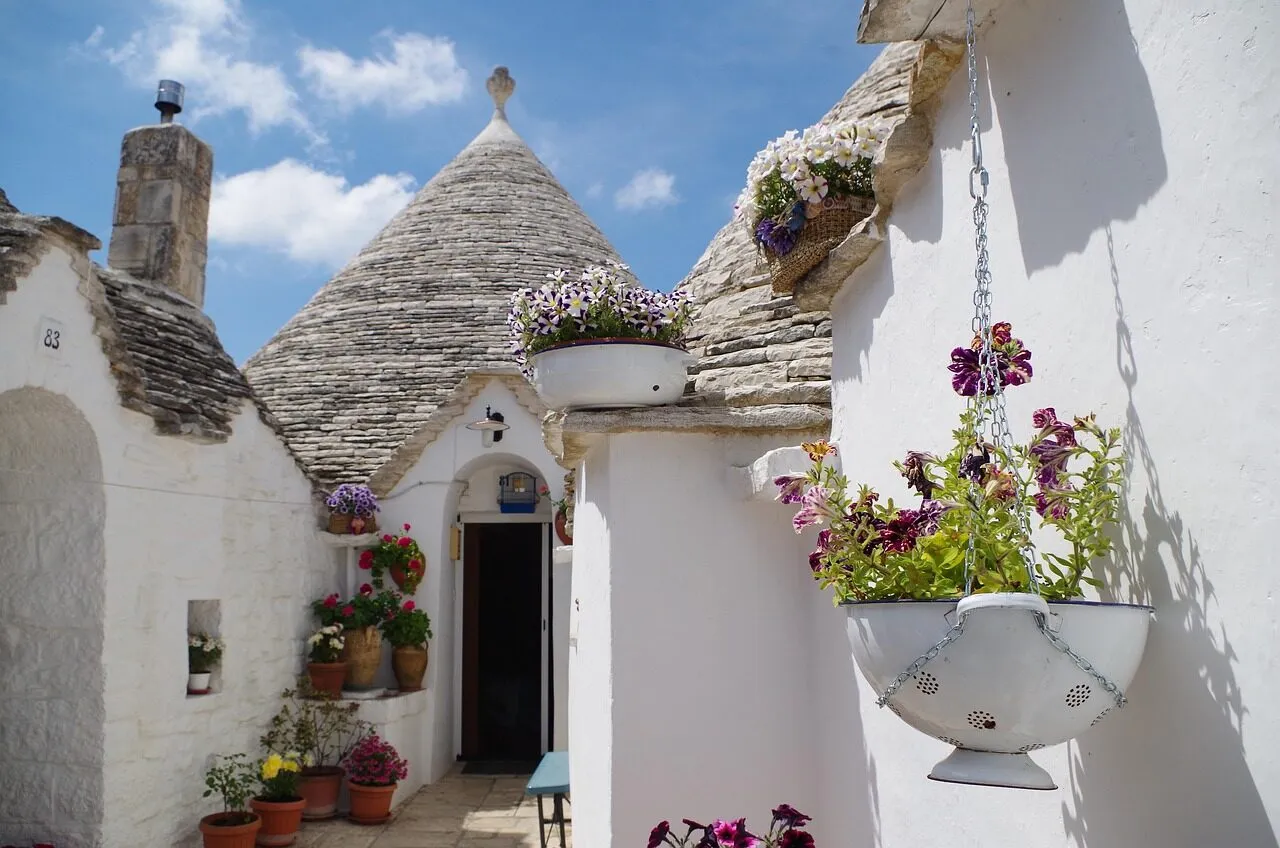
Alberobello is the headline, a town of trulli, the conical dry-stone houses unique to this valley, now a UNESCO World Heritage Site. There are two trulli districts, Rione Monti and Aia Piccola, and the whole town is best seen early, before nine in the morning, when the coach groups arrive and the streets fill. The trulli are still lived in, and the town is small, so an early walk and a coffee is the whole visit.
The other Valle d’Itria towns are quieter and, for many people, more enjoyable. Ostuni, the White City, is a whitewashed hill town with a cathedral and a maze of lanes above the olive plain, and it has the best restaurant scene. Locorotondo is a circular white town with a balcony view over the valley, Martina Franca is the baroque one, and Cisternino is the food town, known for its fornello pronto, the butchers who grill your meat on the spot. Give the valley two or three days and drive between them.
Polignano and the coast
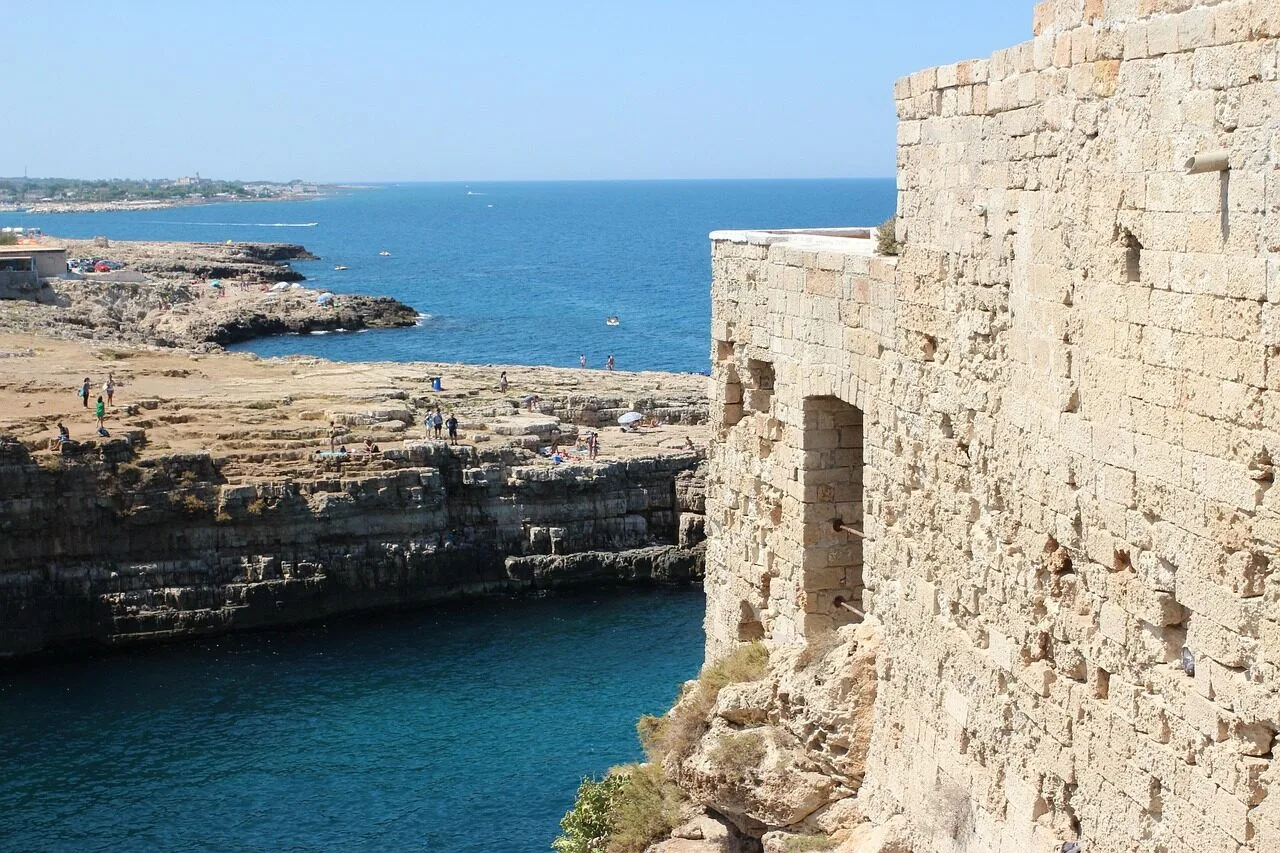
On the Adriatic coast, Polignano a Mare is the most dramatic town in Puglia, built on a limestone cliff that drops straight into the sea, with the little Lama Monachile beach wedged into the gorge below the old town. It is famous for its cliff diving and its caffe speciale, the local espresso with lemon peel and amaretto, and it is a lovely place to wander in the evening. Monopoli, just down the coast, is the working harbour town, less famous and more lived in, with a seafront and a good old town.
This stretch of coast is the easiest to reach from Bari, which makes it a good first stop or last stop on a Puglia trip, and the railway runs along it, so Polignano and Monopoli work even without a car. Between the two towns, and south toward Ostuni and Brindisi, the coast is a series of coves and rocky beaches, less famous than the Salento sand but quieter.
The Salento
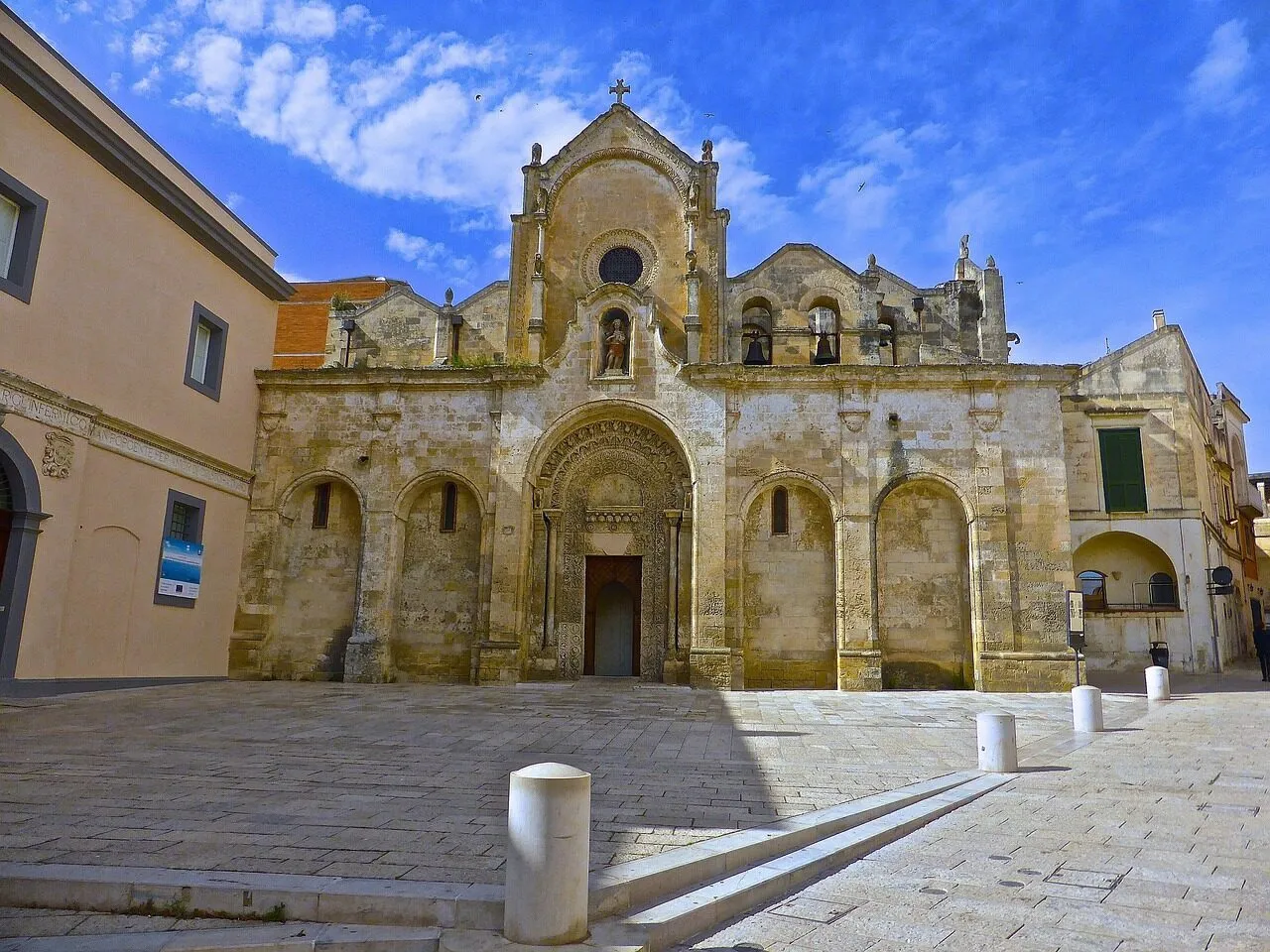
The Salento is the southern peninsula, the land between two seas, and Lecce is its capital and the most beautiful city in the south. Known as the Florence of the South, Lecce is built in a soft golden limestone that carves beautifully, and the barocco leccese style turns its churches and palazzi into wedding-cake facades of balconies, columns and cherubs. The Basilica di Santa Croce, the Piazza del Duomo and the Roman amphitheatre in Piazza Sant’Oronzo are the highlights, and the city is also a good base for the beaches.
Around Lecce, the coast towns each have their own character. Otranto, on the Adriatic, is the easternmost town in Italy, with a castle, a cathedral with a famous mosaic floor and a good beach at the Baia dei Turchi. Gallipoli, on the Ionian side, is an island old town linked to the mainland by a bridge, lively and young in summer, with the beaches of the Ionian coast nearby. Santa Maria di Leuca is the very tip of the heel, where the two seas meet, and Galatina inland has a church of Gothic frescoes worth the detour.
The beaches
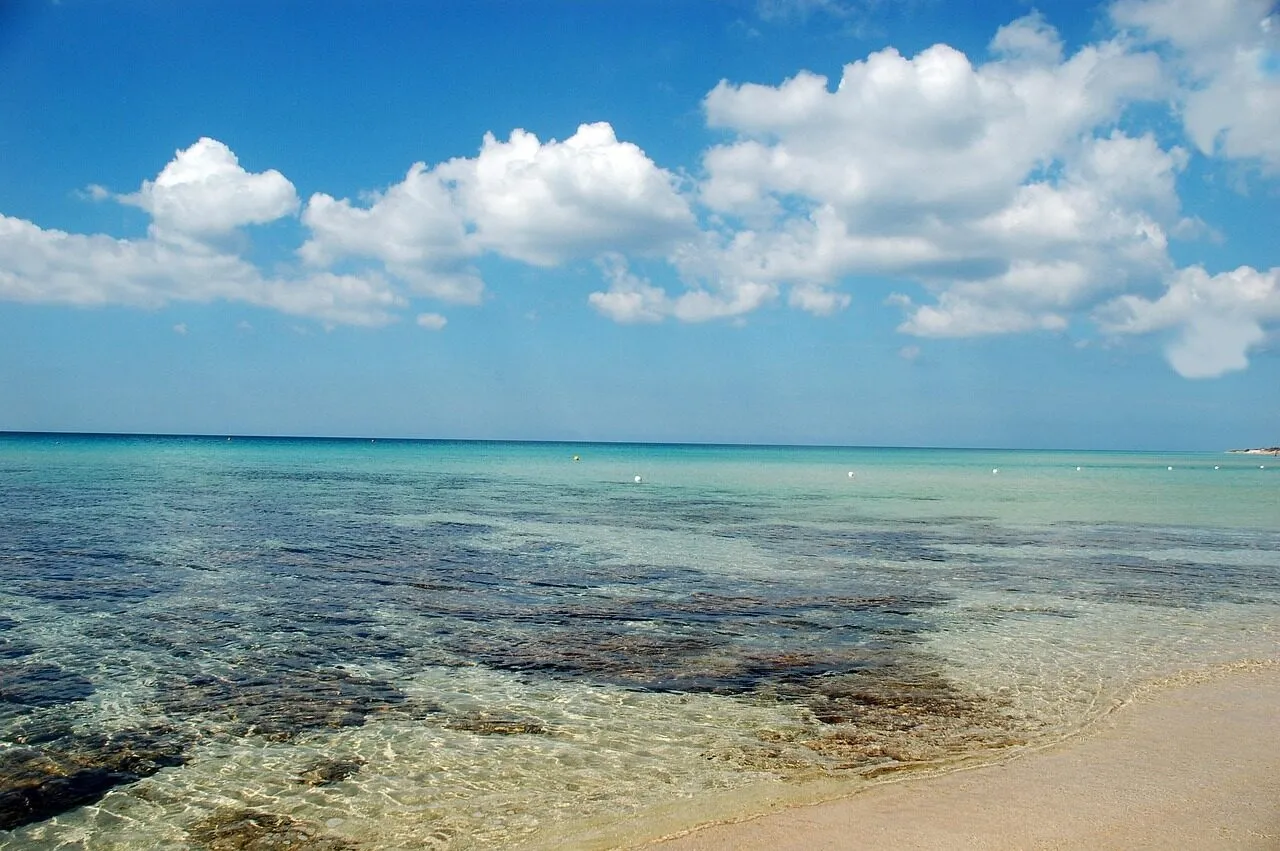
Puglia’s beaches are the reason many people come, and the best are in the Salento. On the Ionian coast, the stretch from Gallipoli down to Punta Prosciutto and Porto Cesareo is a run of white sand and shallow, clear water, with the Spiaggia delle Dune and Punta Prosciutto among the finest. Pescoluse, on the Leuca side, is nicknamed the Maldives of Salento for its pale sand and turquoise water, and the whole coast is lined with beach clubs and free stretches.
The Adriatic side is rockier and prettier in a different way, with coves and cliffs around Otranto, Santa Cesarea Terme and the Baia dei Turchi. The beaches are busiest in July and August, when the Italians arrive and the clubs fill, so go early, book a sunbed, and treat the summer as the peak it is. Outside the summer, the same beaches are quiet and the water is still warm into October.
Food
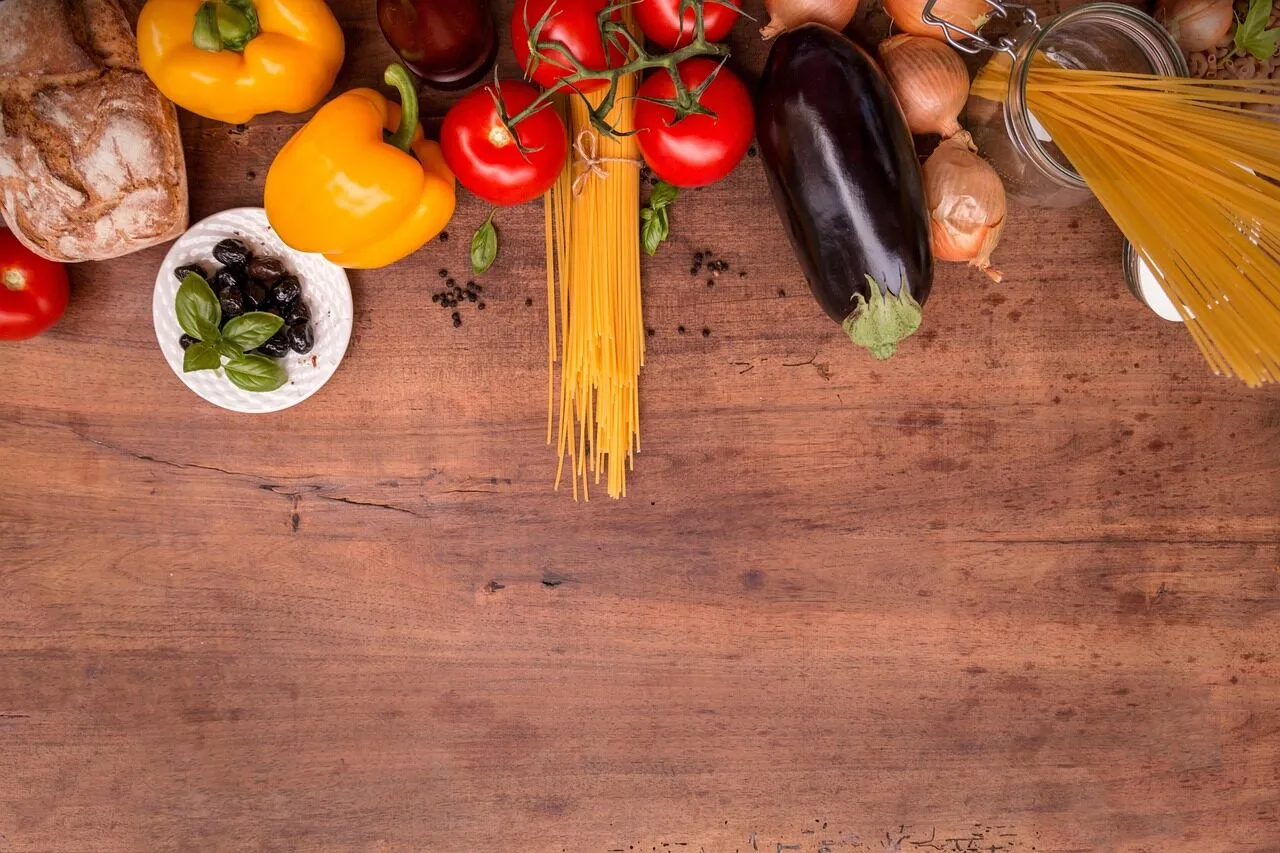
Puglia eats simply and well, and it is the region that feeds much of Italy. Orecchiette with cime di rapa, the little ear-shaped pasta with turnip tops, is the signature dish, and it appears everywhere from home kitchens to restaurants. The region is famous for its burrata and its other cheeses, for its olive oil, which is among the best in the country, and for the bread, from the round Altamura loaf to the friselle. On the coast, the seafood is fresh and cheap, and the grilled vegetables and the aperitivo culture fill the warm evenings.
The wines are the other draw. Primitivo, the full-bodied red, and Negroamaro are the two to know, along with the whites of the Salento, and a visit to a masseria or a winery in the Valle d’Itria is an easy afternoon. Finish with a pasticciotto, the custard-filled pastry of the Salento, and in Polignano, a caffe speciale, the local espresso with lemon peel and amaretto. The full national picture is in the Italian food guide.
Getting there
Puglia has two airports: Bari in the north and Brindisi in the south, both with direct flights from across Europe, and Bari is the larger. From either, a car is the practical way to see the region, because the villages, beaches and masserie are spread out and the public transport is thin away from the main lines. The coastal railway links Bari, Monopoli, Ostuni, Brindisi and Lecce, and it is enough for a town-based trip, but for the countryside and the beaches a car is worth the cost.
The region is also reachable from Rome by high-speed train to Bari in about four hours, and the drive from Naples is about three hours, which makes Puglia a natural extension of a southern Italy trip. If you are combining it with Matera, the cave city in neighbouring Basilicata, that is about an hour from the Valle d’Itria and a common add-on.
When to go
Spring, from April to June, and early autumn, September and October, are the best months, with warm days, open beaches and far fewer people than the summer. The spring brings the green countryside and the wildflowers, and the autumn keeps the sea warm and the harvest in the vineyards and the olive groves. These are also the months when the towns are pleasant rather than packed.
July and August are hot and busy, when the Salento beaches fill, the beach clubs book out and the prices peak, and the midday heat makes sightseeing hard. Winter is mild and quiet, good for the towns, the food and the olive oil, but not for swimming. Whatever the month, the towns are best early in the morning and in the evening, and the beaches best before eleven.
Practical information
| Where to base | Ostuni, Locorotondo or Cisternino for the Valle d’Itria and Alberobello; Lecce for the Salento and the baroque city; Gallipoli or Otranto for the coast. Many trips split between the two halves. |
|---|---|
| Getting around | A car makes Puglia much easier; the coastal railway links Bari, Monopoli, Ostuni and Lecce for a town-based trip. Bari and Brindisi are the airports, about four hours from Rome by train. |
| The beaches | Punta Prosciutto and Porto Cesareo on the Ionian coast, Pescoluse on the Leuca side, and the coves around Otranto on the Adriatic. Best outside July and August. |
| Food | Orecchiette with cime di rapa, burrata, olive oil, fresh seafood, Primitivo and Negroamaro wine, and the pasticciotto pastry. |
| When to go | April to June and September to October. July and August are hot and busy; winter is mild and quiet but not for swimming. |
Disclosure. This blog post contains affiliate links. If you book through them, Mediterranean Vibes may earn a small commission at no extra cost to you; it is how the site stays up.