Malta is about 27 km from end to end, so no base is truly far from anything. That said, the area you choose sets the whole rhythm of the trip, because the island splits into two clear halves: the harbour towns around Valletta, where the culture, restaurants and transport are, and the northern and island resorts, where the beaches and the boat trips are. Pick the half that matches the holiday you want and the rest of the planning falls into place.
This guide compares the places people actually stay, from the capital to the quiet farmhouses of Gozo, and matches each to a type of trip, with the 2026 price ranges for each. It is the practical companion to the Malta itinerary, which shows where each base fits in a three, five or seven day plan. For the sights themselves, the Valletta and Mdina guides go deeper.
Plan and book
3 partners- Flights
Fly into Malta International (MLA) and start from whichever base you pick. Compare routes.
Search flights - Tours and boats
Harbour cruises, the Blue Lagoon, Gozo day trips and diving, bookable before you arrive.
Browse activities - Where to sleep
Compare rooms and apartments across every area of Malta and Gozo by price and score.
Find a room
How to choose
Ask two questions. First, do you want to be in the middle of the sights and restaurants, or near the beach and the boat trips? The harbour towns, Valletta, Sliema and St Julian’s, are the first; the northern resorts and Gozo are the second. Second, how much do you value the ferry to Valletta? Staying in Sliema or the Three Cities puts the capital, the buses and the whole transport network within a short hop, which for a three or four day trip matters more than the view from the balcony.
After that, the choice is mostly about atmosphere. A culture first traveller sleeps in Valletta, a couple who want food and nightlife sleep in St Julian’s, a first timer who wants everything easy sleeps in Sliema, a family on a budget sleeps in the north, and anyone who wants quiet and value looks at the Three Cities or Gozo. None of them is wrong, and none needs a car, which is the quiet advantage of the harbour towns over the resorts.
Valletta
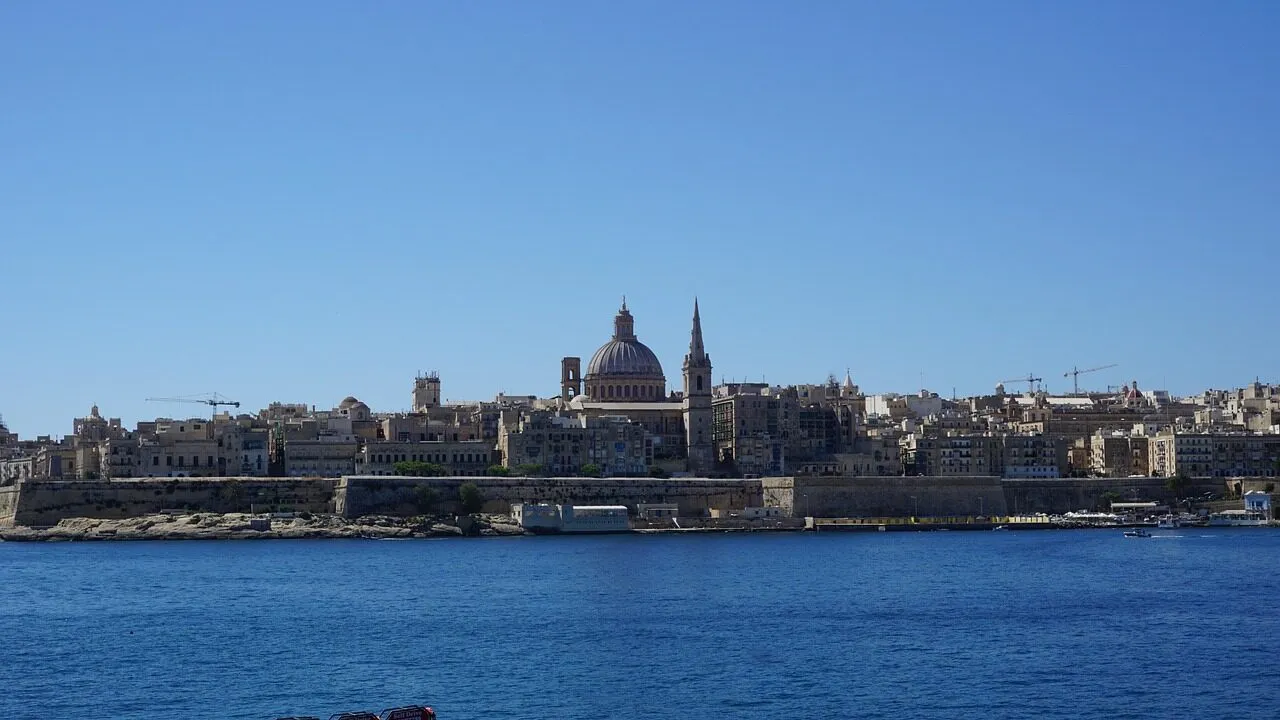
Sleeping inside the walls of the capital is the most atmospheric choice in the country. Valletta is a small UNESCO city on a peninsula between two harbours, and staying there means waking up before the day trippers arrive, walking the baroque streets in the evening once they have gone, and looking out over the Grand Harbour from a rooftop. The hotels are boutique townhouses rather than big resorts, and the restaurants and museums are all within a few minutes on foot.
The trade offs are real. Prices are the highest on the island, the supply of rooms is limited so they book out early, there is no beach, and the evenings are quiet, which suits some travellers and not others. Valletta is also hilly, with steep side streets and steps, so pack for cobbles. It is the right base for a short culture first break and for anyone who wants the capital as the centre of the trip rather than a day out.
Sliema
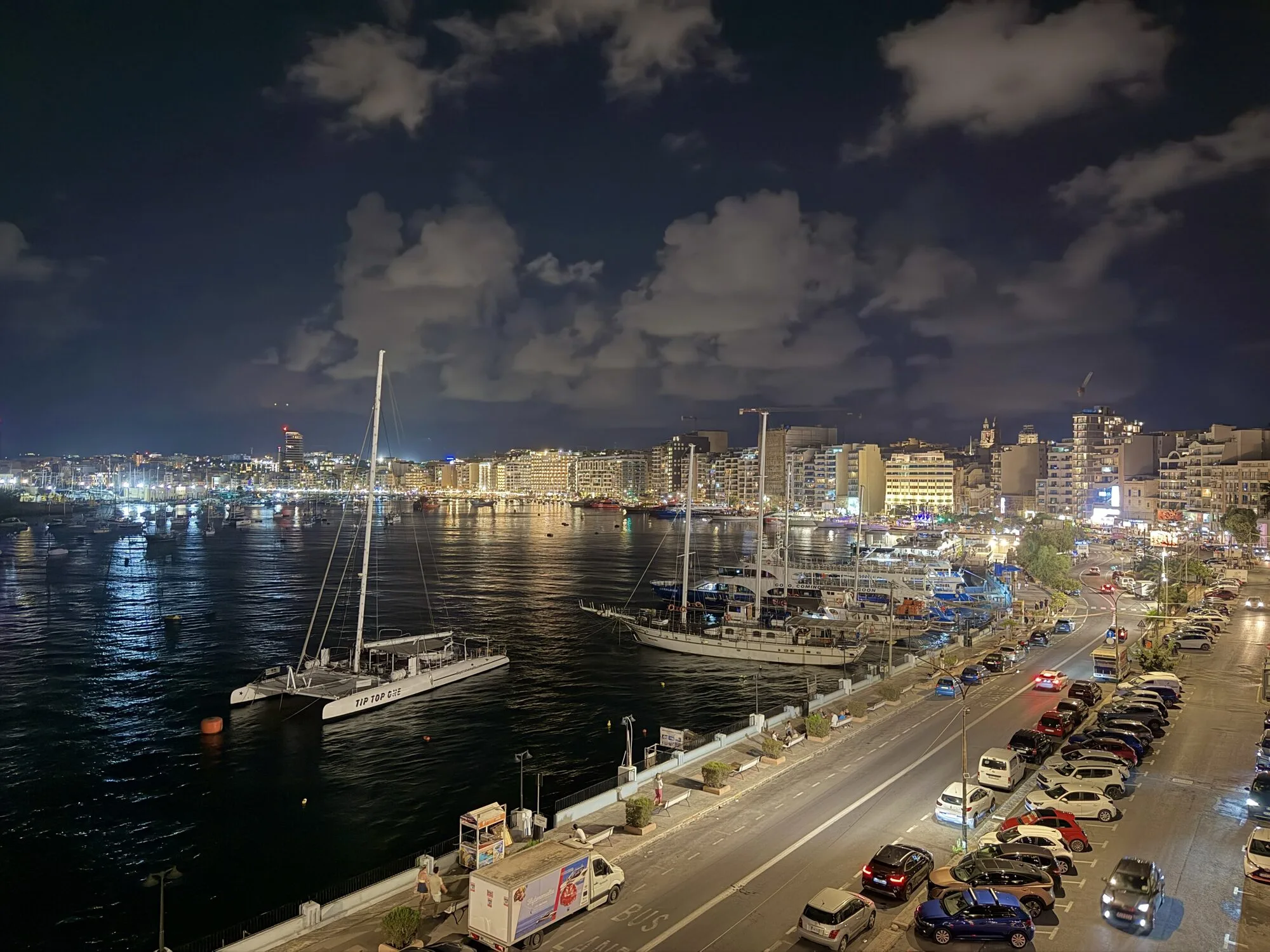
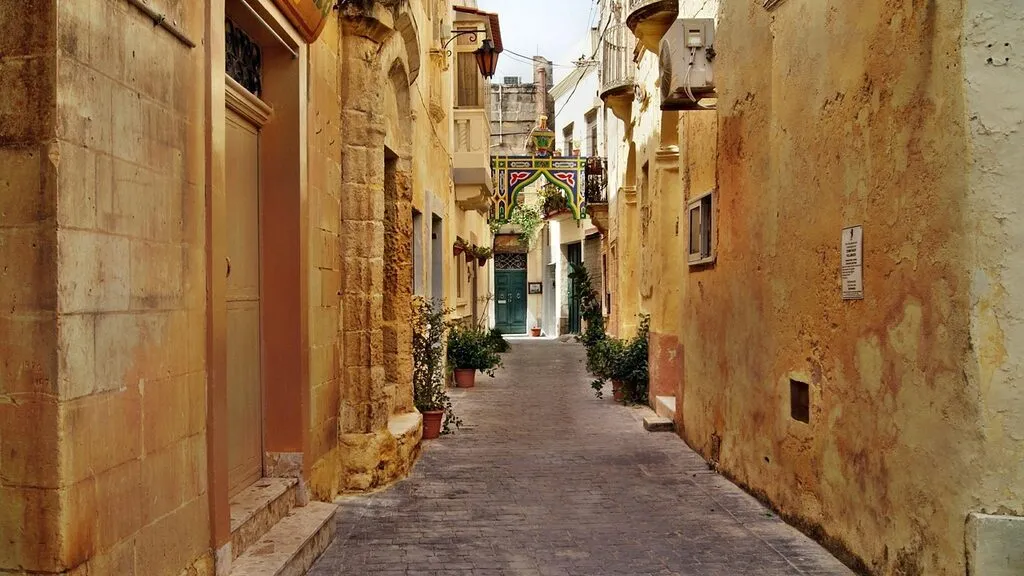
Sliema is the sensible default and the area most first timers should book. It sits on a peninsula across Marsamxett Harbour from Valletta, with a seafront promenade of about 3 km lined with restaurants, cafes and shops, and the ferry to the capital leaves from the Strand for 3 EUR and takes about 15 minutes. That ferry is the whole argument: it turns a visit to Valletta into a scenic hop rather than a bus around the harbours, and it runs every half hour, late into the evening in summer.
The beach situation is the honest caveat. Sliema has no sand, only flat rock lidos where people swim off the concrete, so if sand and shallow water matter, this is not the beach base. What it does have is the best balance on the island: transport, food, sea views and a calm evening atmosphere, all without a car. It is the base to choose when you want everything to be easy.
St Julian’s
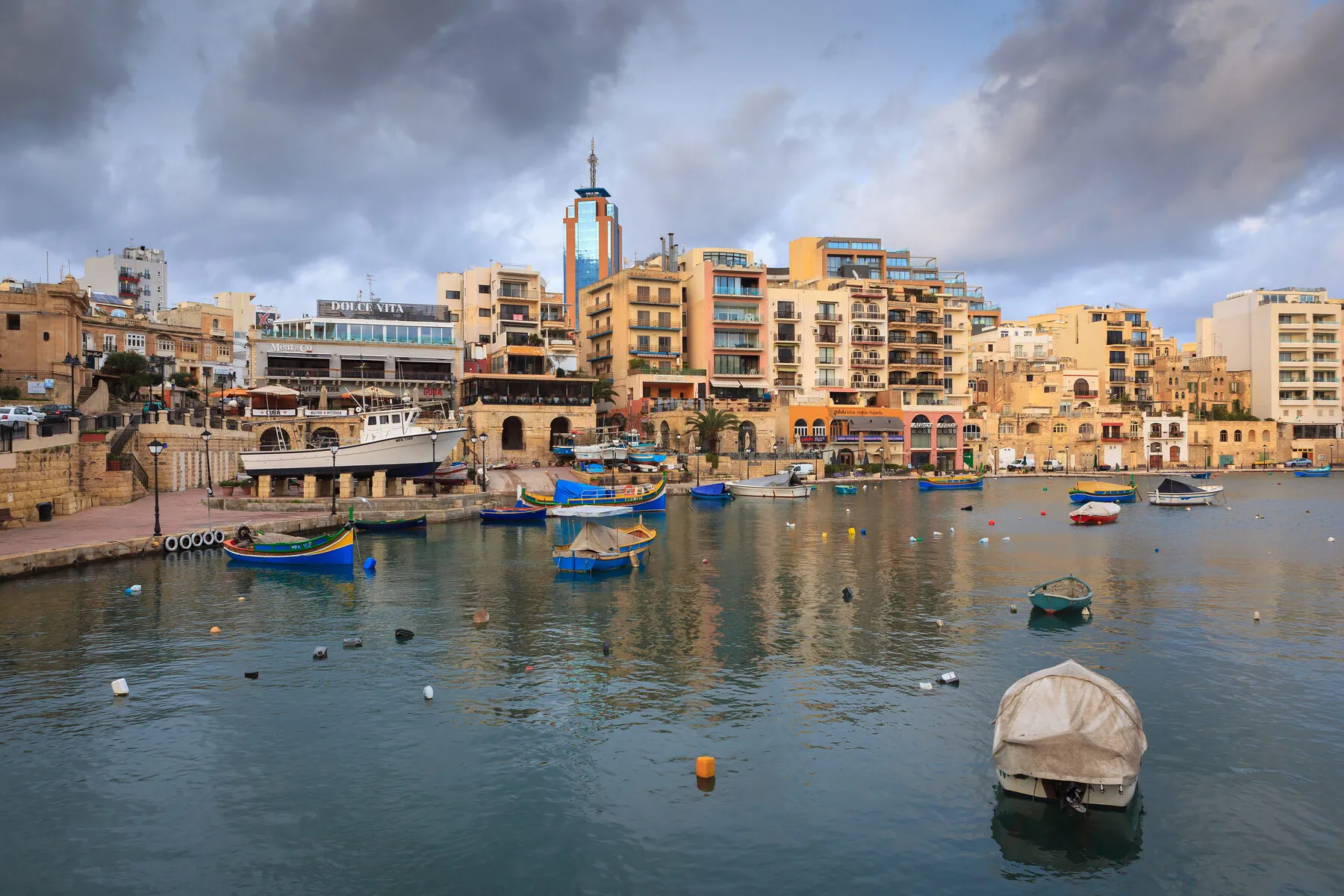
St Julian’s, just north of Sliema, is the resort and nightlife half of the same seafront. It spreads around two pretty bays, Spinola and Balluta, with the big hotels, the strongest restaurant scene on the island, and, in Paceville, Malta’s clubbing district, where the bars and clubs run late and the streets stay loud. The two bays are quite different: Spinola is the place for a waterfront dinner, and Balluta is calmer, with the neo-Gothic church on the water.
Choose St Julian’s for the buzz, for the resorts with pools, and for the dining. The one rule is noise: if you are not there for Paceville, book the Spinola or Balluta side rather than the club core, because the difference between a quiet night and a sleepless one is a few hundred metres. Like Sliema, it has rocky swimming rather than sand, and it is well connected by bus to the rest of the island.
The north
The northern resorts, Bugibba, Qawra and St Paul’s Bay, are the budget base and the closest to the islands’ best boat trips. This is where the all inclusive hotels cluster, and where room prices are consistently the lowest on Malta. The beaches are small and rocky rather than sandy, but the position is the point: from here the Comino and Blue Lagoon boats leave from nearby, the Gozo ferry terminal at Cirkewwa is a short bus ride up the coast, and the northern sandy beaches at Mellieha and Golden Bay are within reach.
It suits families who want a resort with a pool and a fixed price, and travellers who plan to spend their days on the water rather than in Valletta. The trade off is distance from the capital and the culture, which becomes a longer bus ride, and a slightly dated feel in parts. If the plan is boat trips, beaches and value rather than city time, the north is the practical answer.
The quiet options
Three quieter choices round out the list. The Three Cities, Birgu, Senglea and Cospicua, sit across the Grand Harbour from Valletta and are atmospheric, residential and cheaper than the capital, with the harbour ferry linking them to it in minutes; they suit a slower, more local stay. Mdina and Rabat, inland and car free inside the walls, are the quietest and most romantic option, with palazzo boutiques, but you rely on buses or a car for everything else.
Gozo is the last and the most different. A farmhouse or a small hotel on the sister island trades the crowds for countryside and empty evenings, with the beaches, the Cittadella and the diving all nearby, at the cost of a ferry crossing whenever you want the main island. It works best as a two or three night stay within a longer trip, or as the base for a second, slower visit. For the island itself, see the Gozo guide, and for the sites in the water, the diving guide covers the Blue Hole and the Xatt l-Ahmar wrecks.
What you pay
These are shoulder season ranges for 2026, per room per night, and they climb sharply in July and August and around Easter.
| Valletta | About 120 to 250 EUR for a boutique townhouse room inside the walls, and more for a harbour view. Limited supply, so book early. |
|---|---|
| Sliema and St Julian’s | About 90 to 180 EUR for a comfortable mid-range double, with sea-view rooms and the five-star resorts at the top of the range. The widest choice of apartments and aparthotels. |
| The north | Consistently the cheapest, with all inclusive resorts and budget hotels often below the Sliema range, especially outside the peak. |
| Three Cities, Mdina and Gozo | The Three Cities undercut the seafront for similar quality. Mdina and Rabat palazzos and Gozo farmhouses run from about 90 EUR to well over 300 EUR for a large house with a pool. |
These are planning ranges built from the area guides and the site’s own country page, not an official index. The single biggest saving is to travel in May, June, September or October rather than July or August, when the same room costs noticeably more.
Practical information
| Getting around | Valletta, Sliema and St Julian’s are the best connected and need no car. The Sliema to Valletta ferry is about 15 minutes, every half hour, 3 EUR single. Buses reach the rest of the island, and the airport TD routes drop you in about 20 to 30 minutes for 3 EUR. |
|---|---|
| Booking timing | Book early for July, August and Easter, when the best rooms in every area go first. Outside the peak, shoulder season gives the best value and thinner crowds. |
| Noise | Paceville, in St Julian’s, is Malta’s nightlife district and is loud late. Book the Spinola or Balluta side to be near it without sleeping in it. |
| With a car | A car only pays off if you base in the north or on Gozo and want fast access to the south coast and the quieter beaches. Parking is scarce and charged in Valletta and Sliema, and driving is on the left. |
| Split stays | A few nights in Sliema or St Julian’s plus two on Gozo is a common and effective pattern, giving you the convenience of the harbour towns and the quiet of the sister island without much wasted travel. |
Disclosure. This blog post contains affiliate links. If you book through them, Mediterranean Vibes may earn a small commission at no extra cost to you; it is how the site stays up.