Gozo is the second island of the Maltese archipelago, a short ferry ride north of the main island and a world away from it in pace. Where Malta is busy and built up, Gozo is greener, quieter and slower, with a hilltop fortified city, some of the oldest temples on earth, a red sand beach and a rugged west coast of caves and lagoons. It is small enough to cross in half an hour, which is exactly why the mistake is to treat it as a rushed day trip.
This guide covers the island properly: how to get there and what it costs, the sights that are worth the trip, where to eat and stay, and why a night on Gozo changes the whole Malta holiday. Every ferry time and fare is checked against the operator for 2026. If you are only seeing the main island, the Malta itinerary shows where Gozo fits into three, five or seven days, and the Malta country guide has the wider picture.
Plan and book
3 partners- Flights
Fly into Malta International (MLA), then take the ferry to Gozo. Compare routes from wherever you start.
Search flights - Tours and boats
Gozo day trips, quad and tuk-tuk tours, diving, and the Comino crossing from Mgarr.
Browse activities - Where to sleep
Victoria townhouses, Xlendi and Marsalforn seafront rooms, and countryside farmhouses.
Find a room
Getting there
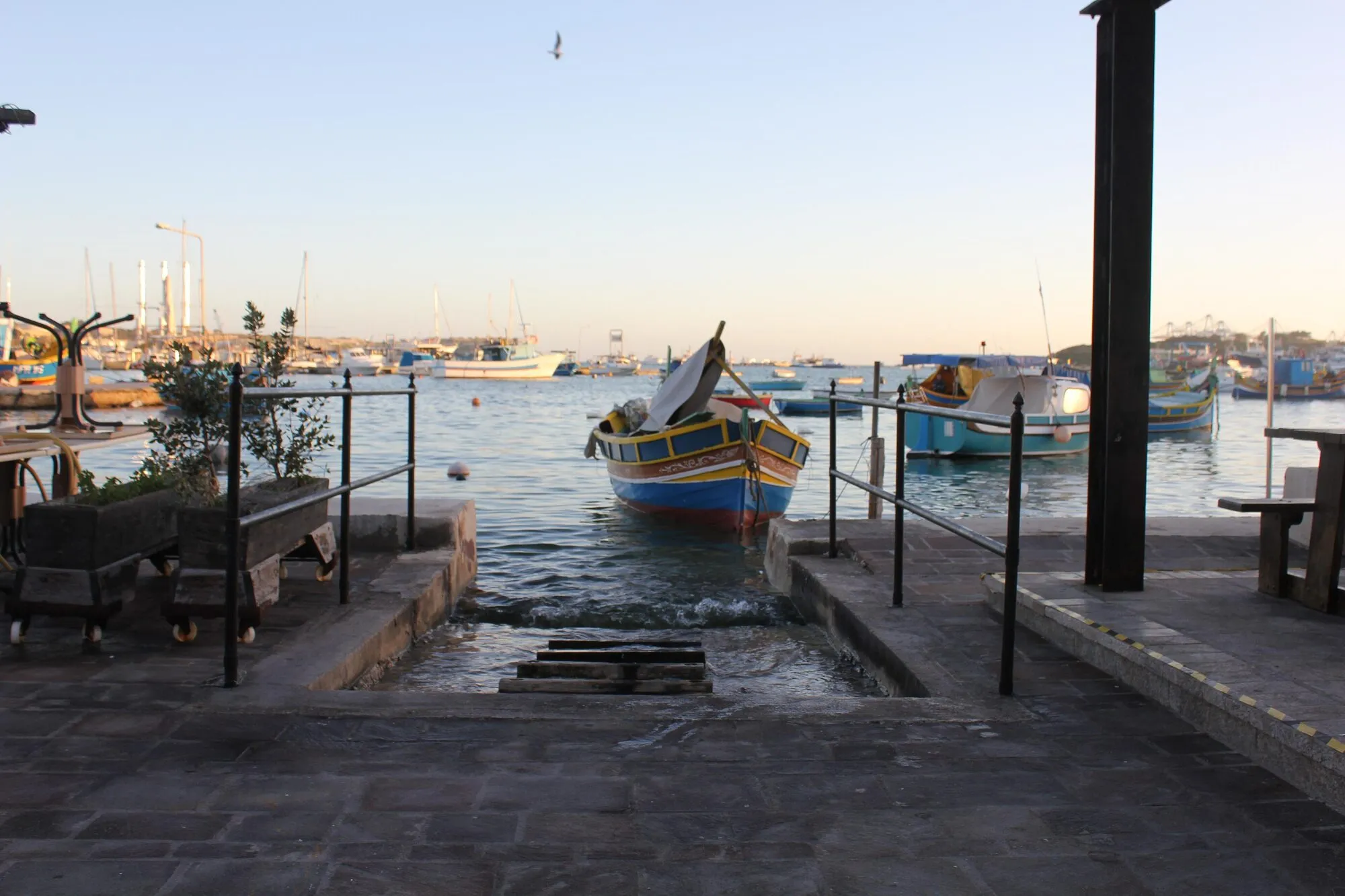
There is one way to reach Gozo with a vehicle and two ways without. The classic route is the Gozo Channel car ferry from Cirkewwa, the rocky northern tip of Malta, to Mgarr on Gozo. The crossing is about 25 minutes and runs 24 hours a day, every 30 to 45 minutes in summer, so it fits almost any plan. The one rule that trips up first timers is the payment: foot passengers pay on the return leg, at Mgarr as they leave Gozo, not at Cirkewwa on the way out. The return fare is 4.65 EUR for an adult, 2.30 EUR for a child aged 4 to 14, and under fours go free. A car is about 15.70 EUR return.
The quicker option for anyone based in Valletta or Sliema is the Gozo Highspeed catamaran, which crosses in about 45 minutes from 7.50 EUR one way from Valletta or 8.50 EUR from Sliema. It costs more than the car ferry but removes the hour and a half bus ride to Cirkewwa, which on a short trip is worth the difference. On the island, buses reach Victoria from Mgarr and connect the main villages, but they are infrequent by Maltese standards, and a car or a scooter is the honest way to see Gozo in a day. For a first taste the hop on hop off bus loops the highlights in a figure of eight.
Victoria and the Cittadella
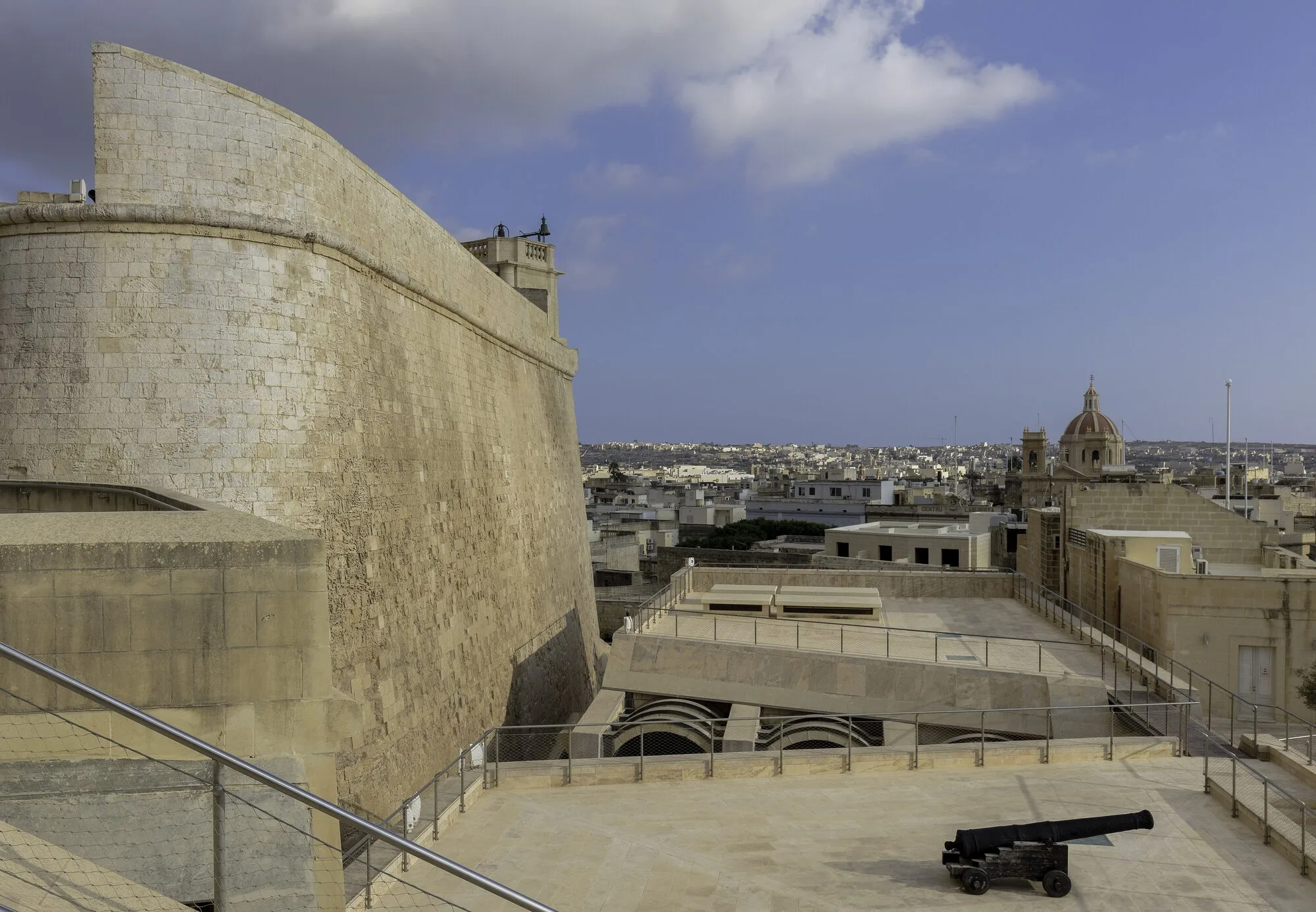
Victoria, still called Rabat by many locals, is the island’s capital and its crossroads, sitting in the middle of Gozo with the bus terminal and most of the restaurants. Above it rises the Cittadella, a fortified shell of a city on its hill, lived in since the Bronze Age and rebuilt by the Knights into the walls you see today. It is the one sight no visit can skip. Walk up through the gate, cross the silent piazza, and climb to the ramparts, where the whole island opens up in every direction and, on a clear day, the coast of Malta shows across the water.
Inside the walls are the Cathedral of the Assumption, with its flat, painted ceiling and the optical illusion that makes it look domed, and a cluster of small museums covering archaeology, folklore and the island’s history. Allow two hours, and come in the late afternoon for the light and the near empty streets. Nearby, the Villa Rundle gardens and the town’s squares are where Victoria does its living; on the island’s pace, that is a slow coffee and a long conversation.
The Ggantija temples
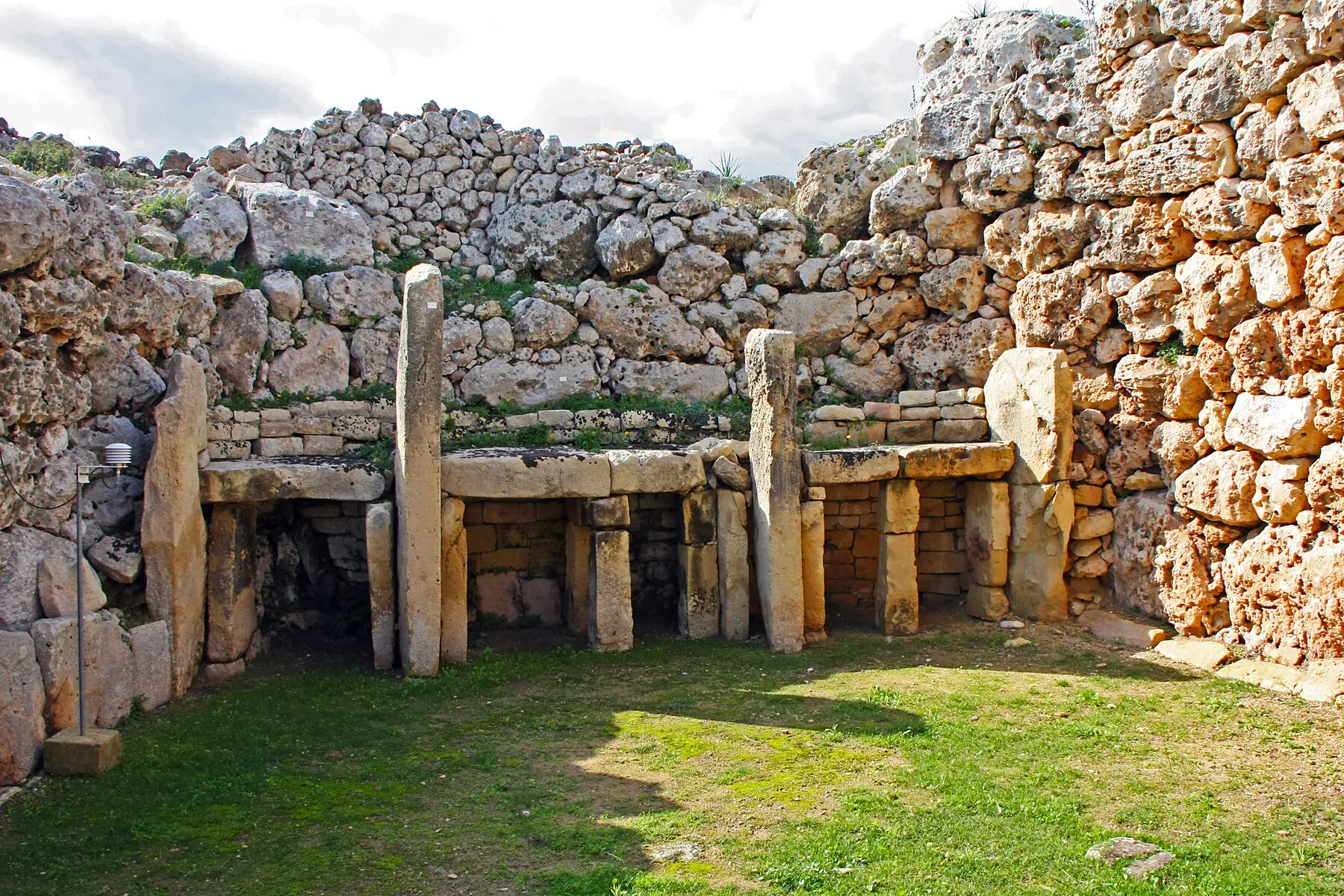
The Ggantija temples at Xaghra are the reason Gozo matters to archaeology. Two hulking limestone temples, built around 3600 BC and used for well over a thousand years, they are older than Stonehenge and older than the pyramids, and among the oldest free standing structures in the world. The name means the giants’ work, because later islanders could not believe ordinary people had moved the megaliths, some of them over six metres long and many tons in weight. Ggantija is a UNESCO World Heritage Site, and the walkway through and around the two temples makes the scale of the engineering obvious in a way the photos do not.
Give the site and its small visitor centre an hour, and pair it with the Ta’ Kola windmill next door, a restored eighteenth century mill that shows how the island ground its grain and lived off the land. The temples and the windmill sit inland in the greenest part of Gozo, among villages and dry stone walls, which is the half of the island the day trippers on the coast buses never see.
Ramla Bay
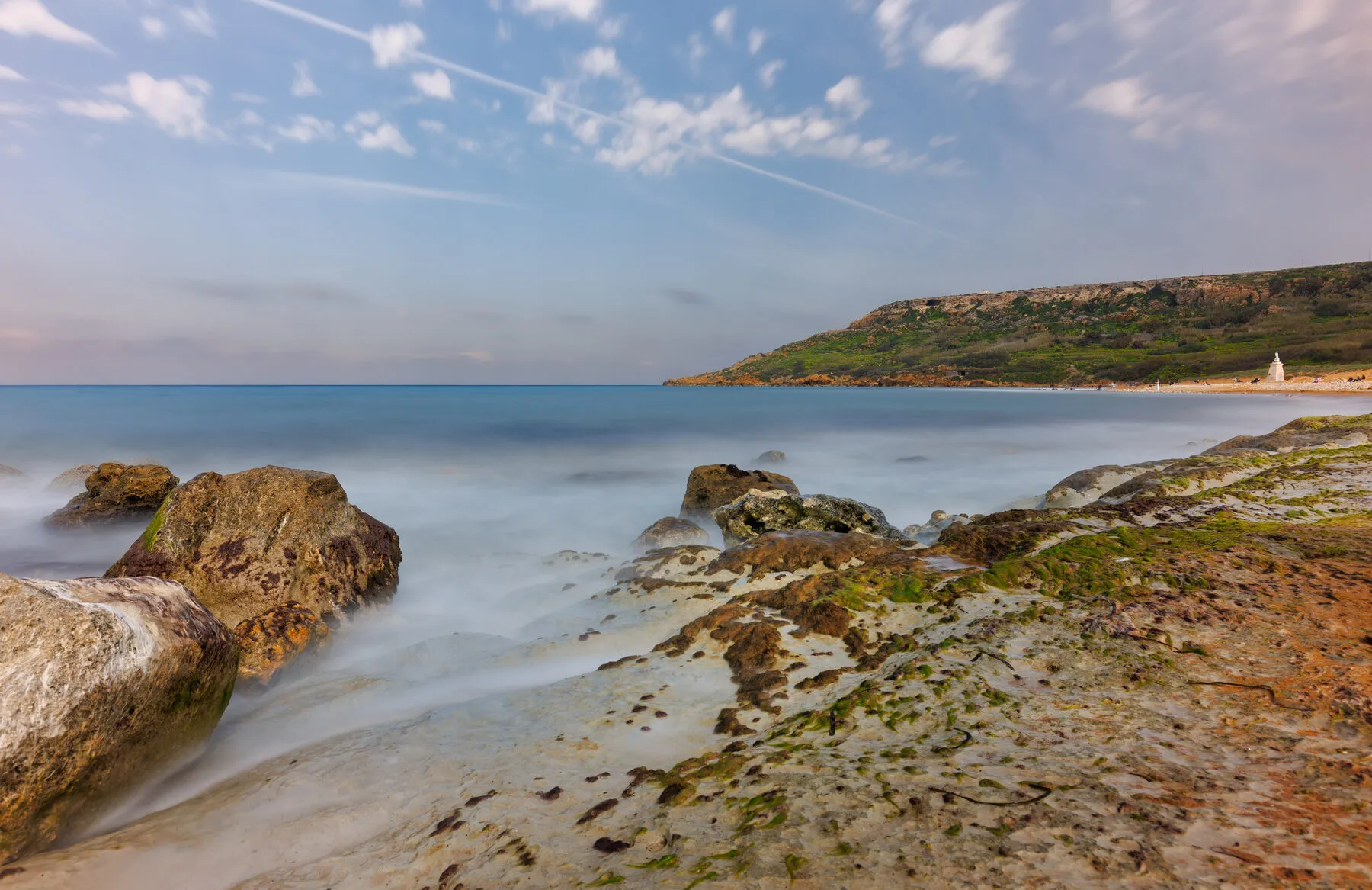
Ramla Bay, or Ramla l-Hamra, the red sand beach, is Gozo’s best known stretch of coast and the one to swim from. The sand is a deep rusty red, the water is shallow and clear, and the bay sits under green terraced hills at the foot of the Xaghra plateau. It is the island’s most popular beach, so it fills in August, but outside the peak it feels open and unhurried and there is room for everyone.
Two viewpoints make the bay worth more than a swim. The Tal-Mixta Cave, a short and slightly rough walk up from the Xaghra side, looks straight down over the red sand, one of the best photographic spots on the island. The Calypso Cave, on the other headland, is tied to the legend of Homer’s Calypso, who was said to have kept Odysseus on the island for seven years. Go in the morning for the swim and the quiet, or in the late afternoon for the light on the sand and an almost empty beach.
Dwejra and the Inland Sea
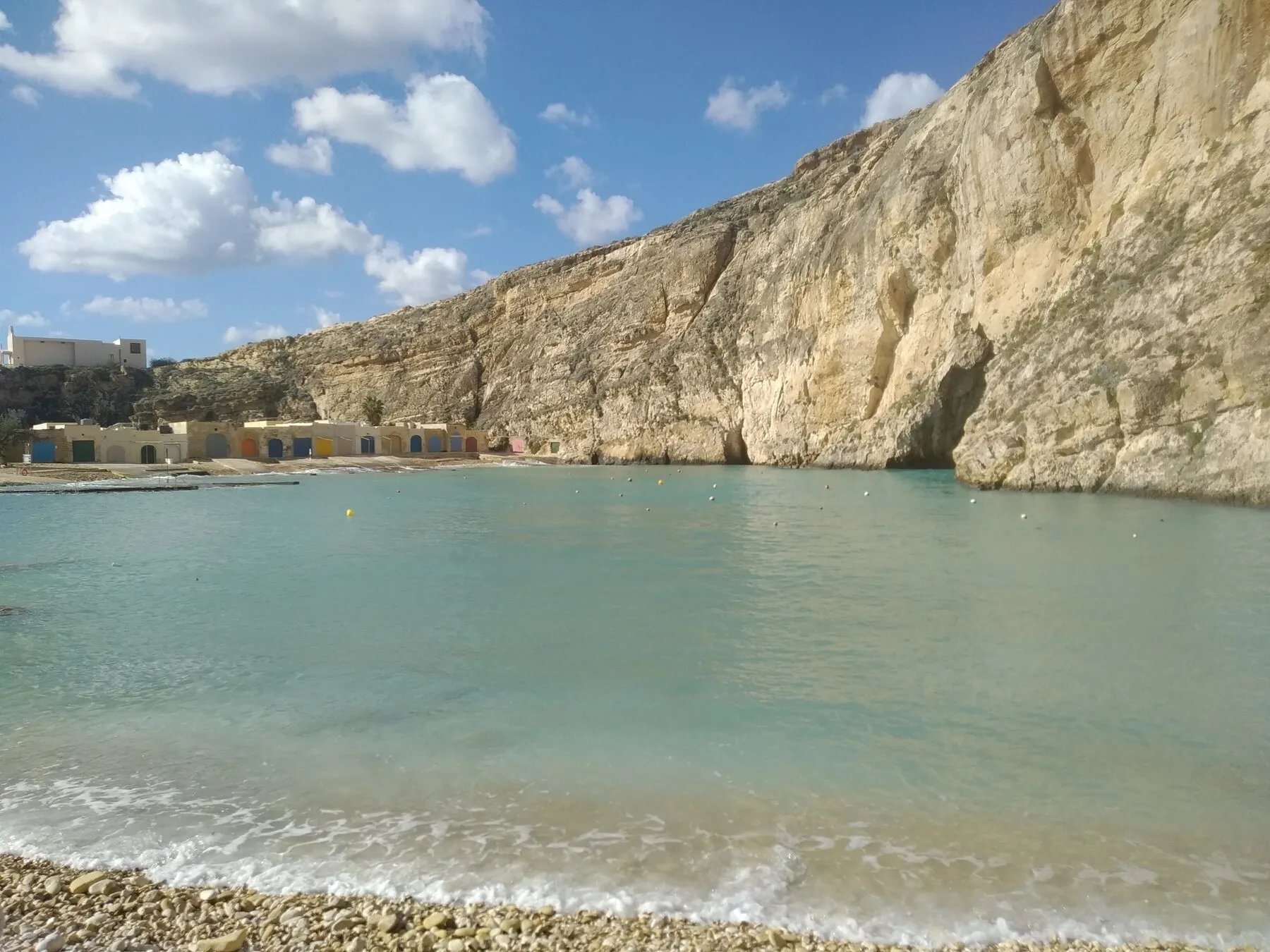
Dwejra, on the wild western coast, is the most dramatic landscape on either island. The Inland Sea is a small lagoon, almost enclosed by rock, connected to the open Mediterranean by a natural tunnel about 60 metres long. Boats run from the little jetty through the tunnel and out to the cliffs, and the water shifts from green to deep blue as you cross. Fungi Rock, a flat-topped outcrop standing offshore, is so named for the mushroom that grows only on it, and the cliffs around the bay are honeycombed with caves and dive sites.
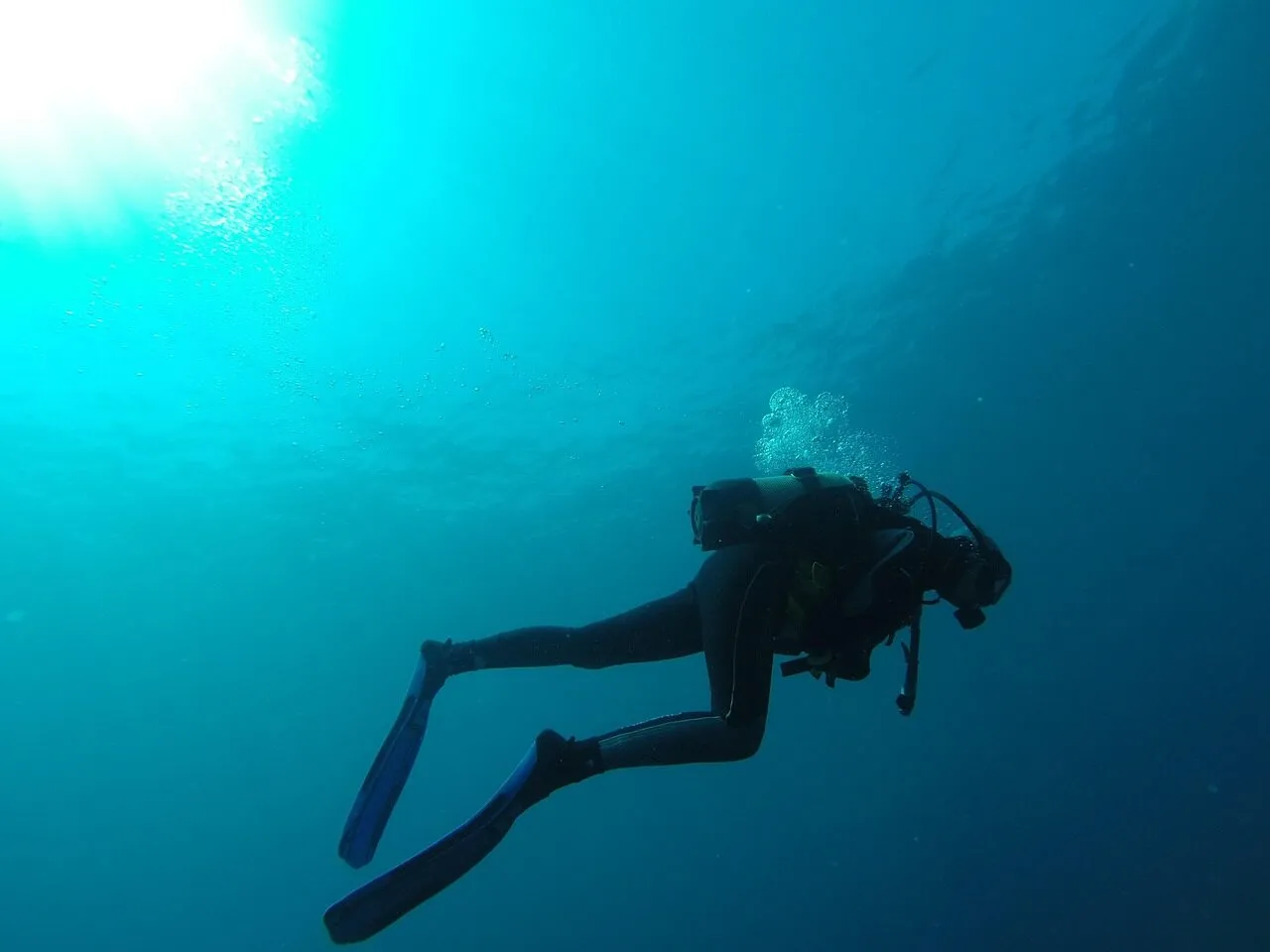
The Azure Window, the natural arch that once framed the whole bay, collapsed into the sea in a storm in March 2017, and it is gone. The area is still the highlight of the west coast without it, and the Blue Hole, the circular sinkhole at the edge of the bay, is one of the most famous dive and snorkel spots in the Mediterranean, with a sheltered entry and an underwater arch leading out to the open sea. Even if you do not dive, come for the geology, the boat through the tunnel, and the sunset over the cliffs, which is the best on Gozo. For the sites in the bay, including the Blue Hole and the Inland Sea, see the diving in Gozo and Malta guide.
Ta’ Pinu, Xlendi and the salt pans
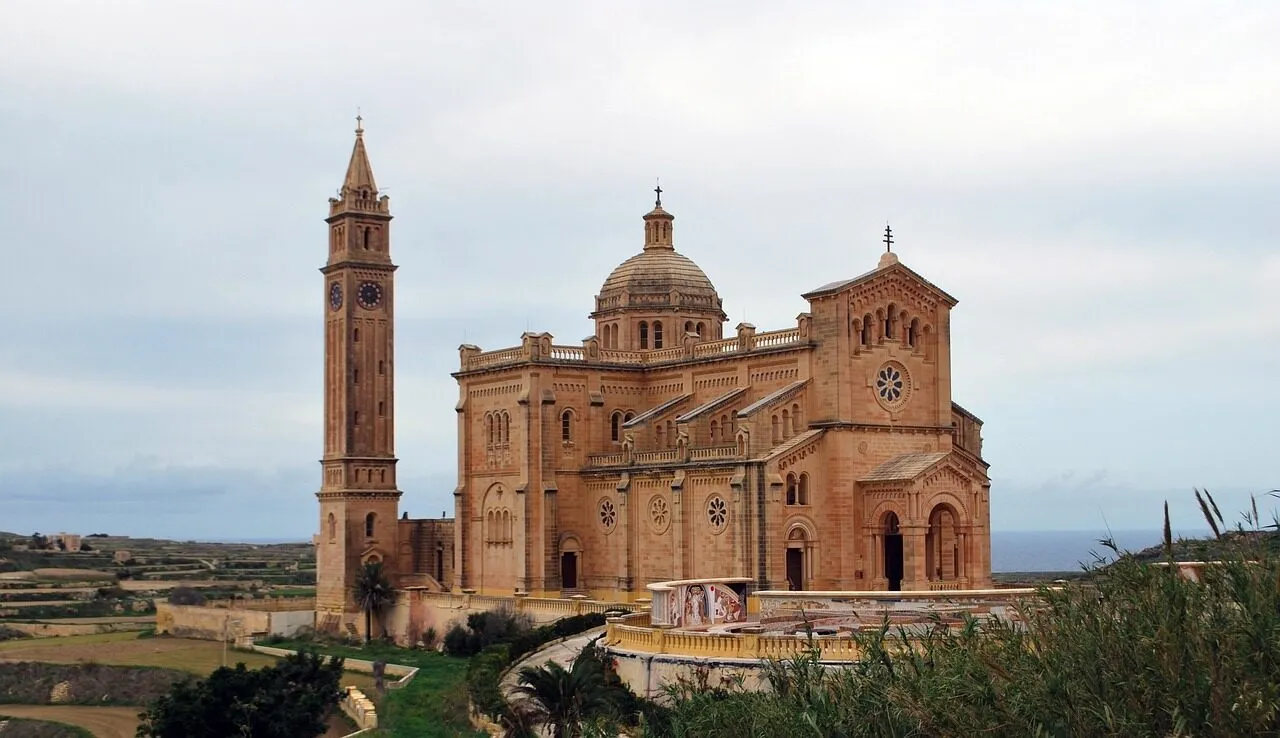
The rest of the island is a loop of small places that reward a slow drive. The Ta’ Pinu Basilica, a solitary pilgrimage church in the open countryside, is Malta’s national shrine and a striking sight in the middle of nowhere, built after a reported miracle in 1883. Xlendi Bay, a fjord-like inlet on the south coast, is the island’s prettiest harbour, with restaurants around the water and a walk out to the old tower. Marsalforn, on the north coast, is the main resort, and just beyond it the Xwejni salt pans, cut into the flat rock and still worked by hand each summer, are a reminder that Gozo has always lived off a thin and rocky land.
Gozitan food
Gozo eats simply and well. The island’s signature is the gbejna, the small round cheeselet made from sheep’s or goat’s milk, eaten fresh with pepper and olive oil or dried and grated over pasta. The ftira, a ring of sourdough flatbread, is the island lunch, split and filled with tuna, tomato, capers and olive oil, and the rabbit, cooked in wine and garlic, is the shared dish of a Sunday table. Wash it down with a local wine or a Cisk.
Victoria is where to eat, around the Cittadella and the main squares, and Ta’ Rikardu in the Cittadella is the best known traditional table, serving the cheeselets and the rabbit with the island’s own produce. On the coast, Xlendi and Marsalforn do the seafood, and the village band clubs do the cheap, honest plates. For a small island, the food is a real reason to stay a night rather than rush back on the last ferry.
Where to stay
For most visitors, Victoria is the practical base: the Cittadella on the doorstep, the restaurants and the bus terminal a few minutes away, and the whole island reachable in half an hour. Xlendi and Marsalforn are the coastal choices, good for an evening by the water and a swim before breakfast, with Marsalforn the livelier of the two in summer. The most atmospheric option, if you have a car, is a countryside farmhouse between the villages, where the quiet of Gozo is the whole point.
The case for a night on Gozo is simple. As a day trip the island is a blur of two or three stops and a ferry to catch; as a night or two it becomes the calmest part of the trip, with empty evenings in the Cittadella, a sunset at Dwejra, and no timetable to obey. Many people arrive expecting to tick it off and leave wishing they had booked longer. If you are weighing the mainland areas against Gozo, the where to stay guide compares them all.
Practical information
| Getting around | Buses connect Mgarr, Victoria and the main villages, but are infrequent, so a car or scooter is the best way to see the island in a day. The hop on hop off bus covers the highlights in a loop. Distances are short but the roads are narrow and winding. |
|---|---|
| When to go | May, June, September and October are the best months, warm with thinner crowds. July and August are hot and busy, especially Ramla Bay and Marsalforn. Winter is quiet and mild but many coastal places close. |
| Money | Euro. Cards are widely accepted, but carry cash for the small beach kiosks and the salt pan stalls. Tipping about ten percent is normal. |
| Health and safety | The coast is rocky and the limestone slippery, and shade is scarce at the temples and on the beaches, so use high sun protection and drink water. The sea is calm in sheltered bays but rough on exposed coasts; swim where locals do. |
| With Comino | Gozo and Comino combine easily: ferries run from Mgarr to the Blue Lagoon in about 15 minutes, so a night on Gozo makes an early, crowd free start to Comino, before the boats from the main island arrive. See the Comino and Blue Lagoon guide for the ferries and the entry rules. |
Disclosure. This blog post contains affiliate links. If you book through them, Mediterranean Vibes may earn a small commission at no extra cost to you; it is how the site stays up.