Maltese cooking is the story of everyone who ever held the island, boiled down into a few hundred square kilometres. The Sicilians brought the pasta and the tomato, the Arabs the citrus and the rice, the Knights of St John the tastes of France and Italy, and the British the bread and the beer culture. What came out is a Mediterranean kitchen that looks Italian on the surface and tastes distinctly its own, built on rabbit, fish, bread and a lot of olive oil.
For a small island, Malta eats unusually well, from the pastizzeria on the corner to two Michelin starred tables. This guide covers what to eat, where to find it and where to eat it, town by town, with the dishes worth travelling for and the ones to try at least once. For the wider Mediterranean table, the Mediterranean diet guide sets the context, and the Malta itinerary works the food into the days.
Plan and book
3 food experiences- Food tour
Walk Valletta or the Three Cities with a local guide and taste the classics in one afternoon.
Find a food tour - Cooking class
Cook pastizzi, ftira or rabbit stew with a Maltese home cook, then eat what you made.
Find a cooking class - Wine tasting
Taste the islands’ wines at a local winery, from the crisp whites to the fuller reds.
Find a wine tasting
What is Maltese food
Maltese food sits at the crossroads of the Mediterranean, and the influences are layered rather than blended. The base is Sicilian and southern Italian, with pasta, tomato, aubergine and fresh fish. On top of that sit the Arab tastes that shaped the language and the fields, citrus, rice and sweet pastries, the French and Italian refinements the Knights brought in the sixteenth and seventeenth centuries, and the British habits of tea, beer and a solid breakfast. The result is a kitchen that recognises itself as Mediterranean, with rabbit and fish at the centre and bread never far away.
What makes it distinctive is what grows on the islands: a thin, rocky limestone soil that suits olives, capers, tomatoes and sheep and goats, and a sea that supplies the fish. Much of what was once everyday food, rabbits raised at home, cheeselets from the family’s animals, is now the food of the traditional restaurants, which is exactly why it is worth seeking out. The good news is that the best of it is cheap and everywhere, from the corner pastizzeria to the village square.
Pastizzi
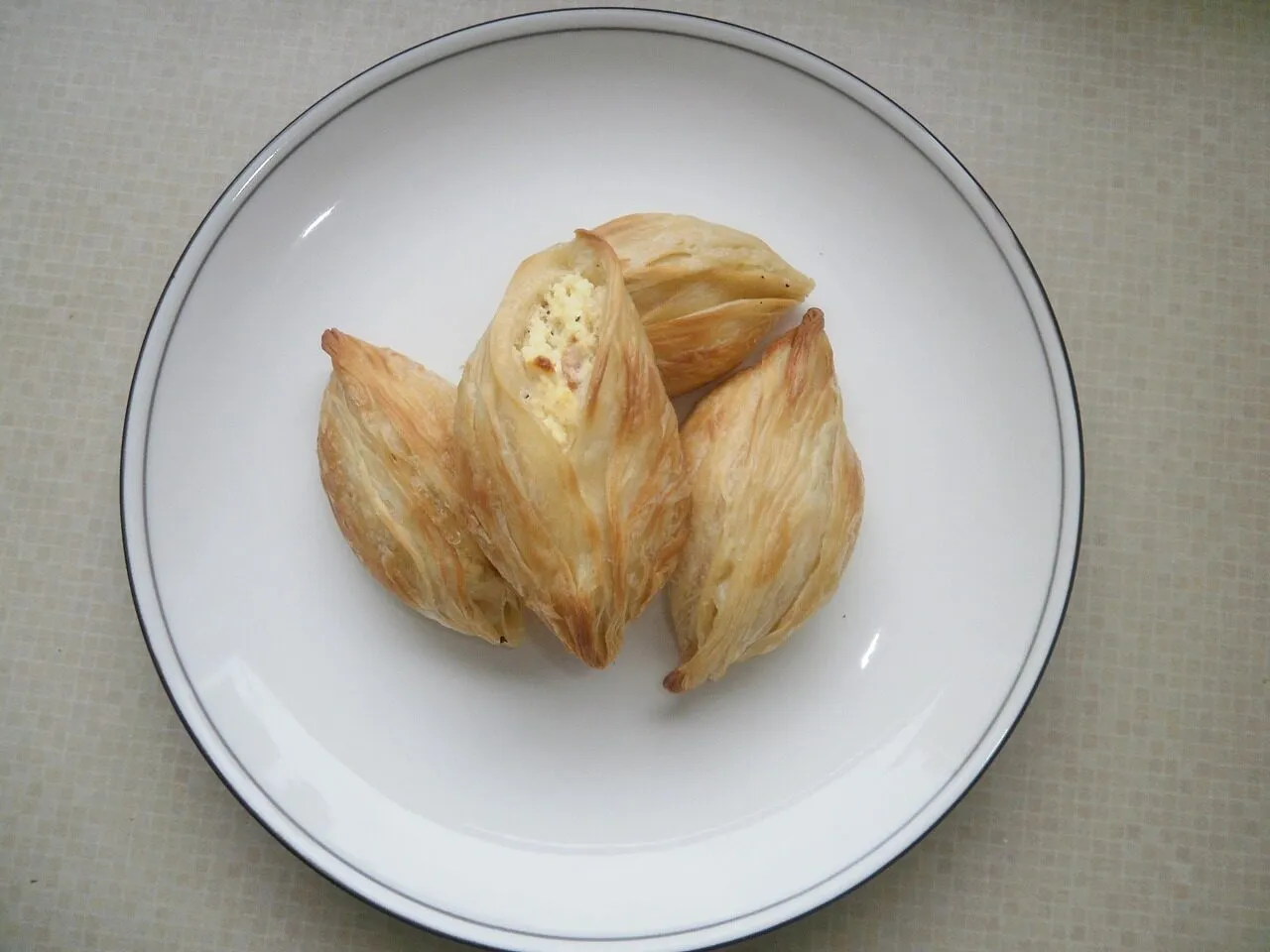
Pastizzi are Malta’s national snack and the first thing to eat. They are small, flaky, diamond shaped pastries made from a filo like dough, folded around a filling of ricotta or of mushy peas, and baked until the layers shatter. They cost well under a euro each, they come hot from the oven in the pastizzerie that dot every town, and the correct order is two or three with a coffee, eaten standing up. The ricotta is the classic; the pea version is the purist’s choice.
The most famous pastizzeria is Crystal Palace in Rabat, on the way to Mdina, where the queue is part of the experience. But almost every village has a good one, and the best are the ones with a full tray coming out of the oven as you arrive. Do not eat them cold, and do not stop at one.
Rabbit stew
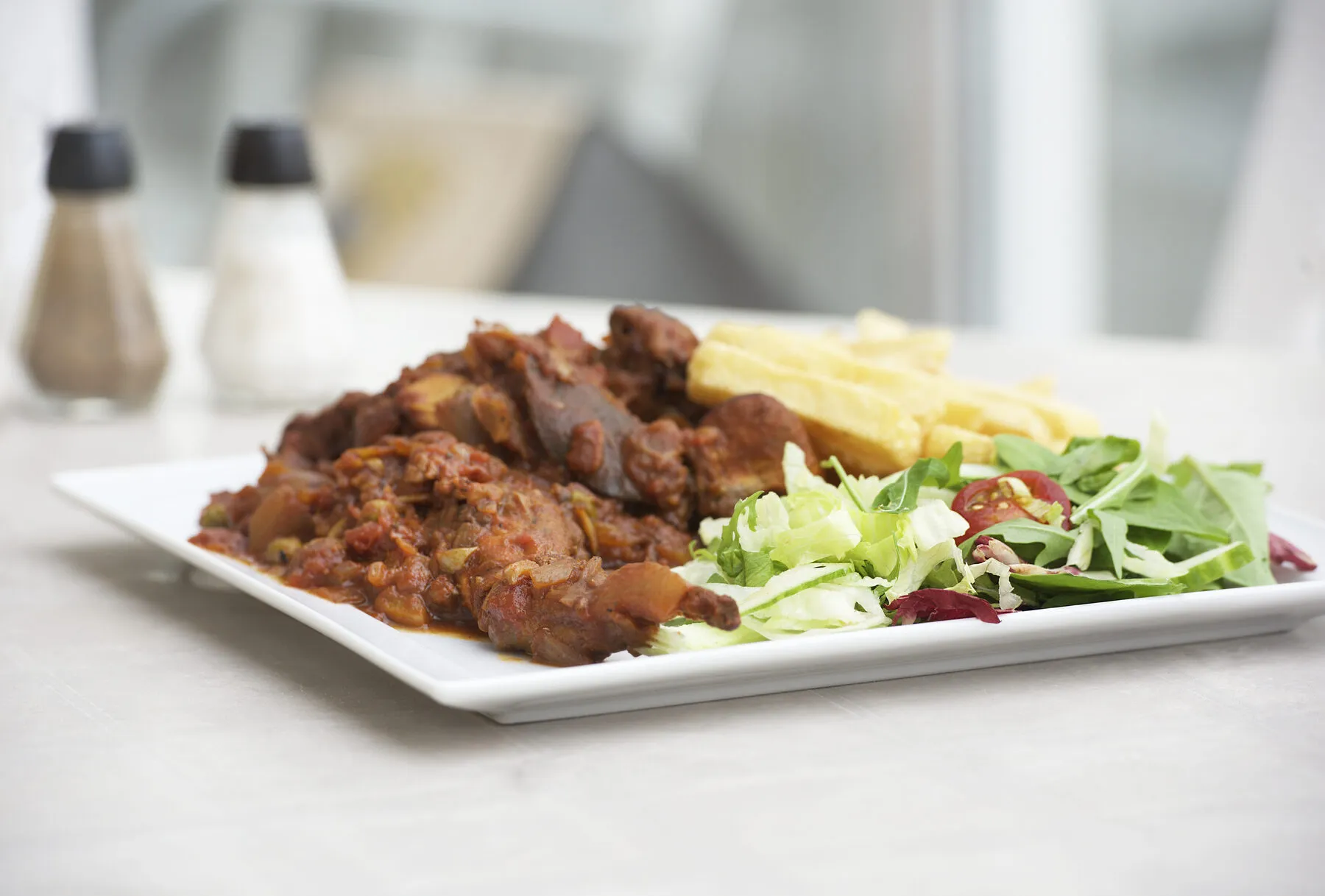
If pastizzi are the snack, rabbit is the meal. Stuffat tal-fenek, rabbit stewed slowly in red wine with garlic, onions and herbs, is the national dish, served with spaghetti, chips, or simply good bread to mop the sauce. It is a dish built for a long table and a fenkata, the Maltese tradition of friends sharing a rabbit, often on a Sunday or at a celebration. The meat is lean and full of flavour, and the slow cooking makes it forgiving and rich.
Rabbit shows up fried too, fenek moqli, pan fried with garlic, and both versions appear on the menus of the traditional restaurants, especially in the villages and on Gozo. It is the single best introduction to what Maltese cooking is, so if you eat one substantial dish on the island, make it this one.
The Maltese table
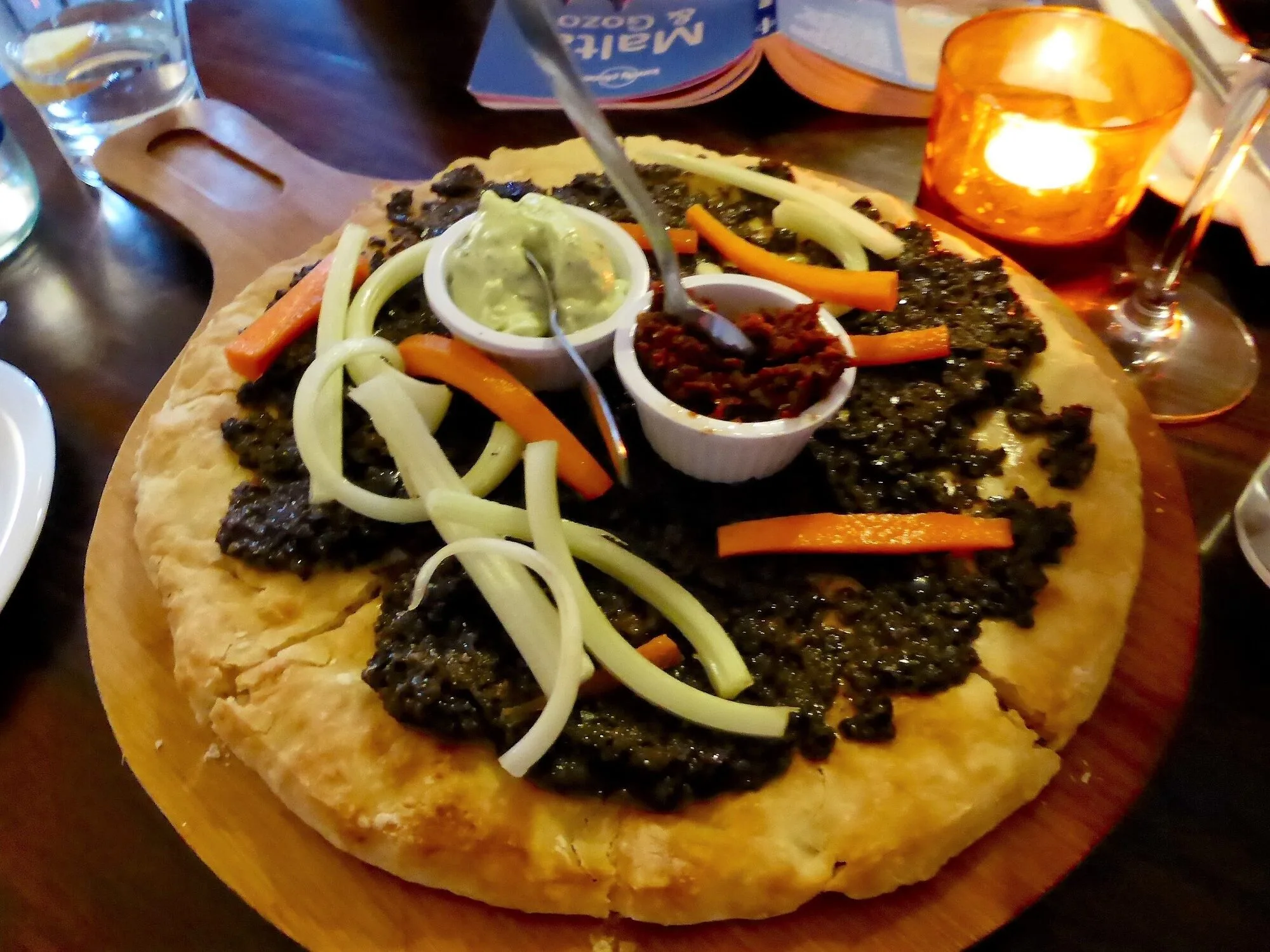
Around the rabbit sits a table of dishes worth trying. Bragioli, beef olives, are thin slices of beef rolled around a filling of minced meat, egg and herbs and braised in wine, a Sunday lunch staple. Ftira is the Maltese flatbread ring, split and stuffed with tuna, tomato, capers and olive oil, and hobz biz-zejt is the crusty bread rubbed with ripe tomato and drenched in olive oil, the beach lunch of the islands. There is timpana, a baked macaroni pie under a pastry crust, and aljotta, a garlicky fish soup, and on the side, gbejna, the small round cheeselets eaten fresh with pepper or dried and grated, and bigilla, a broad bean dip with a kick.
The unifying thread is bread and olive oil. The Maltese loaf is dense and sour, baked in village ovens, and it turns up under everything from the ftira to the fenkata. Order it wherever you eat, dip it in the rabbit sauce, and you have understood half the cuisine.
Fish and Marsaxlokk
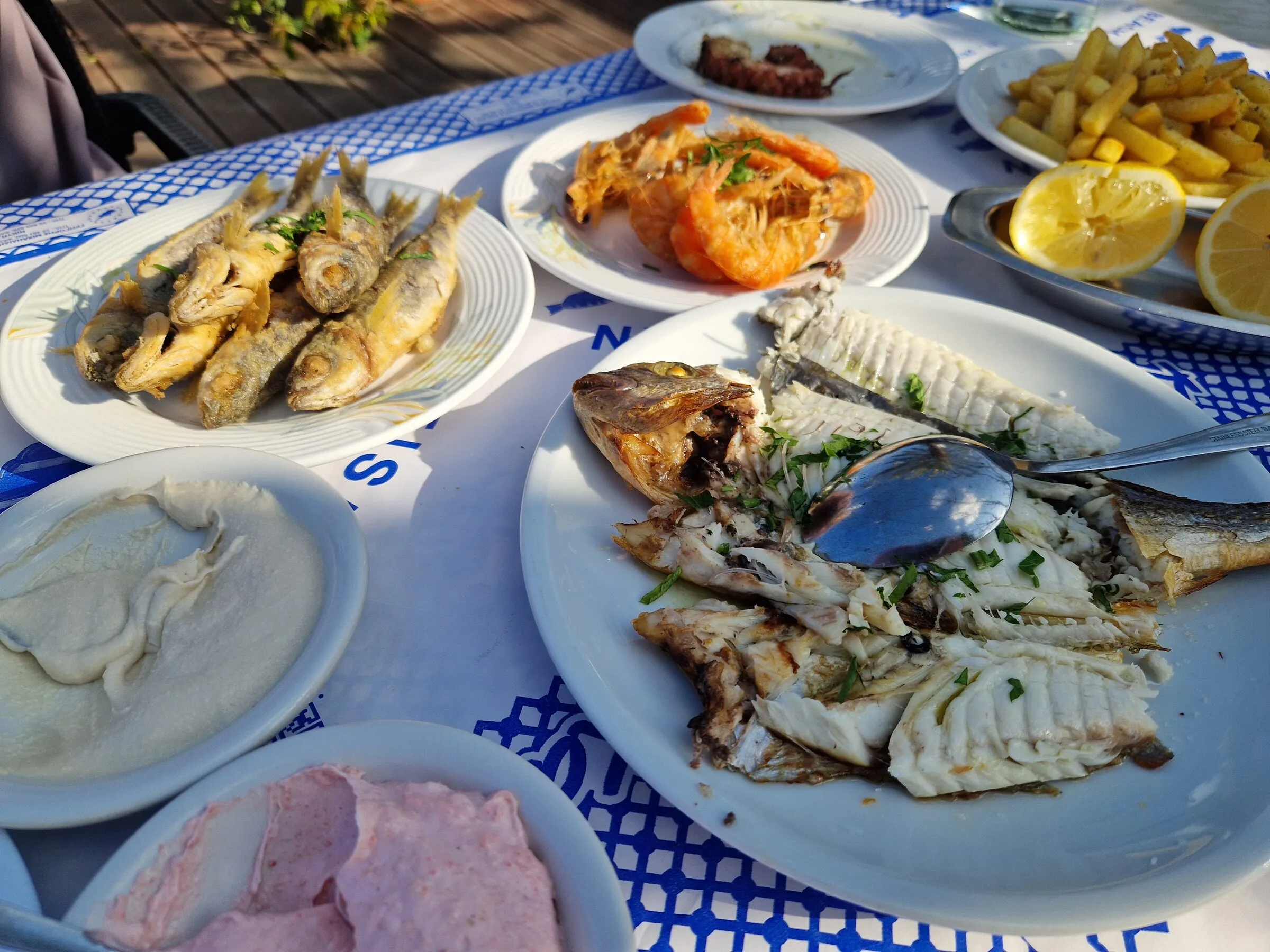
The sea provides the other half. Lampuki, the dolphinfish, is the fish of autumn, appearing in pies and fried, while the year round catch runs to sea bream, sea bass, swordfish, octopus and squid, grilled simply with lemon and olive oil. The place to eat it is Marsaxlokk, the fishing village on the south coast with the painted luzzu boats moored in rows and restaurants along the harbour.
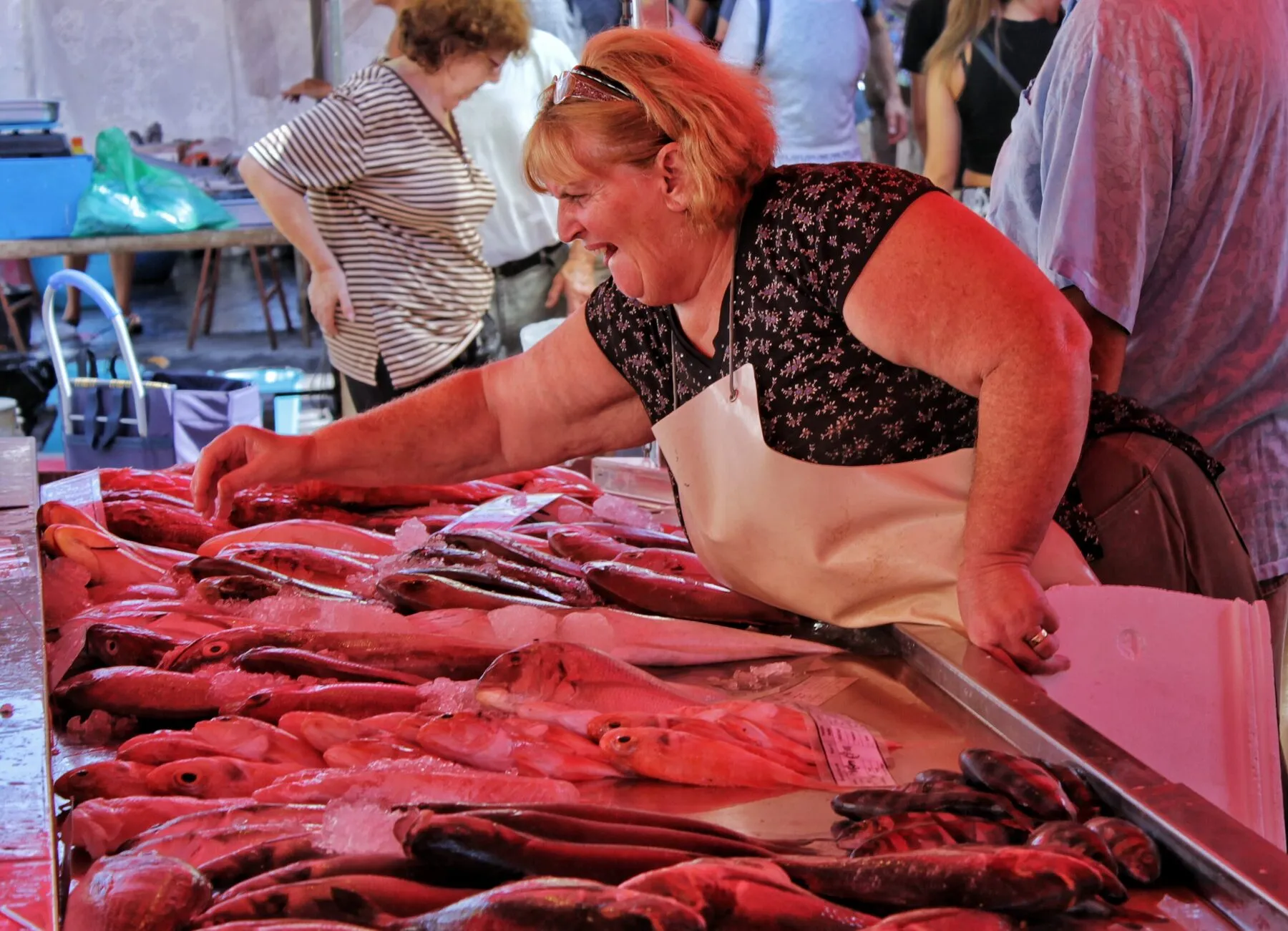
Marsaxlokk’s Sunday fish market is the island’s best food morning, when the waterfront fills with stalls of fresh fish, honey, jams and vegetables, and the whole village turns out. Come early, eat lunch on the harbour afterwards, and pair the trip with the Blue Grotto and the temples just up the coast. It is the most Maltese food day you can have. For a tighter focus, the fishing villages at Marsaskala and the tiny coves around the island do the same thing on a smaller scale.
Sweets and drinks
Maltese sweets lean on dates, almonds and honey. Imqaret are diamond shaped pastries filled with date paste and fried, sold at festas and markets; qaghaq tal-ghasel are the aniseed ring biscuits; helwa tat-tork is a sesame and nut nougat; and the pastizzi have a sweet cousin in the ricotta filled kannoli. Try imqaret hot at a festa, when a paper cone of them is the best euro you will spend.
The drinks are as local. Kinnie is the island’s own bitter orange soft drink, an acquired taste that most visitors end up craving, and Cisk is the cold, light lager that goes with everything in the heat. Malta also makes its own wine, with Meridiana and Marsovin the best known producers; the islands’ whites and the fuller reds are worth a glass with the rabbit depending on the region, and a vineyard tasting is an easy afternoon. Wash down the pastizzi with a coffee or a Kinnie, and the fenkata with a glass of the local red.
Where to eat
For the classics, eat where the locals do. In Valletta, Rubino and the small family tables around the city do traditional dishes in a historic setting. In Rabat, the pastizzerie and trattorias serve the surrounding villages, and Mdina’s De Mondion, in the Xara Palace, holds a Michelin star for a special occasion. On Gozo, Ta’ Rikardu in the Cittadella is the best known traditional table, serving the cheeselets, the ftira and the rabbit in the heart of the old city. On the south coast, the Marsaxlokk waterfront and Tartarun do the fish, and Diar il-Bniet at Dingli does farm to table in the countryside. In Valletta, ION Harbour is the other Michelin starred table.
The honest advice is not to overplan it. The best meals in Malta are often the unplanned ones, in a village pastizzeria, at a festa stall, or at a harbour table where the fish came off the boat that morning. Book the starred restaurants, but leave room to eat where the menu is in Maltese.
Practical information
| Must try | Pastizzi, rabbit stew (stuffat tal-fenek), hobz biz-zejt, ftira, bragioli, lampuki in autumn, imqaret, and the gbejna cheeselets. |
|---|---|
| Costs | Pastizzi under 1 EUR each, a casual lunch 8 to 15 EUR, a proper dinner 25 to 40 EUR a head. Michelin tables are a step up. |
| Best food days | The Marsaxlokk Sunday fish market, and any summer weekend village festa, where the stalls and the imqaret are part of the fun. |
| Drinks | Kinnie, the local bitter orange soft drink, Cisk lager, and wines from Meridiana and Marsovin. |
| Dietary notes | Vegetarians eat well on the vegetable dishes, timpana, gbejna and the meze style starters; seafood is everywhere on the coast, and rabbit is the dish to know about if you would rather avoid it. |
Disclosure. This blog post contains affiliate links. If you book through them, Mediterranean Vibes may earn a small commission at no extra cost to you; it is how the site stays up.