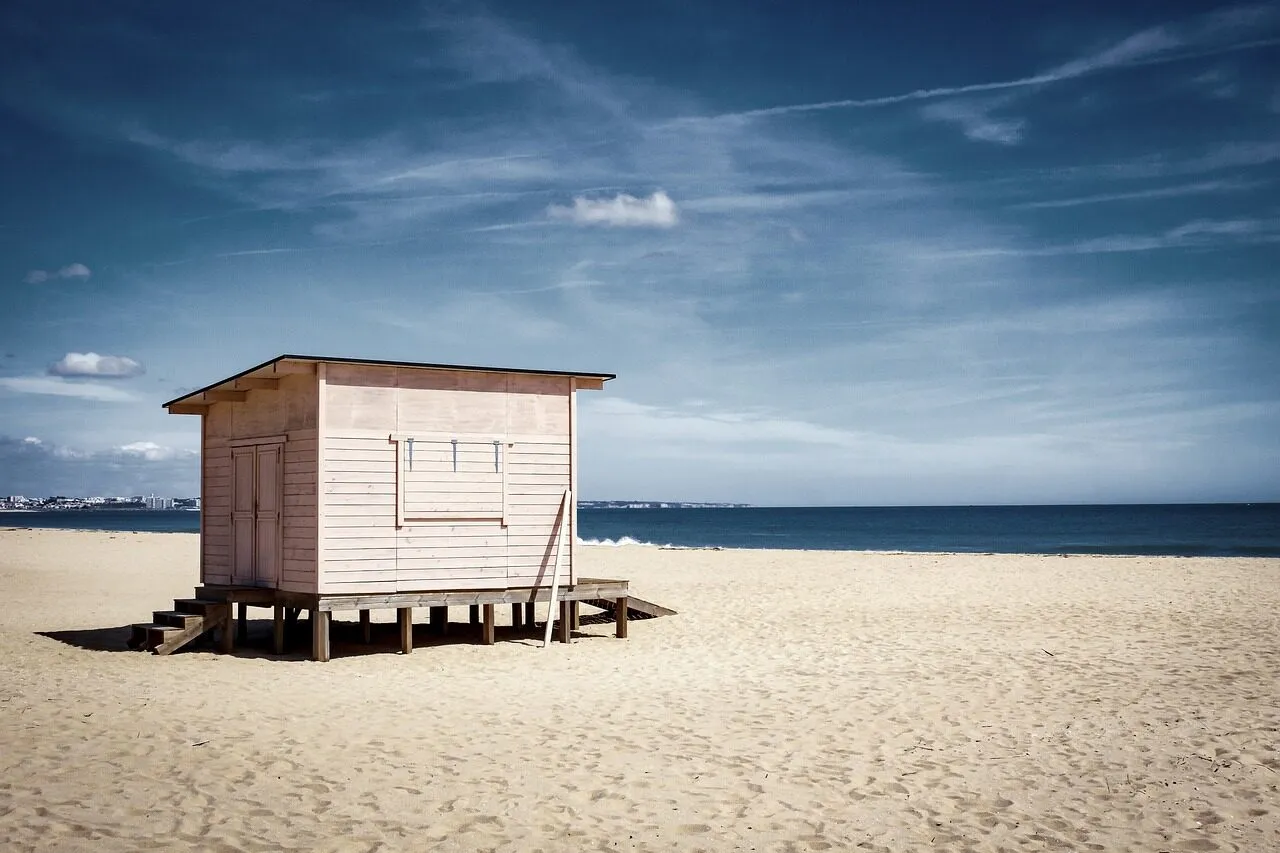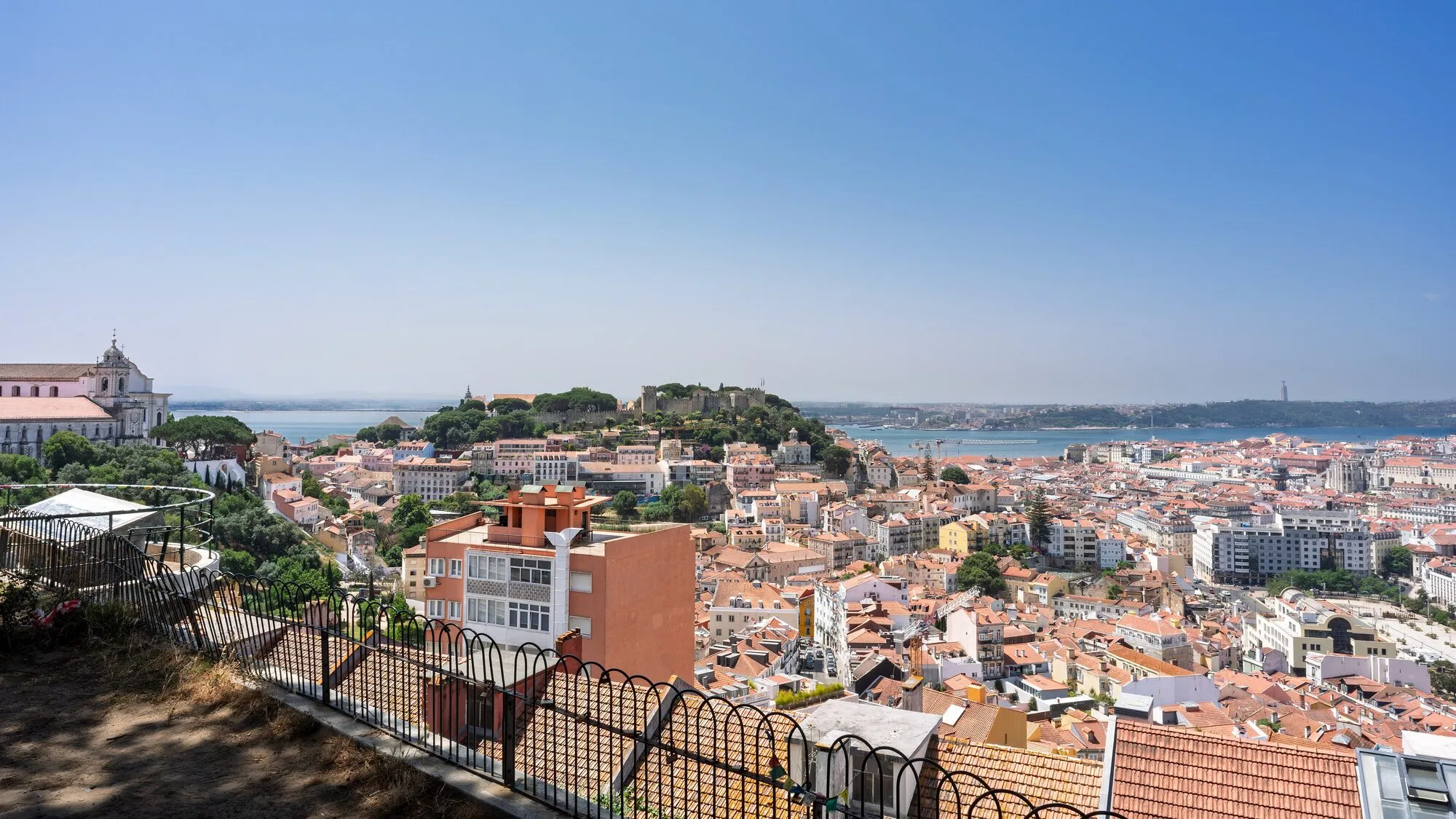
The Algarve is the south coast of Portugal and the country’s holiday heartland, a 155 km stretch of coastline that runs from the Atlantic tip at Cape St Vincent in the west to the Spanish border in the east. What makes it special is the range packed into that short run: golden limestone cliffs carved into arches and caves in the centre and west, and the flat barrier islands and calm lagoons of the Ria Formosa in the east. Between them sit more than 150 beaches, 85 of them Blue Flag, and the warmest, sunniest weather in Portugal.
It is also a region people either love or get slightly wrong, because the Algarve is not one place. Lagos, Carvoeiro, Albufeira, Faro and Tavira are very different towns, and the base you pick decides the trip as much as the beaches do. This guide covers where to stay, the best beaches and caves, the Seven Hanging Valleys walk, and the quieter east, with the busiest sights booked ahead. It slots into the wider country through the Portugal itinerary, and the Portugal country guide has the background.
Plan and book
3 partners- Flights
Fly into Faro (FAO), the Algarve’s own airport, from across Europe. Compare routes.
Search flights - Trains
Reach the Algarve by train from Lisbon to Faro, then on along the coast to Lagos.
Compare trains - Where to sleep
Rooms from Lagos and Carvoeiro to Tavira and Faro, sorted by town, price and review score.
Find a room
Where to base
The Algarve divides into four honest bases, and most trips work best with one or two. Lagos, in the west, is the best all rounder and the first choice for most visitors: a walkable old town, the Ponta da Piedade cliffs on its doorstep, the prettiest beaches in the region and the liveliest restaurant and bar scene outside the resorts. The central coast around Carvoeiro, Armacao de Pera and Lagoa is the base for the famous sights, Praia da Marinha and the Benagil cave, and suits anyone whose plan is cliff walks and boat trips. Albufeira and Portimao, further along, are the big resort towns, with the most hotels and nightlife and the long beaches at Praia da Falesia and Praia da Rocha.
The east is the quiet alternative. Faro is the transport hub and the gateway, with the airport and the Ria Formosa lagoon, and the towns of Olhao and Tavira are slower, more Portuguese, and better value, with the calm, warm waters of the lagoon beaches and the islands offshore. For a family or a couple who want space and a local feel rather than clubs and crowds, the east is the pick. Whatever you choose, fewer bases and longer stays beat moving every night, because the coastal roads slow to a crawl in summer.
The beaches
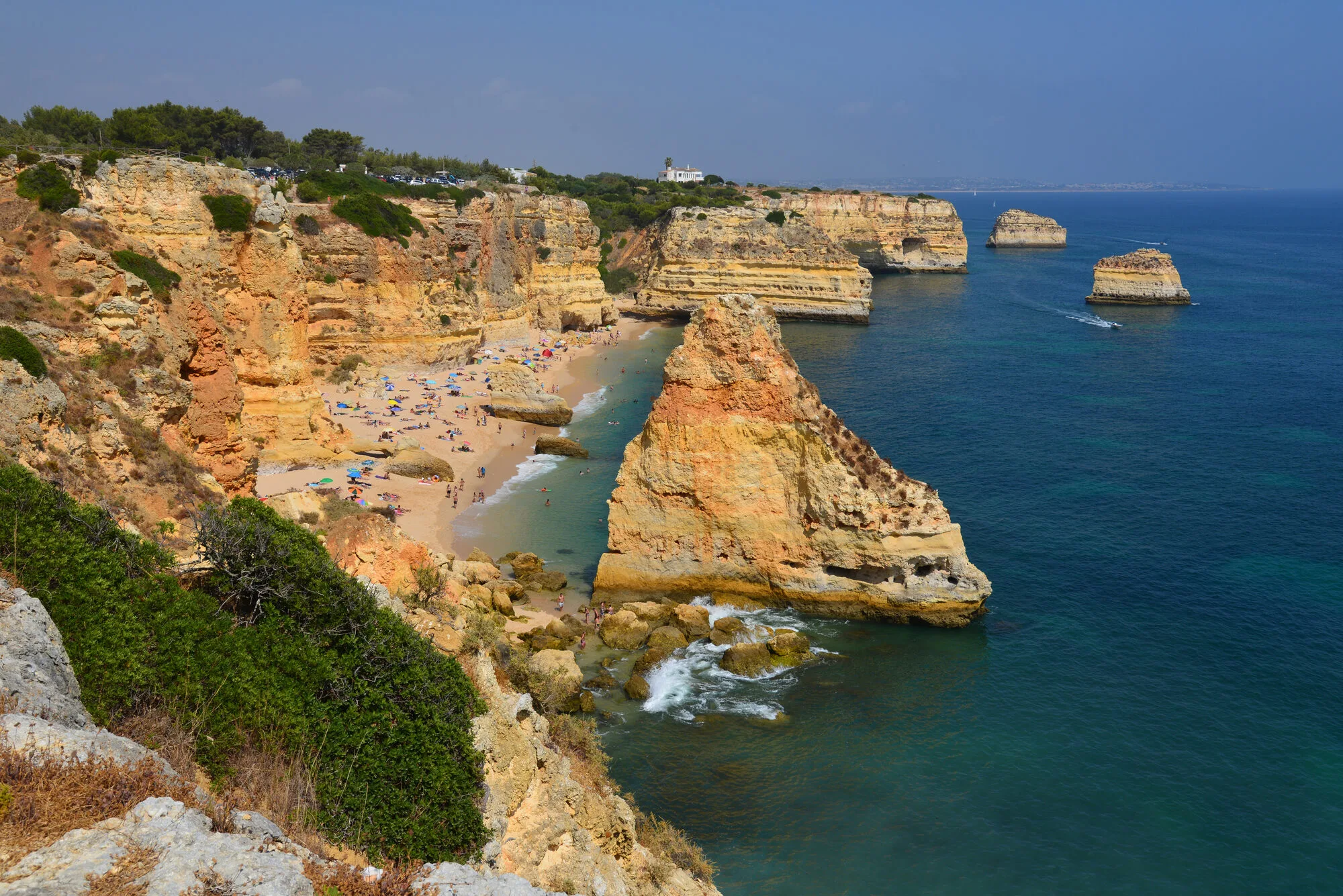
The Algarve’s beaches are its reason for being, and they come in two very different kinds. The west and centre are the dramatic ones: golden limestone cliffs above sheltered coves, with sea arches, stacks and caves, best from Praia da Marinha round to Lagos and Sagres. Praia da Marinha, between Carvoeiro and Armacao de Pera, is the most photographed, with its double sea arch and clear water for snorkelling. West of it, Praia do Camilo and Praia Dona Ana near Lagos are the classic cliff coves, and there the sand and the rock combine into small, sculpted bays.
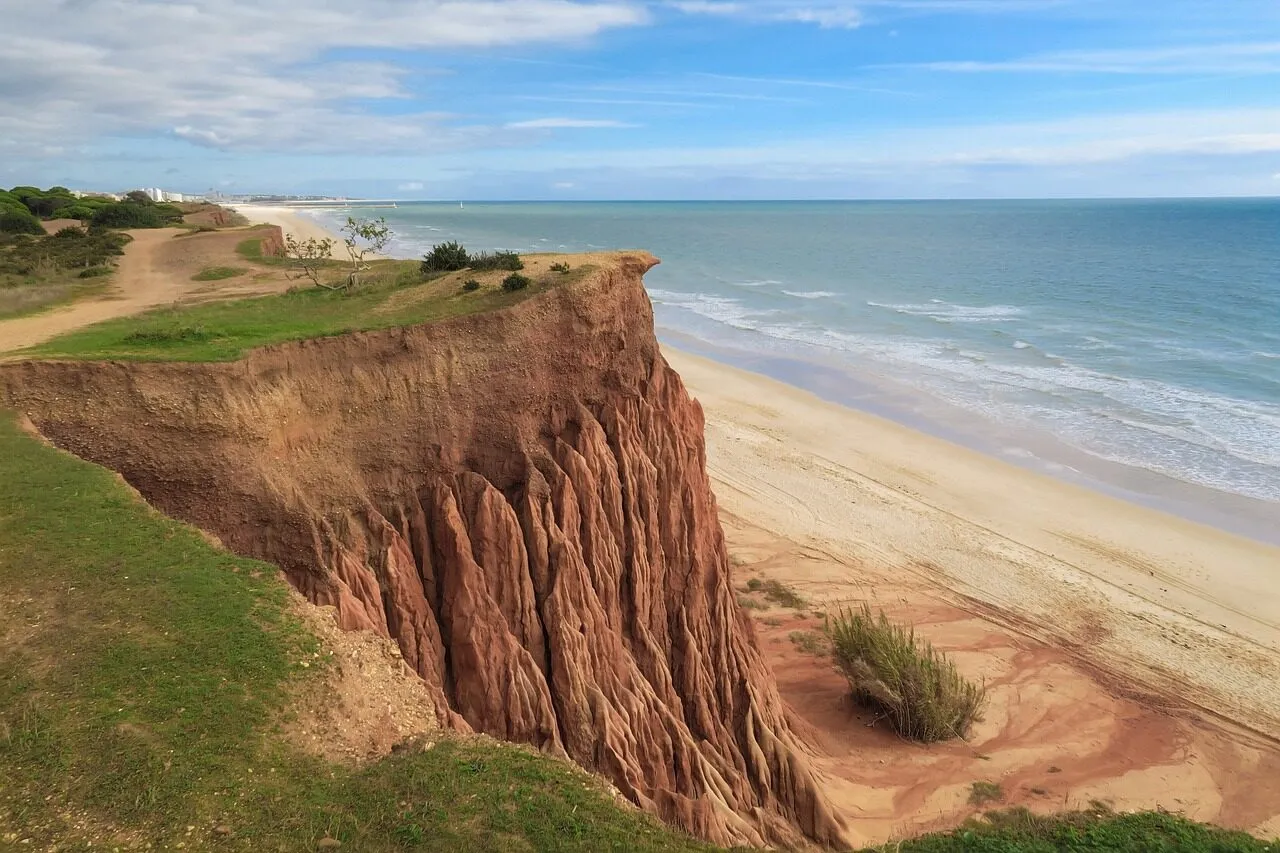
The east is the long, sandy Algarve: broad beaches backed by red and ochre cliffs rather than golden rock, and, past Faro, the flat barrier islands of the Ria Formosa, reached by boat. Praia da Falesia near Albufeira is the famous long stretch of golden sand, and Praia da Rocha at Portimao is the biggest resort beach. Meia Praia at Lagos is the family pick, four kilometres of sand with shallow water. The thing to know about the whole coast is that the Atlantic is colder and livelier than the Mediterranean, so the water is bracing even in summer, and the lifeguarded beaches and sheltered coves are the ones to swim from.
Benagil and the caves
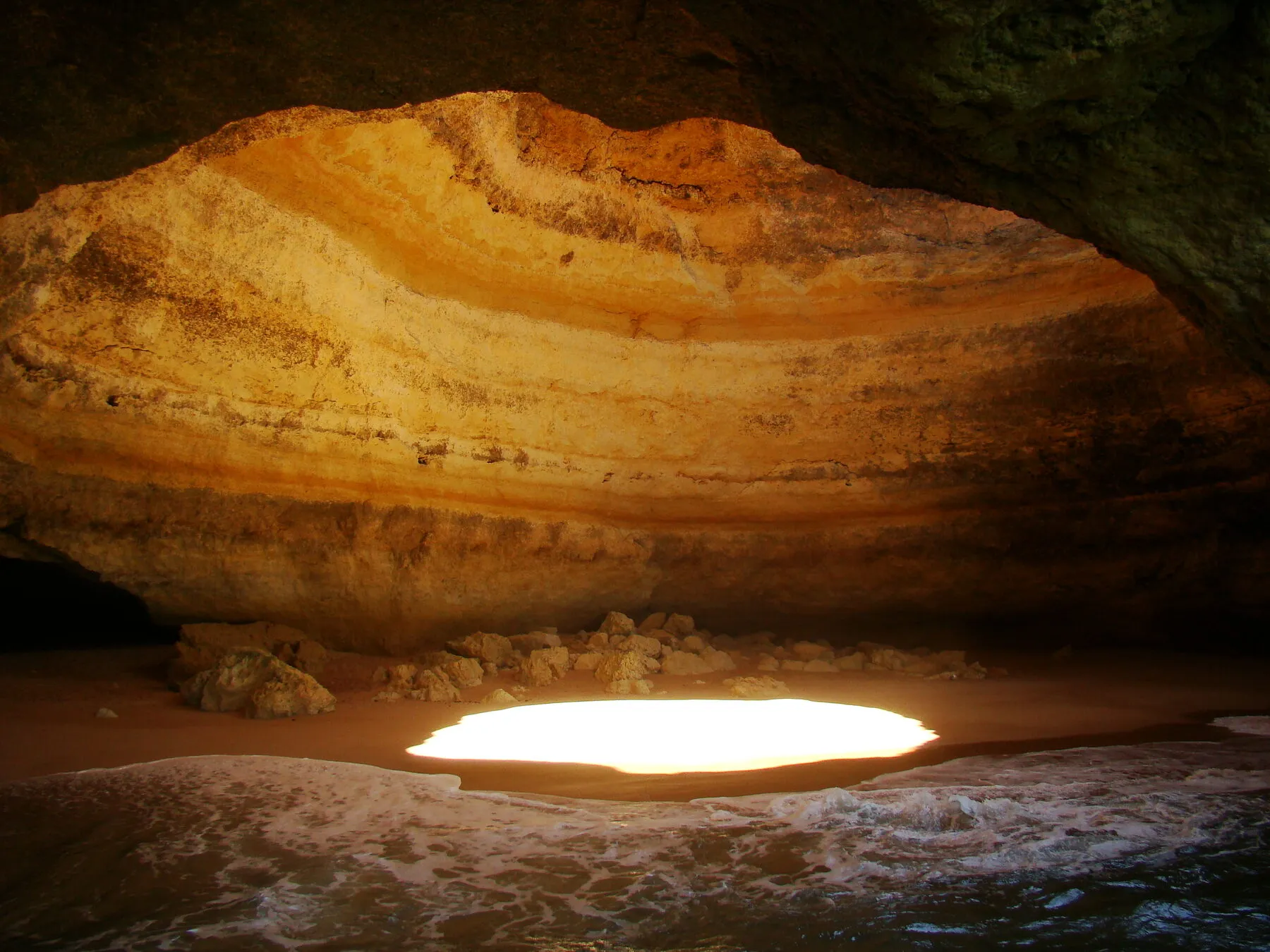
The Benagil cave, the Algar de Benagil, is the single most famous sight on the Algarve coast, a domed limestone sea cave with a circular skylight that throws a beam of light onto the sand inside. It is a genuine wonder and it is also a victim of its own fame, which is why access is now strictly regulated. You cannot swim into the cave, because the boat traffic makes it dangerous and it is banned, and you cannot land on the beach inside it under the 2024 rules. The way in is by kayak, paddleboard, or licensed boat tour from Benagil itself or the neighbouring beaches of Carvalho and Marinha, and the licensed operators are the only ones allowed to run the trips.
The cliff-top alternative is free and, for many people, better. The Percurso dos Sete Vales Suspensos, the Seven Hanging Valleys trail, runs about 5.7 km along the clifftops from Praia da Marinha to Vale Centeanes, past Benagil cave, a series of hidden coves and the Algar Seco rock formations. It is one of the finest coastal walks in Portugal, and the cave’s skylight is visible from the path above it. Wear proper shoes, because the ground is rough and the path is close to the edge in places, and start early to walk it before the heat sets in. For the boat and kayak tours, see the licensed operators on GetYourGuide.
Lagos and the west
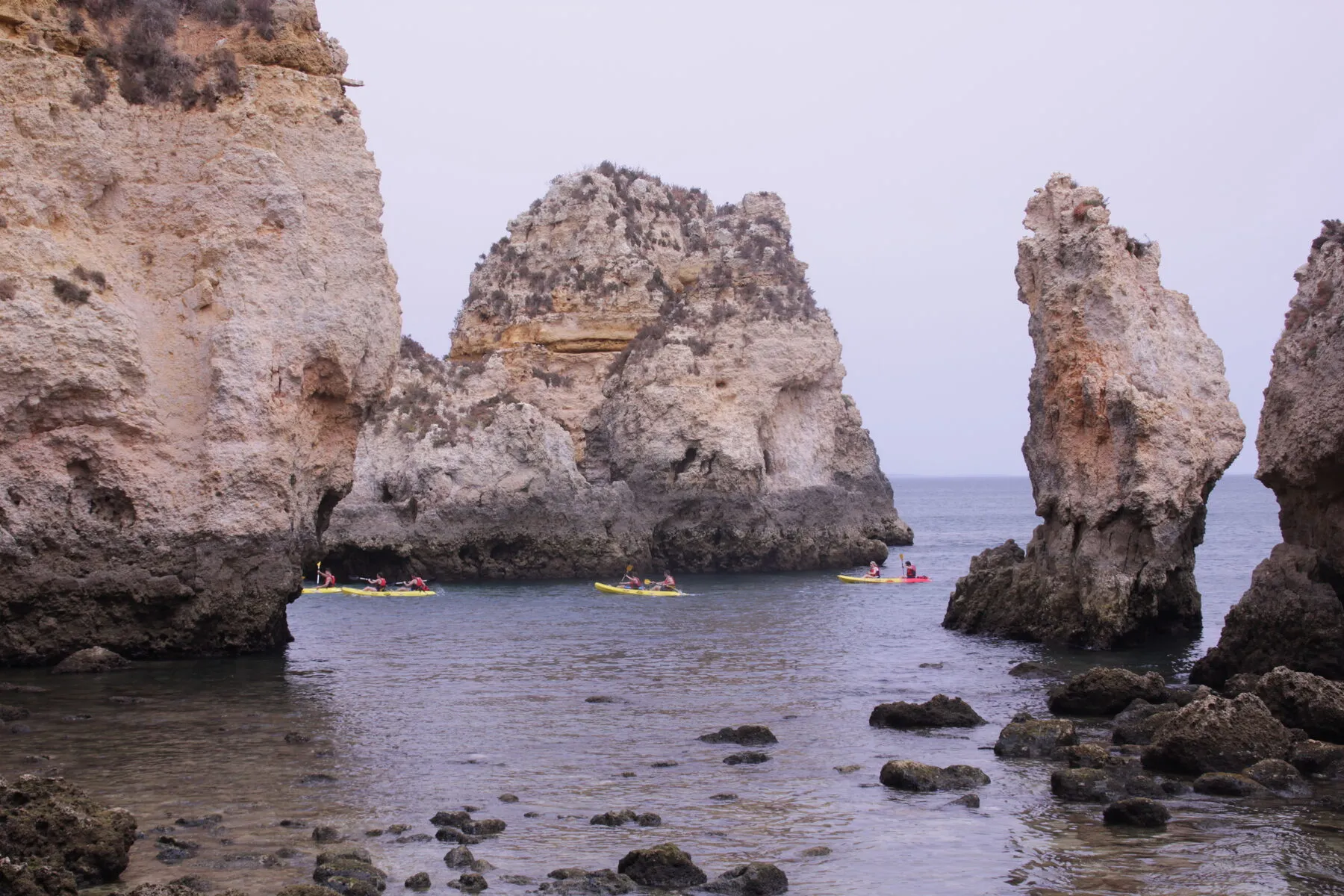
Lagos is the west’s hub and the most likeable town in the Algarve, a walled old town of tiled streets above a working harbour, with the Ponta da Piedade headland just outside it. Ponta da Piedade is the region’s best natural sight, a cluster of golden rock pillars, arches and grottoes that you see by kayak, by boat or from the clifftop steps and viewpoints. The beaches around Lagos, Praia Dona Ana, Praia do Camilo and the long Meia Praia, are among the best on the coast, and the town has the restaurants and bars to fill the evenings.
West of Lagos the coast turns wilder, running through the surf beaches of the west coast and out to Sagres and the Cape St Vincent, the south-western tip of Europe, where the cliffs drop straight into the Atlantic and the sunset has a real end-of-the-world feeling. This is the surfing end of the Algarve, with the reliable swell and the beach towns that suit a slower, sportier trip. It is also much quieter than the centre, and worth a day even from a Lagos base.
The central coast and the east
The central coast, from Lagoa and Carvoeiro to Albufeira and Portimao, is where the Algarve’s icons sit. Carvoeiro is a small cove town under the cliffs, Algar Seco is a dramatic rock formation a short walk away, and this is the base for Praia da Marinha and the Benagil cave. Albufeira is the biggest resort town, with the Fisherman’s Beach and the strip of nightlife, and Portimao has the long Praia da Rocha. It is the busiest, most built up part of the coast, and it suits anyone who wants the full resort experience.
The east is the other Algarve, and for many people the better one. Faro, the regional capital, is a low, pleasant city with the marina, the old town and the Ria Formosa natural park, a maze of channels and islands that shelters the calmest, warmest beaches on the coast. The barrier islands, including the uninhabited Ilha Deserta, are reached by boat from Faro, and Olhao and Tavira further east are slow fishing towns with tiled streets and good seafood. This is the Algarve for couples, families and anyone who wants space, warm water and a Portuguese feel rather than a resort one.
Food
The Algarve eats from the sea. Cataplana, the copper-pan seafood stew of clams, fish and sausage, is the signature dish, and along the coast the grilled sardines, the arroz de marisco rice, the percebes and the line-caught fish are the things to order. The Ria Formosa supplies much of the shellfish, and the fishing towns of the east, Olhao, Tavira and Fuseta, are the best places to eat it, where the restaurants still cook for the town rather than the tourists. Inland, the hills add game, cured meats and the local medronho spirit.
The everyday food is cheap and good: a pastel de nata with coffee, a bifana or a grilled fish lunch for 8 to 12 EUR, and a dinner with wine for 20 to 35 EUR a head. The rule that holds across Portugal holds here: eat where the menu is in Portuguese and the fish is priced by the kilo, and you will eat better and pay less. The full picture of the country’s cooking is in the Portuguese food guide.
Getting there
Faro airport (FAO) is the gateway to the Algarve, with direct flights from across Europe and a short drive or bus to the coast. From Lisbon, the train to Faro takes about 2h 50m to 4h, with a change at Tunes for Lagos, which puts the region on the rail network without a car. See the Lisbon guide for the city end of the trip. Within the Algarve, the coastal train line links Faro, Albufeira and Lagos, and buses reach the towns and beaches, but the roads slow badly in summer, so a rented car gives you much more freedom for the coves and the west coast.
The main road is the N125, with the A22 motorway behind it, and neither is fast in peak season. One useful arrangement is to arrive at Faro and pick up a car, or to base in Lagos or Tavira and use the train and buses for a car-free trip, hiring a car only for a day on the west coast or the caves. Parking at the famous beaches, especially Marinha and Benagil, fills early in summer, so arrive before ten in the morning.
When to go
The best months are May, June, September and October, when the days are warm, the sea is at its most bearable and the crowds are thinner than the peak. The Algarve is the warmest part of Portugal and stays pleasant into October, which makes it the country’s best late-season beach option. July and August are the hottest and busiest months, when the beaches, the roads and the boat trips are at their fullest and prices peak, so book everything ahead if you come then.
Winter is the quiet season. The coast is mild, around 15 to 17 C, which makes it good for walking and sightseeing, but the swimming is cold and many resort businesses close. Spring brings the wildflowers and the green hills, and early autumn keeps the warm sea after the summer crowds have gone. Whatever the month, remember that this is the Atlantic: the water is colder and the waves stronger than the Mediterranean, so swim at lifeguarded beaches and respect the currents, especially on the exposed west coast. If you want to stay for a season rather than a week, remote work in Portugal covers the visa and the practical side of a longer base.
Practical information
| Where to base | Lagos for the best all round base and the western cliffs; Carvoeiro or Armacao de Pera for Benagil and Praia da Marinha; Albufeira or Portimao for resorts and long beaches; Tavira and the east for a quieter, warmer, more local coast. |
|---|---|
| Best beaches | Praia da Marinha, Praia da Falesia and Praia da Rocha in the centre; Ponta da Piedade, Praia Dona Ana and Meia Praia at Lagos; the Ria Formosa islands in the east. The west coast is for surf. |
| Benagil cave | Reached only by kayak, SUP or licensed boat tour; swimming in is banned. Tours from about 15 to 45 EUR. The Seven Hanging Valleys clifftop trail above it is free and superb. |
| Getting there | Fly into Faro (FAO), or take the train from Lisbon (about 2h 50m to 4h). A car gives the most freedom; the coastal train and buses cover the towns. Arrive at the famous beaches before 10:00 in summer. |
| When to go | May, June, September and October are best. July and August are the hot, busy peak. Winter is mild and quiet but the sea is cold and some places close. |
Disclosure. This blog post contains affiliate links. If you book through them, Mediterranean Vibes may earn a small commission at no extra cost to you; it is how the site stays up.