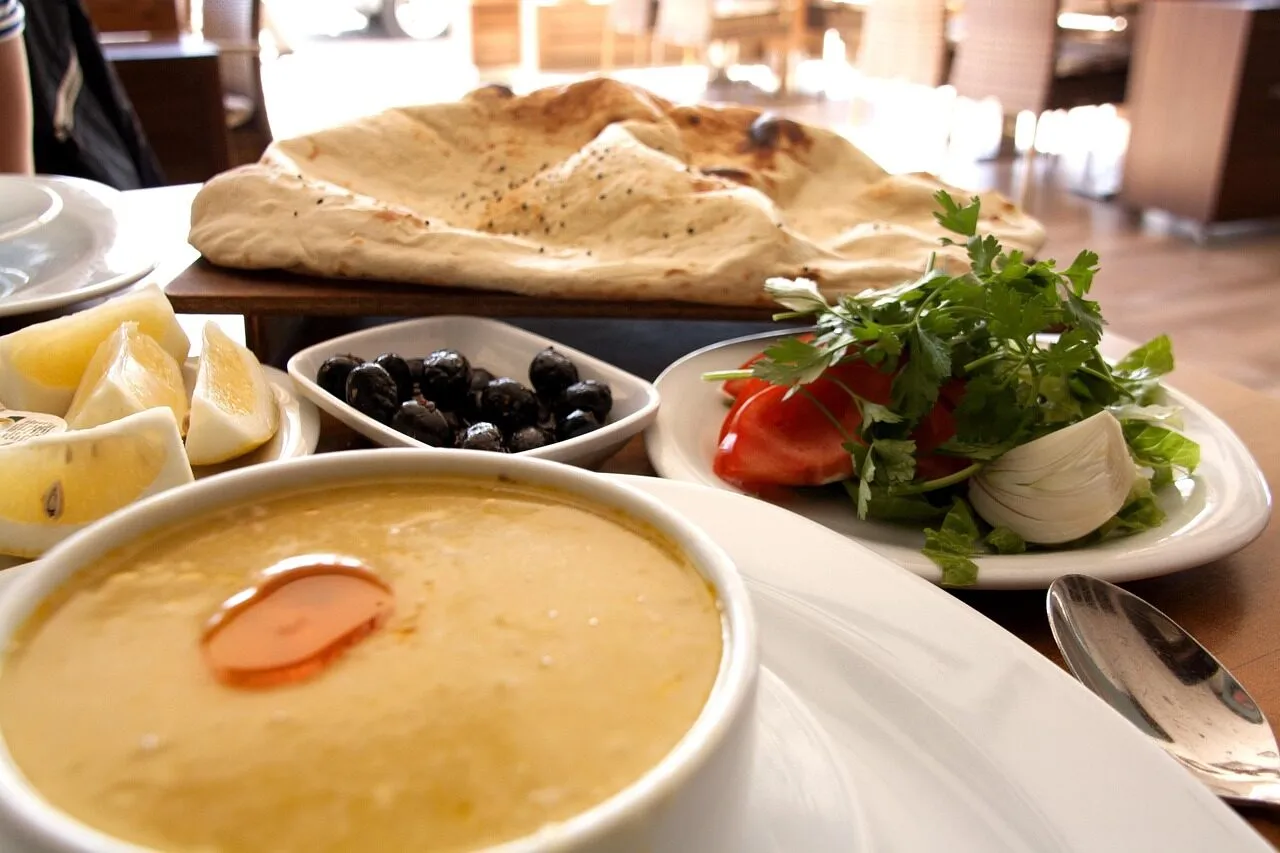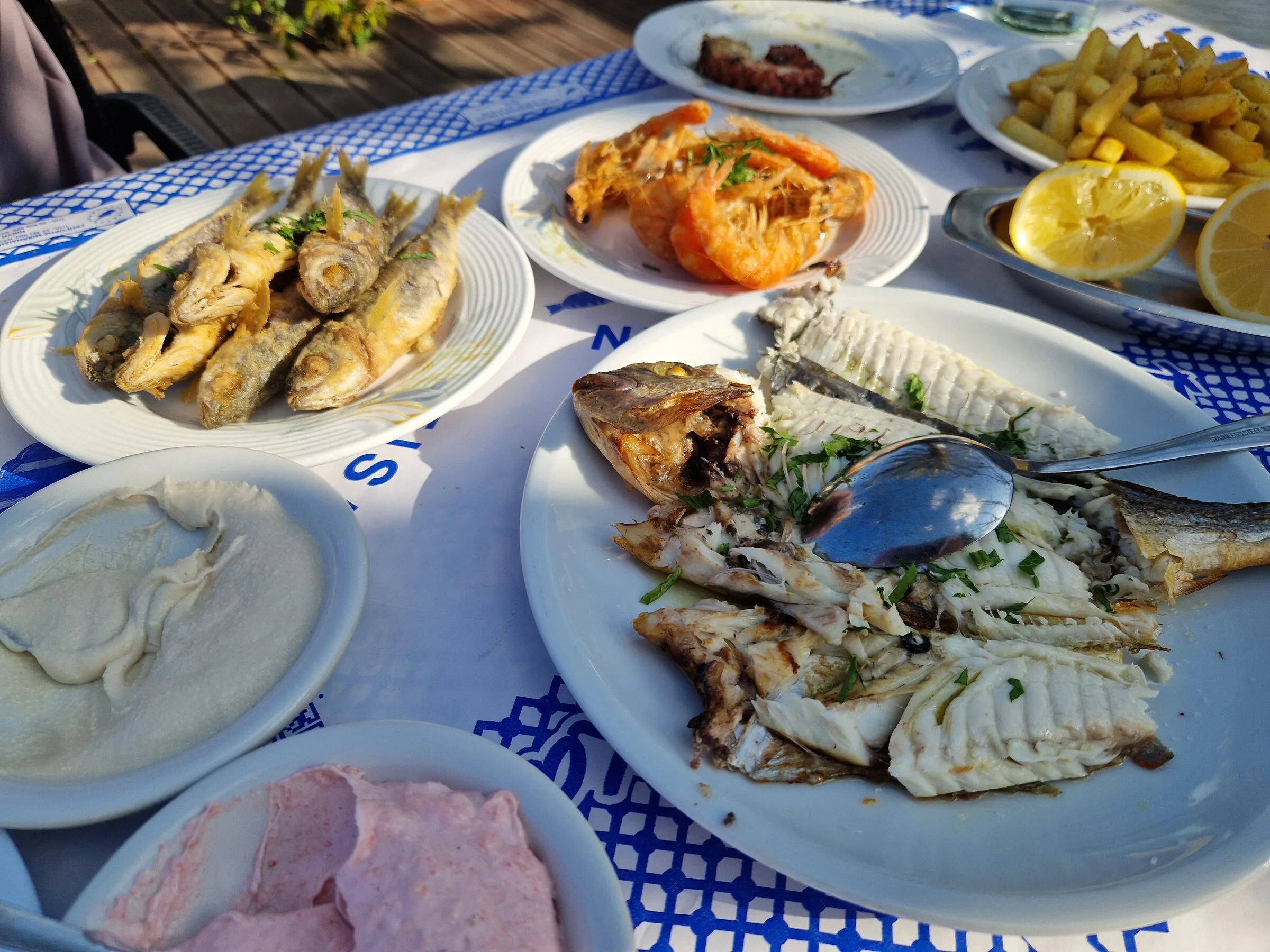
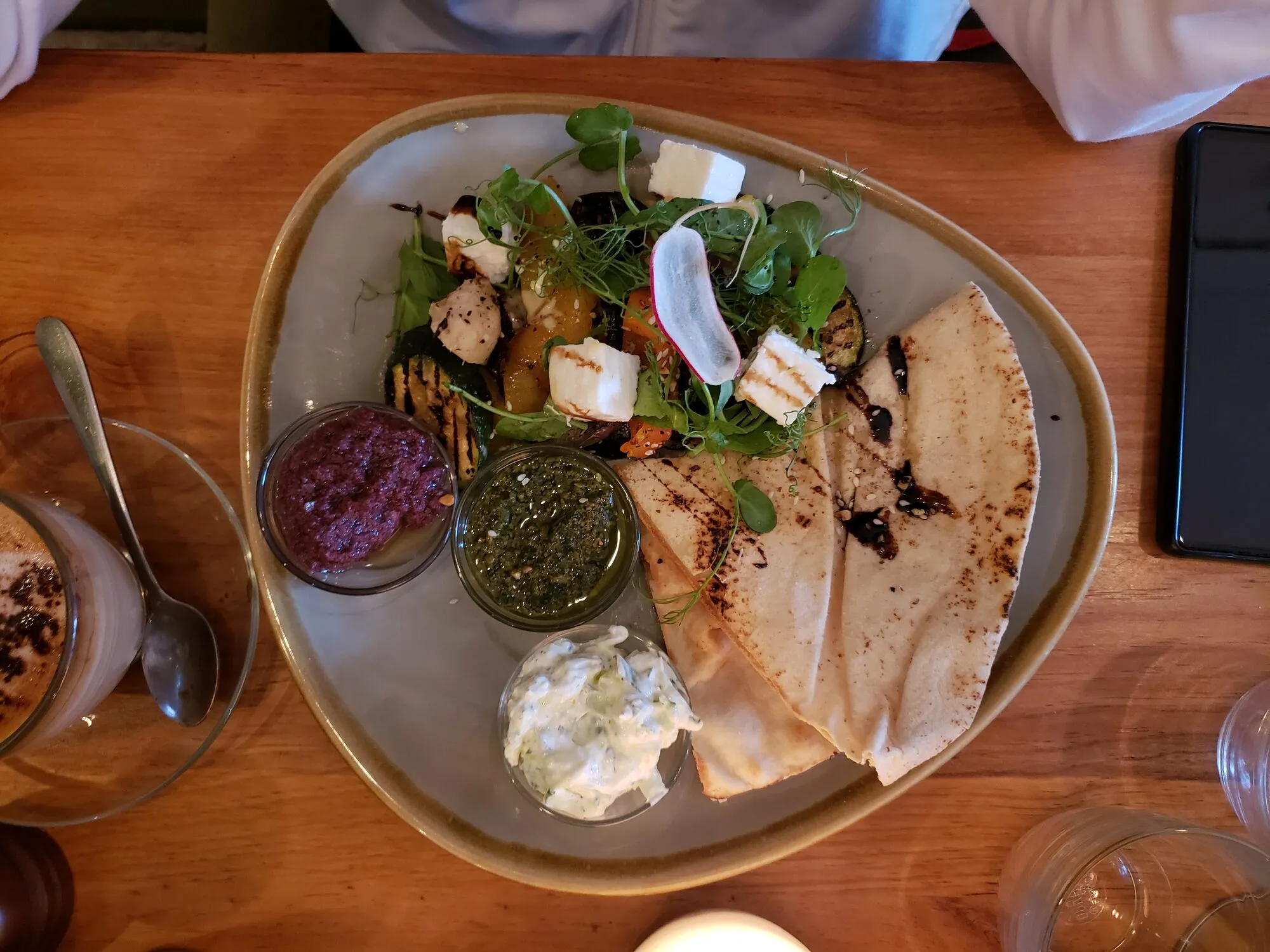
The Mediterranean diet is the traditional way of eating of the people who live around the Mediterranean Sea, and it is a pattern rather than a menu. It is built on vegetables, fruit, whole grains, beans, nuts, herbs, and olive oil, with fish and seafood a few times a week, moderate amounts of yogurt and cheese, and red meat and sweets only now and then. Wine is optional and usually taken with a meal. That is the whole idea, and everything else is detail.
It is also one of the most studied ways of eating in the world, with both long-running population studies and randomized trials behind it, which is why doctors keep returning to it. The name is a translation of the Greek diaita, which means way of life, so the diet has always been about more than the shopping list: eating with other people, walking, cooking, and taking your time at the table are part of the definition. UNESCO recognized the Mediterranean diet as intangible cultural heritage in 2010, extended in 2013, and its citation is explicit that the social side matters as much as the food.
This guide covers what the diet actually is, the food pyramid and the weekly servings, what the research does and does not show, and the misconceptions that make people give up on it. Health claims are linked to the study or health authority they come from, including the one influential trial that was retracted and republished, because the honest version is more useful than the tidy one. If you want to taste it rather than read about it, the food sections in the country guides are linked further down.
Plan and book
3 food experiences- Food tours
Walk a market or an old town with a local guide and taste the diet where it comes from.
Find a tour - Cooking classes
Learn to make fresh pasta, mezze, or a whole grilled fish from a local cook.
Book a class - Wine and olive oil
Tastings at vineyards and olive mills, usually an hour or so inland from the coast.
Taste the wines
What the Mediterranean diet actually is
It is not a single cuisine. The food of Greece is not the food of Spain or southern Italy, and a Cretan taverna does not cook like a Andalusian bar. What the researchers noticed, starting with Ancel Keys and the Seven Countries Study in the middle of the last century, is that very different kitchens around the same sea shared a structure: a lot of plants, olive oil as the main fat, fish when it was available, little meat, and meals that were social events rather than fuel stops.
UNESCO’s own description of the element names olive oil, cereals, fresh or dried fruit and vegetables, a moderate amount of fish, dairy and meat, condiments and spices, and wine or infusions, always within the beliefs of each community. That is a useful definition because it is broad. It allows for a Greek lentil soup, an Italian plate of pasta with beans, a Spanish fish stew, and a Turkish mezze table to all count as the same pattern.
The practical translation is a hierarchy. Some foods belong at every meal, some belong a few times a week, and some are occasional. You are not counting calories or banning bread, which is why nutritionists tend to like it: it is a set of proportions, not a set of prohibitions.
The pyramid
The picture most people have seen was drawn by Oldways, the food traditions nonprofit, working with the Harvard School of Public Health and the World Health Organization in 1993. It was created as a rival to the USDA pyramid of the time, and it was the first mainstream dietary guide to put lifestyle at the base: physical activity and shared meals sit under the food, not beside it. Over the years it has been redrawn, including a 2011 update published in Public Health Nutrition that reframed it as a lifestyle for today, but the shape has barely moved.
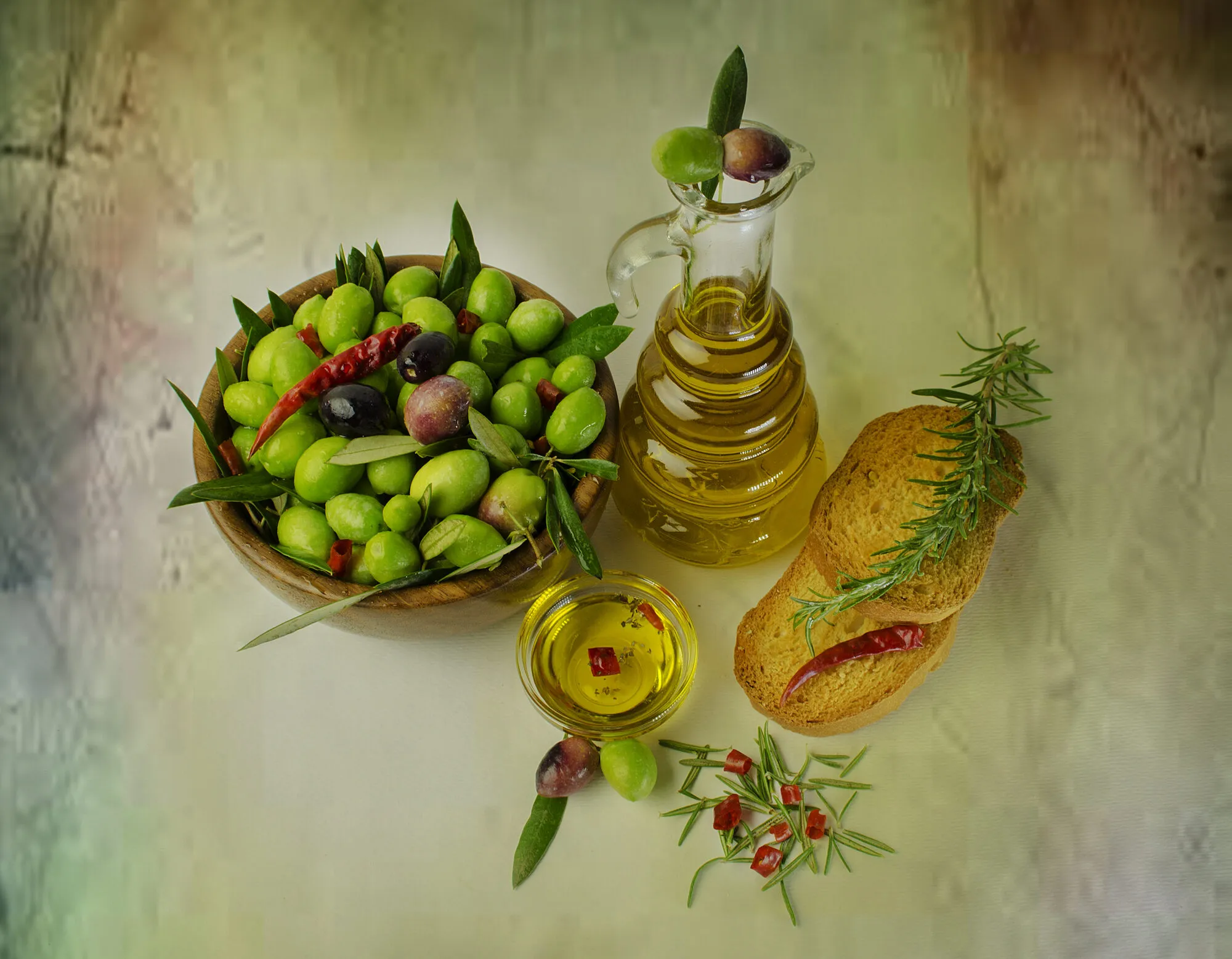
At the base are the foods you eat every day: vegetables, fruit, whole grains, beans and legumes, nuts, seeds, herbs, spices, and olive oil. Above them come fish and seafood, at least twice a week, then dairy, mostly yogurt and cheese, in moderate amounts, with eggs and poultry a few times a week. Near the top, and eaten rarely, are red meat and sweets. Water is the everyday drink, and wine is a small optional extra for people who already drink.
What to eat and how often
The servings below are the general guidance used by health authorities, including the Cleveland Clinic and Harvard Health. They are a starting shape, not a prescription, and portions should follow your own energy needs.
Every day: three or more servings of vegetables, three of fruit, and three to six of whole grains such as oats, barley, brown rice, or whole wheat bread and pasta. One to four tablespoons of extra virgin olive oil as the main fat, used for cooking, dressing, and dipping instead of butter. Dairy appears daily in moderate amounts, mostly yogurt and traditional cheese. Every week: at least three servings of beans and lentils, at least three of nuts, and two to three of fish or seafood, with at least one oily fish such as sardines, mackerel, or salmon. Eggs and poultry fit a few times a week. Red meat is a weekly exception at most, around one small serving, and sweets and sugary drinks are occasional.
On the plate, the simplest version is half vegetables, a quarter whole grains or a starchy vegetable, and a quarter fish, beans, or other protein, with olive oil and lemon rather than a heavy sauce. Alcohol is the part most people get wrong. Moderate drinking means up to one glass a day for women and two for men, with meals, and the American Heart Association is clear that people who do not already drink should not start for the health benefit.
What the research shows
The strongest evidence is for the heart. The trial most often cited is PREDIMED, which followed 7,447 people aged 55 to 80 in Spain who were at high cardiovascular risk but had no heart disease at the start. They were assigned to a Mediterranean diet with extra virgin olive oil, a Mediterranean diet with nuts, or a low-fat control diet. After a median of 4.8 years, the two Mediterranean groups had roughly 30 percent fewer major cardiovascular events, and the trial was published in the New England Journal of Medicine.
The parts worth knowing are the caveats. The first version of the trial, published in 2013, was retracted and republished in 2018 after protocol problems at some study sites, which the BMJ analyzed in detail. When the analysis was redone, the effect size held, but the study still tested a Mediterranean diet with added olive oil or nuts against a low-fat diet in older, high-risk adults. It does not prove that the diet prevents disease in everyone, and the control group was not eating a typical Western diet either.
Beyond that trial the picture is broader but softer. A 2021 review by Harvard researchers in the journal Advances in Nutrition found the diet linked to lower cardiovascular risk, better blood sugar control, lower mortality, and less age-related cognitive decline, and noted that it has a relatively low environmental footprint. A 2023 study of 110,799 people in the UK Biobank found that a full Mediterranean lifestyle, meaning the diet plus rest, exercise, and socializing, was linked to lower all-cause and cancer mortality, a 28 percent lower risk of cancer death. A study of more than 25,000 women followed for up to 25 years found that closer adherence was linked to up to 23 percent lower risk of dying from any cause.
Much of this body of work is observational, which means it shows an association rather than proof of cause. The randomized evidence is strongest for cardiovascular risk in people who already have risk factors. A separate trial, PREDIMED-Plus, found that a Mediterranean diet combined with calorie reduction, exercise, and professional support cut the risk of type 2 diabetes by 31 percent, but the benefit came from the whole package, not the diet alone. None of this is a treatment, and it does not replace medical care.
More than food
The lifestyle half of the diet is not decoration. The Oldways pyramid put activity and shared meals at its base for a reason, and the UK Biobank study found that the non-food habits, resting, moving, and spending time with people, were themselves linked to lower mortality. UNESCO’s citation makes the same point from the cultural side: eating together is described as the foundation of the tradition, along with markets, seasonal cooking, and passing the knowledge down through families.
That is the part that translates to daily life almost anywhere. Cooking instead of assembling, sitting down with other people, buying what is in season at a market, walking after a meal. None of it requires living on a coastline.
Common misconceptions
The first is that it is a weight-loss diet. It is not. It is a pattern that describes what to eat and how often, not how much, and people can gain weight on it if portions are large. When researchers wanted a weight-loss version, as in PREDIMED-Plus, they added calorie restriction and exercise to the diet rather than expecting the diet to do it alone.
The second is that it means pasta and pizza. The traditional diet uses refined white flour sparingly and leans on whole grains, beans, and vegetables. A plate of plain pasta with a little tomato is not the same as a plate of beans, greens, and fish. The third is that it is only about olive oil. Olive oil is the main fat, and it matters, but a bottle of oil poured over processed food does not make a Mediterranean diet.
The fourth is the restaurant version. The menus sold to visitors along the coast are often heavier and more expensive than what people eat at home, and the traditional diet is closer to a market, a bowl of beans, a piece of fish, and fruit for dessert. The last misconception is wine. It is optional, it is not the source of the benefit, and it is fine to skip it entirely.
How it tastes on the coast
The diet changes with the country, which is the point. If you want to see the real thing rather than read about it, the food sections of our country guides show what is eaten and what it costs:
In Spain, Granada serves a free tapa with every drink, which is the local culture in miniature, and Seville runs on salmorejo, fried fish, and tapas at the bar. In Italy, the Amalfi Coast is built on lemons, olive oil, and scialatielli pasta, and Rome has its own working-class canon of beans, artichokes, and cacio e pepe. Greece contributes the Santorini table of fava, tomato fritters, and Assyrtiko wine. Turkey brings the Antalya mezze and grilled fish, Portugal adds Lisbon’s grilled sardines and custard tarts, and Croatia closes the loop with the Dalmatian coast’s olive oil, seafood, and peka.
The useful travel rule is that the traditional diet is cheap where it is local. Beans, greens, bread, and fish are everyday food in these places, and the expensive restaurants on the seafront are usually the least Mediterranean thing in town. Browse all the guides to see the food sections in full, or start from the country index.
How to start
Change one thing at a time. Switch your cooking fat to extra virgin olive oil. Add one more vegetable to lunch and dinner. Keep a bowl of nuts where the snacks used to be. Cook beans or lentils three times a week. Eat fish twice. Make fruit the default dessert. Choose water, coffee, or tea over soft drinks. None of these requires a special shop, and the 2023 UK Biobank study suggests that non-Mediterranean countries can adopt the pattern with local ingredients.
On cost, the diet is cheaper than it sounds when it runs on seasonal vegetables, dried or tinned beans, whole grains, and tinned fish, which is how most of the Mediterranean has always eaten it. Extra virgin olive oil and fresh fish are the two lines that push a food bill up, and both are worth buying well and using a little more deliberately. If you have a medical condition, take medication, or are pregnant, talk to a clinician before making big dietary changes, and treat the alcohol guidance as a limit rather than a target.
Practical information
| At a glance | A way of eating, not a single cuisine: vegetables, fruit, whole grains, legumes, nuts, and olive oil every day; fish and seafood a few times a week; moderate dairy, eggs, and poultry; red meat and sweets rarely; optional wine with meals. UNESCO lists it as intangible cultural heritage. |
|---|---|
| Daily and weekly servings | Daily: 3+ servings of vegetables, 3 of fruit, 3 to 6 of whole grains, 1 to 4 tablespoons of extra virgin olive oil. Weekly: 3+ servings of legumes, 3+ of nuts, 2 to 3 of fish, eggs and poultry a few times. Red meat about once a week or less. These are general guides, not fixed rules. |
| What the evidence supports | Strongest for heart health. In PREDIMED, a Mediterranean diet with olive oil or nuts cut major cardiovascular events by around 30 percent in high-risk older adults. Other benefits are mostly from observational studies, which show association rather than cause. |
| Alcohol | Optional, with meals, and not recommended for anyone who does not already drink. Moderate means up to one glass a day for women and two for men. Skipping it entirely loses nothing. |
| Cost and access | Built on beans, whole grains, seasonal vegetables, and tinned fish, it is affordable in most places. Olive oil and fresh fish are the expensive parts. You do not need to live on the Mediterranean to eat this way. |
| Health note | This article is general information, not medical advice. Talk to a doctor or dietitian before changing your diet, especially if you take medication, have a chronic condition, or are pregnant. The Mediterranean diet does not replace treatment. |
Disclosure. This blog post contains affiliate links. If you book through them, Mediterranean Vibes may earn a small commission at no extra cost to you; it is how the site stays up.