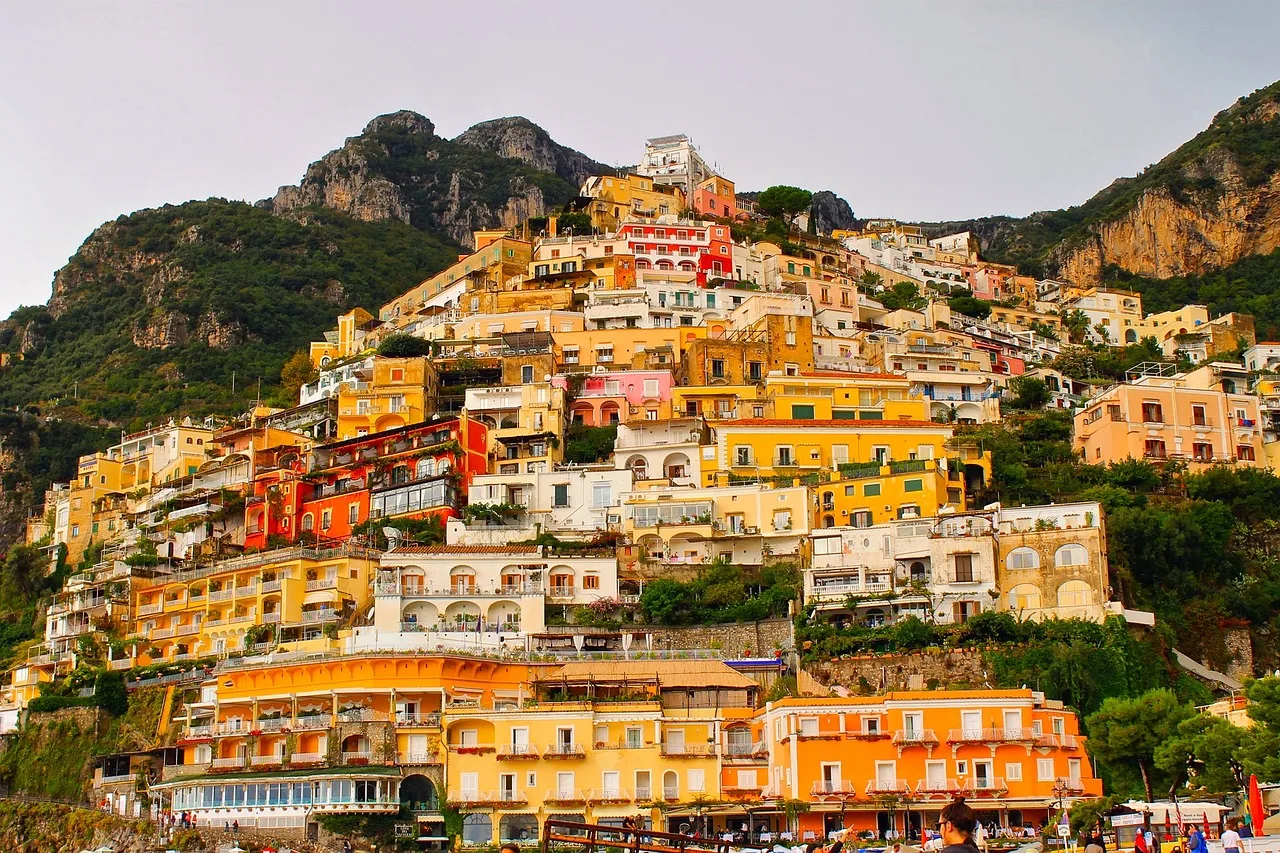
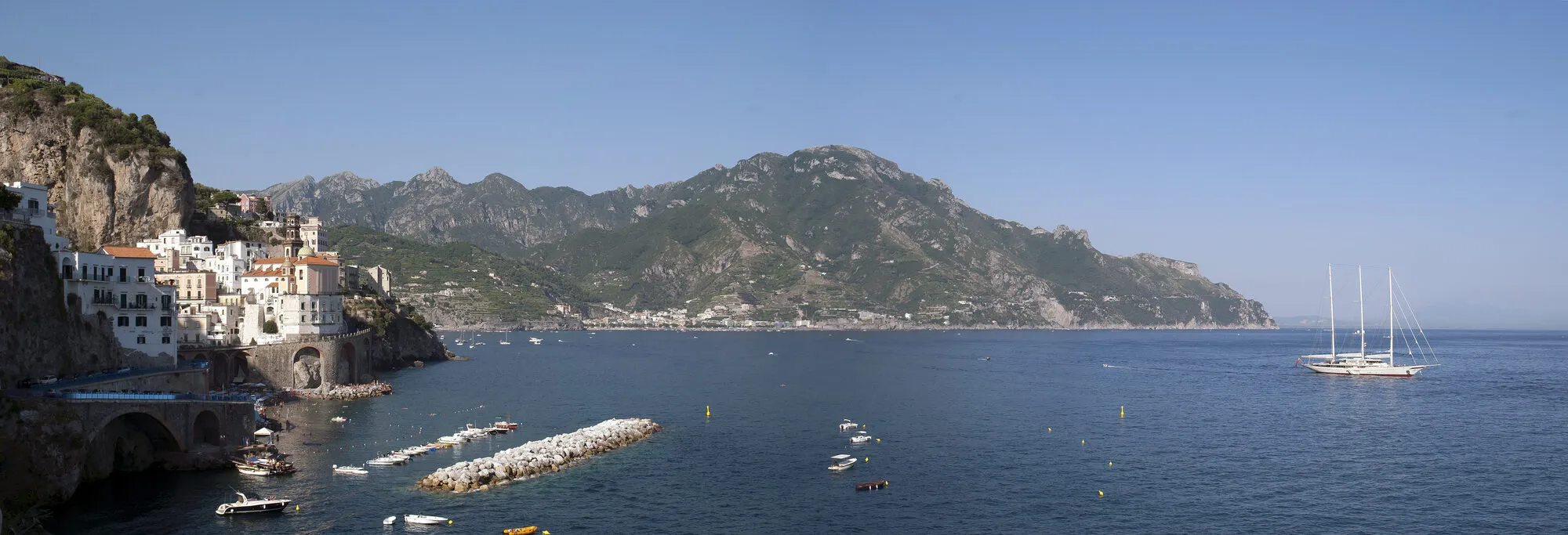
The Amalfi Coast is a short stretch of the Sorrento peninsula south of Naples, roughly 40 to 50 kilometres of cliff and terraced hillside that holds thirteen towns, and almost none of it is flat. Positano and Amalfi sit down at the water, Ravello sits up on the ridge, and the road between them, the SS163, is a corniche hung on the rock. UNESCO listed the Costiera Amalfitana in 1997, and the landscape that earned it is the same thing that makes getting around a full-time job.
The coast is also one of the most crowded places in Italy, and the two facts are linked. In summer the towns swell far past their resident numbers, ferries queue at the docks, and the bus that should take you ten kilometres can take an hour. The good news is that the logistics are solvable once you learn one rule: on the Amalfi Coast you move by boat first and bus second, and you leave the car alone.
This guide gives you the numbers that matter for 2026 with the source attached, because ferry seasons, fares, and entry prices change every year. Ferry times and ticket prices, the SITA bus lines and day pass, the Path of the Gods, the Duomo and the villas of Ravello, Capri, and a daily budget range, plus the timing mistakes that cost first-timers the most. Every figure is checked against an operator or official 2026 page, and the ones worth rechecking before you book are linked as you go. If you are planning the wider trip, compare all seven countries in the country index.
Plan and book
3 partners- Flights
Fly into Naples, the gateway airport for the whole coast, or compare it with Salerno.
Search flights - Trains
The high-speed run to Salerno, where the coast ferries and buses begin, plus onward Italian legs.
Compare trains - Where to sleep
Rooms in Positano, Amalfi, Praiano, and Sorrento, sorted by area, price, and review score.
Find a room
Positano
Positano is the postcard, a pyramid of pastel houses dropping to a single curve of beach, and it is the most expensive and most photographed town on the coast. The main beach, Spiaggia Grande, is pebbles rather than sand and lined with beach clubs whose loungers run about 30 EUR a day in high season. Ten minutes around the headland, Fornillo is smaller, quieter, and free to spread a towel on.
There is no train station and no flat approach. You arrive by ferry at the pier below town or by SITA bus at the top, and either way the last stretch is stairs. That is the trade for the view: stay high for the panorama, stay low for the beach, and accept that every meal involves a climb. The town works as a base if you want the image, and works better as a day stop if you want value.
Amalfi
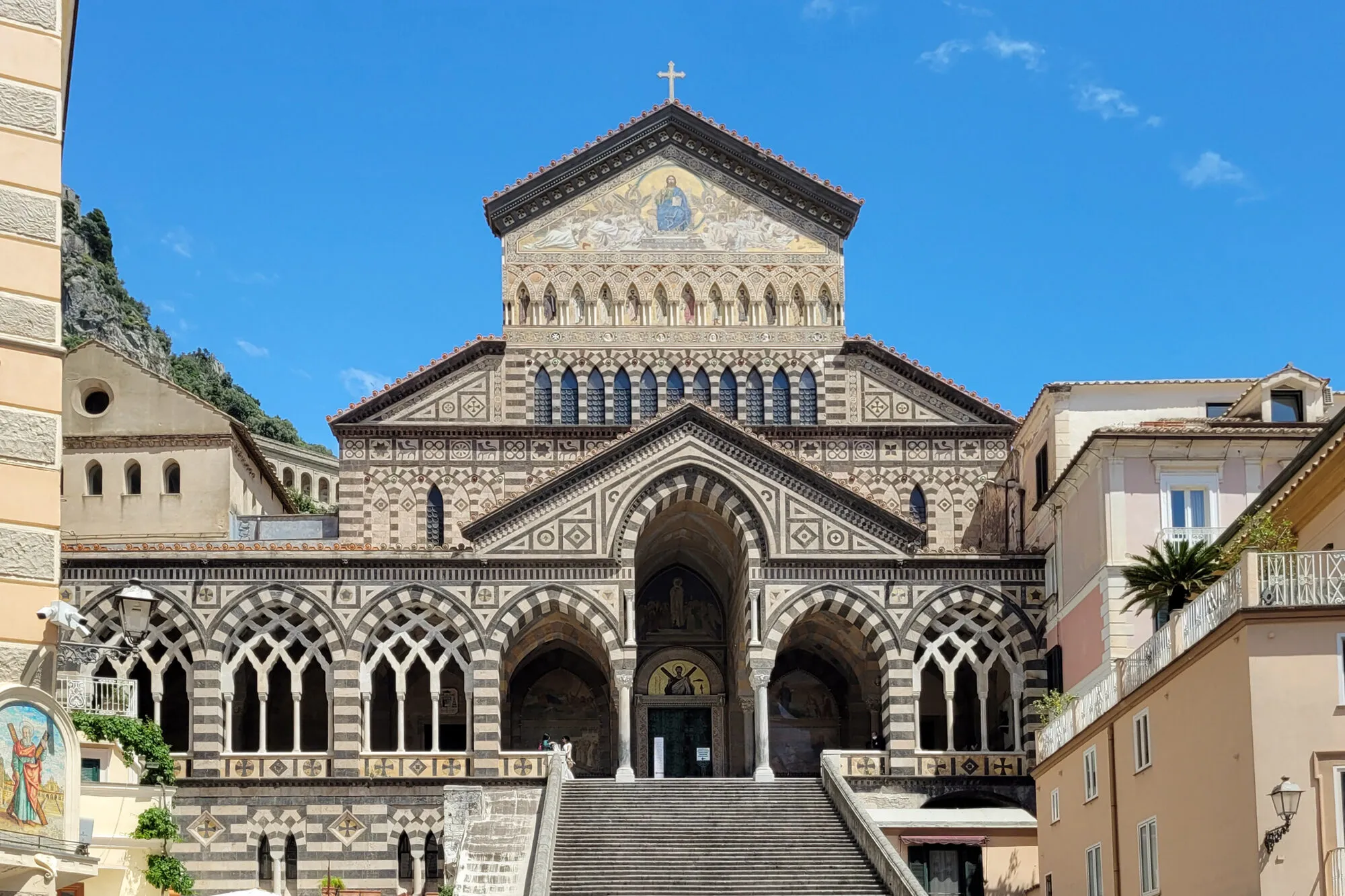
Amalfi was one of the four maritime republics and ruled a trading empire across the Mediterranean before Pisa and Genoa eclipsed it, and the town still reads as the capital of the coast. The Duomo sits at the top of a long flight of steps off Piazza Duomo, with a striped Arab-Norman facade and a bronze door cast in Constantinople. The cathedral itself is free to enter as a place of worship; the Cloister of Paradise and the diocesan museum next door are ticketed, a few euros, and were being repriced when we checked, so pay at the gate.
Two smaller stops round out the town. The Museo della Carta, in a working valley mill, shows how the old paper was beaten by water; it opens daily from March, roughly 10:00 to 19:00, and the small ticket is sold at the entrance. The other draw is the sea. Amalfi has the best ferry connections on the coast, which makes it the smartest base for a first visit, and its piazza is lively late into the evening once the day-trippers have gone.
Ravello
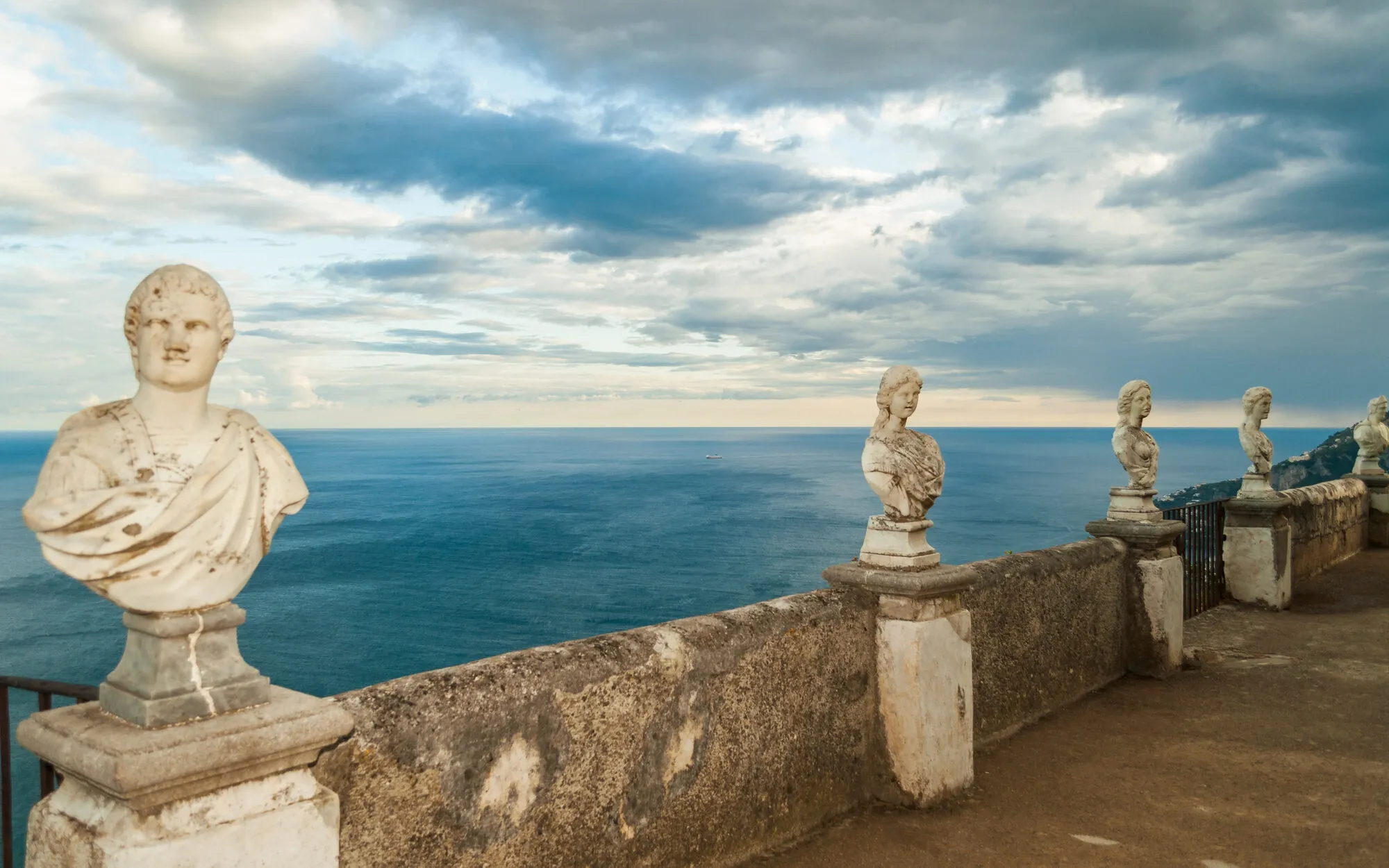
Ravello sits on the ridge above Amalfi, far above the ferry line, and it is the quiet, cultivated counterpoint to the beach towns. Two villas do the work. Villa Rufolo has the terraced garden that inspired Wagner and hosts concerts in summer, and Villa Cimbrone has the Terrace of Infinity, a row of marble busts looking out over nothing but sea and sky. Villa Rufolo costs 8 EUR, or 6 EUR for over-65s, and Villa Cimbrone 10 EUR. Both open from 9 in the morning until early evening; the Cimbrone hours shift through the season, so check the official site the week you go.
Ravello has no ferry dock, so you reach it on the AC1 bus from Amalfi, about 25 minutes and 1.50 EUR, and you come up for the gardens, the view, and the cooler air. Pair it with Amalfi on the same day rather than making it a base unless you want the stillness more than the sea.
The Path of the Gods
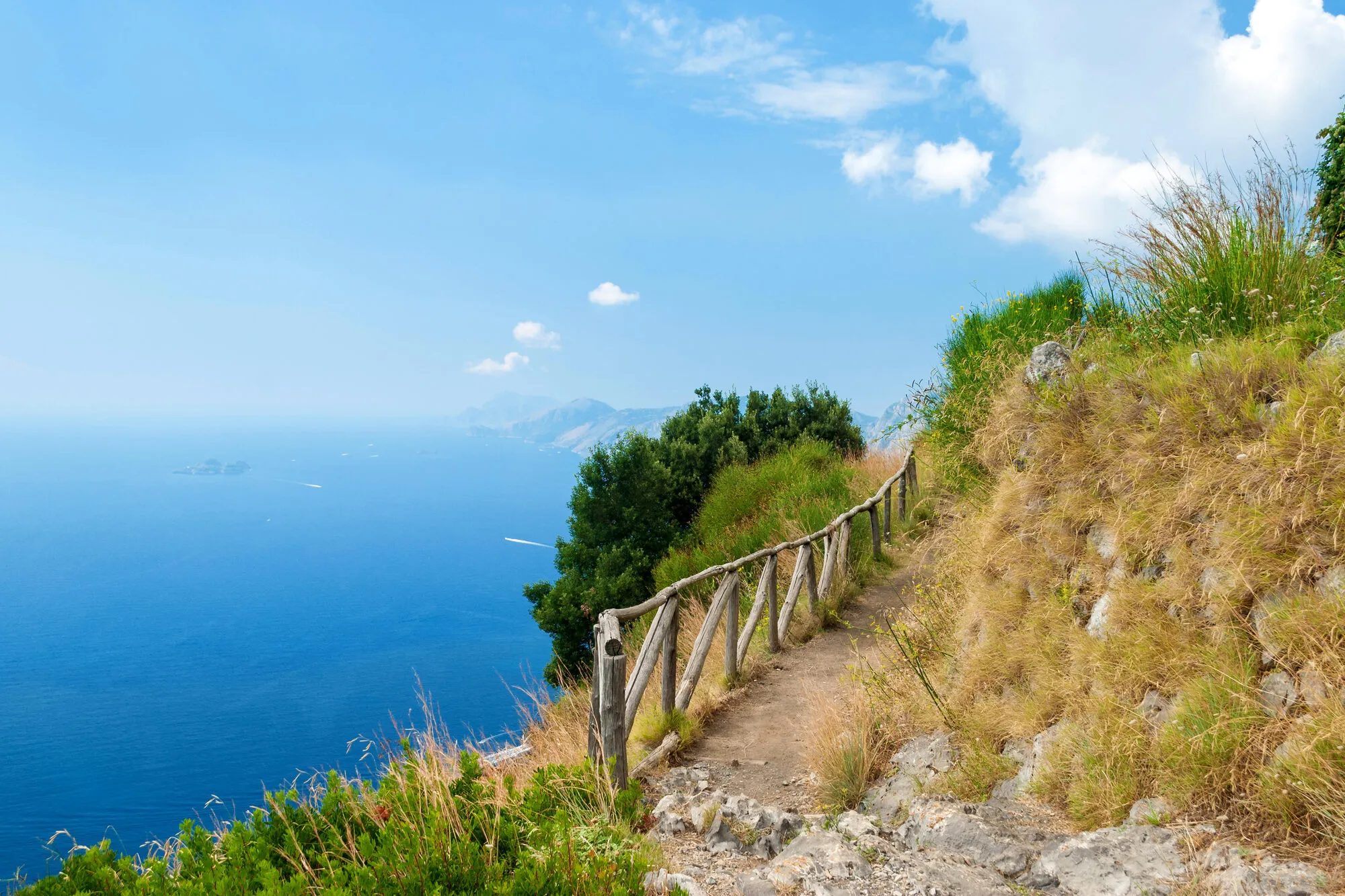
The Sentiero degli Dei is the best walk on the coast and one of the few free things that beats the paid ones. It runs from Bomerano, a village up in Agerola, to Nocelle above Positano, about 6 to 7 kilometres depending on the fork you take at the Colle Serra saddle. Most people walk it in 2.5 to 4 hours, it tops out near 630 metres, and the name is not marketing: the trail sits above the sea with the whole coastline strung out below you.
Walk it from Bomerano to Nocelle, because that direction is mostly downhill and ends above Positano. The SITA 5080 bus reaches Bomerano from Amalfi in about 40 minutes. From Nocelle you either take the local bus down or walk the roughly 1,700 steps into Positano, which is harder than the trail itself. Start early in summer, carry water, and check the weather, because there is no shade and no shortcut off the ridge.
Capri
Capri is not part of the Amalfi Coast but it is the day trip everyone takes from it, and it earns the space. The island sits off the tip of the Sorrento peninsula, reached by fast ferry from Sorrento in 15 to 45 minutes from about 19 to 24 EUR, from Positano in roughly 30 minutes, and from Amalfi in about an hour for 23.50 to 25.50 EUR. A 2.50 EUR Capri landing tax is built into the ferry fare, so there is no separate day-tripper entry fee.
The two set pieces are the Blue Grotto and Monte Solaro. The Blue Grotto costs about 18 EUR including the rowboat, is paid in cash at the cave, and closes whenever the sea is rough, with queues that can run an hour or more in high season. The chairlift to the top of Monte Solaro is 15 EUR return and gives you the whole island and the bay in one sweep. Expect crowds: Capri can take tens of thousands of day visitors in summer, and from May 2026 tour groups landing on the island are capped at 40 people. Go early, or go late, or stay the night if you can.
Ferries and buses
In season the ferry is the way to travel the coast, not a scenic extra. It is faster, cooler, and it skips the SS163 traffic entirely. Between Amalfi and Positano the crossing is 15 to 25 minutes and about 8 to 12 EUR. Salerno to Amalfi is around 35 to 42 minutes for about 9 to 10 EUR, Sorrento to Amalfi about 40 minutes for 24.50 EUR, and Naples to Amalfi about 1 hour 45 minutes to 2 hours from around 31 EUR. The catch is the season: the coastal ferries run roughly from late March or April to the end of October, and they stop in rough weather. Book at least two weeks ahead for June to September, when morning crossings sell out first.
The buses run all year. SITA line 5070 links Sorrento, Positano, Amalfi, and Salerno, with the 5080 covering Amalfi to Agerola and the 5020 running Amalfi to Ravello and Salerno. Buy tickets before you board, at a tabacchi, newsstand, or bar, never from the driver. Singles run about 1.50 to 4 EUR by distance, and the COSTIERASITA day pass is 10 EUR for 24 hours of unlimited travel, which pays for itself by the third ride. The honest warning is the crowding: in summer the buses fill fast, and the mid-morning run from Sorrento is often full, so take the early one or wait until after 10:30.
Do not plan to drive. The SS163 has an odd-and-even licence plate restriction through the season, extended to daily in August and September, and parking in the towns is close to impossible. A car on this coast is a way to spend your holiday in a queue.
Food and lemons
The Amalfi Coast grows the Sfusato Amalfitano, the long, thick-skinned lemon protected as an IGP, on terraces cut into the cliffs, and it turns up in everything from the limoncello to the pasta. The dish to order is scialatielli, a short fresh pasta invented in Amalfi and usually served with seafood. Along the eastern end of the coast, Cetara makes colatura di alici, an anchovy sauce descended from the Roman garum, and Minori is the home of the delizia al limone, a dome of sponge and lemon cream. Sfogliatella Santa Rosa comes from Conca dei Marini.
Prices climb with the postcode. A coffee is 1.50 to 2 EUR and a glass of wine 4 to 6 EUR just about everywhere, a trattoria main runs around 20 EUR, and a set lunch is 12 to 18 EUR. A full restaurant dinner is 20 to 50 EUR a person, at the top of that in Positano and Ravello and at the bottom in Cetara, Maiori, and Minori. Eat lunch inland or in the smaller towns and save the sea-view terrace for one dinner.
Getting there
Naples Capodichino (NAP) is the main airport, about 75 kilometres from Amalfi, and most trips start there. The Alibus runs from the terminal to Naples centre and the port for 5 EUR, and the Curreri shuttle goes straight to Sorrento for 13 EUR. Salerno Costa d’Amalfi (QSR) reopened in 2024 and is much closer to the coast, so compare fares before you lock in Naples.
By rail, the trick is to aim for Salerno rather than Naples. High-speed trains from Rome reach Salerno in about two hours, and the Naples to Salerno run is about 40 minutes, from as little as 6 EUR on the regional train, according to Omio. From Salerno the ferries and SITA buses work the coast. There is no train to Positano or Amalfi; the Circumvesuviana line from Naples reaches Sorrento in roughly 55 minutes to 1 hour 10 for about 4 EUR, and that is the other classic way in. From Sorrento, ferry or bus the last stretch. If you are also doing the cities, the Rome guide covers the other end of the line.
Where to stay
Pick your base by how you want to move. Amalfi is the best all-rounder: the historic centre, the widest ferry choice, and buses to everywhere, so you can sleep in the thick of it and leave easily. Positano is the most beautiful and the most expensive, with the steepest streets and the fewest connections. Ravello is quiet and cool but ferry-free, so every trip starts with the bus down to Amalfi. Praiano, halfway between the two, is the value pick with big views and a local feel, and Atrani, five minutes from Amalfi, is the smallest and cheapest town on the coast.
Two bases sit just outside the coast proper and often make more sense. Sorrento is not on the SS163 but has the rail line, the most hotels, and the best ferry links to Capri, Positano, and Amalfi. Salerno is a real city with high-speed rail and its own ferry pier, and it is the cheapest of the lot. If you are doing the coast as a series of day trips rather than a stay, Sorrento or Salerno is the smarter base.
What a day costs
Planning figures for 2026, per person per day and excluding flights. A backpacker day runs about 90 to 130 EUR: a bed in a hostel or B&B outside Positano, ferries and the SITA day pass, a picnic lunch, and one trattoria dinner. A mid-range day runs about 200 to 320 EUR: a hotel room in Amalfi or Praiano, ferry hops, a restaurant lunch and dinner, and one paid sight or boat trip. Accommodation is the line that breaks the budget, not the food or the transport, and these ranges are planning estimates built from the ferry, bus, entry, and meal prices cited in this guide, not an official index.
The season decides everything else. May, June, September, and early October are the good months: warm sea, running ferries, and crowds you can still outwalk in the early morning. July and August are the peak, with temperatures around 32°C, packed buses, and the hardest hotel prices. The shoulder months are also cheaper, and a coast that costs a fortune in August is merely expensive in late September.
Practical information
| Getting around | Ferries run late March or April to the end of October, stop in rough weather, and are the fastest way between towns. SITA buses run all year; buy tickets at a tabacchi or bar, never on board. The COSTIERASITA day pass is 10 EUR for 24 hours. Driving is restricted on the SS163 by an odd-and-even plate system in season, so leave the car behind and use the boats. |
|---|---|
| When to go | May, June, September, and early October give the best mix of running ferries, warm sea, and manageable crowds. July and August bring peak heat, full buses, and the highest prices. Ferries are seasonal, so check that your dates fall inside the sailing season before planning a boat-first trip. |
| Money | Italy uses the euro. Cards are widely accepted in hotels and restaurants, but carry cash for bus tickets, small bars, and the Blue Grotto, which is paid in cash at the cave. Tipping is not expected; rounding up or leaving a euro or two is normal. Positano and Ravello charge the most for everything. |
| Health and safety | The coast is safe, with the usual caution for pickpockets on crowded ferries and buses. The real hazards are the terrain and the heat: hundreds of steps in every town, uneven stone paths, and little shade on the trails. Wear shoes with grip, carry water, and do not attempt the Path of the Gods in the middle of a summer day. Tap water is safe to drink. |
| Sightseeing rhythm | Take the early ferry or bus to beat the crowds and the heat. Give Positano and Amalfi the morning, Ravello the middle of the day, and the Path of the Gods an early start. Capri needs a full day and an early boat. Book summer ferries at least two weeks ahead and check villa and cathedral hours the week you travel, since both shift with the season. |
Disclosure. This blog post contains affiliate links. If you book through them, Mediterranean Vibes may earn a small commission at no extra cost to you; it is how the site stays up.
_01.jpg)


