Sicily is not an island you see in a week. It is the largest island in the Mediterranean, about 25,700 square kilometres, and it holds more Greek temples than mainland Greece, the most active volcano in Europe, three thousand years of conquest layered into its cities, and a food culture that changes from one coast to the next. Trying to cover all of it in seven days is the single most common mistake, and the reason so many first visits end up as a blur of motorway and car parks.
The island divides usefully into four corners. The east has Etna, Taormina, Catania, and Syracuse, and it is the easiest introduction, with the best transport and the most concentrated sights. The west has Palermo and the beaches at San Vito Lo Capo. The south has Agrigento’s temples and the Baroque towns of the Val di Noto. And off the north-east coast, the Aeolian Islands add an entirely separate week of volcanoes and black sand. Pick two corners, not four.
This guide gives you the numbers that matter for 2026 with the source attached, because Sicily’s state sites set entry prices centrally and they change by season. What the temples and Etna actually cost, how the trains, ferries, and airports work, which coast and month to choose, and a daily budget range. Every figure is checked against an official 2026 page, and the ones worth rechecking are linked as you go. If you are planning the wider trip, compare all seven countries in the country index, or start with the Italy guide and the Rome guide.
Plan and book
3 partners- Flights
Find a route into Catania or Palermo from wherever you start, and compare the summer fares early.
Search flights - Trains and ferries
Compare the Rome to Sicily overnight train, the Messina crossing, and the island hops in one search.
Compare routes - Where to sleep
Rooms in Palermo, Catania, Syracuse, Taormina, and the Aeolian Islands, sorted by area and price.
Find a room
The Valley of the Temples
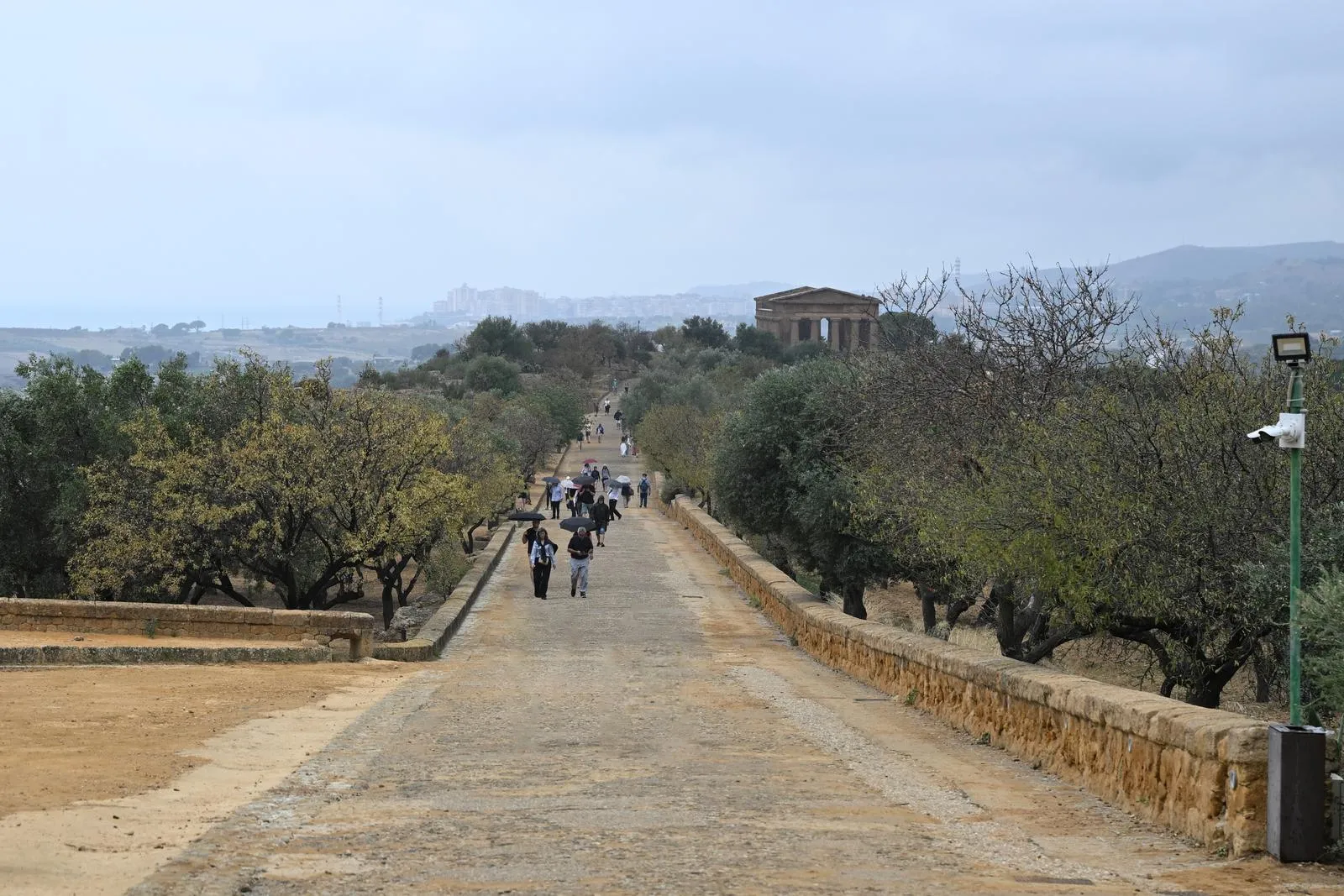
Agrigento’s Valley of the Temples is the reason to come to the south, and it earns the name despite being a ridge rather than a valley. It is a line of Doric temples from the 5th century BC, built by a Greek city that was one of the wealthiest in the ancient world, and the Temple of Concordia survives almost intact, with 34 of its 38 columns still standing. Walking the Via Sacra between the temples, with the sea in the distance and almond trees along the path, is the single best ancient site in Italy after Pompeii.
The official park publishes its prices through the regional heritage authority: 14 EUR full and 7 EUR reduced, with a 3 EUR supplement for the temporary exhibition running from 23 July to 31 October 2026, and a combined ticket that adds the Pietro Griffo museum, which holds the finds from the site. Hours run 08:30 to 20:00 for most of the year, and the park stays open late through the summer nights, which is the best time to see the temples lit and the heat gone. Book and check current times on the official regional park site.
Two practical notes. The site has two ticket offices and two routes, and the long route from the Temple of Juno down to Porta V is the one that takes in everything. Come early or late, because there is almost no shade and the midday heat in July is punishing. And Agrigento town, up the hill, is a faded but atmospheric place worth an evening, with a Norman cathedral and a view back over the temples at sunset.
Mount Etna
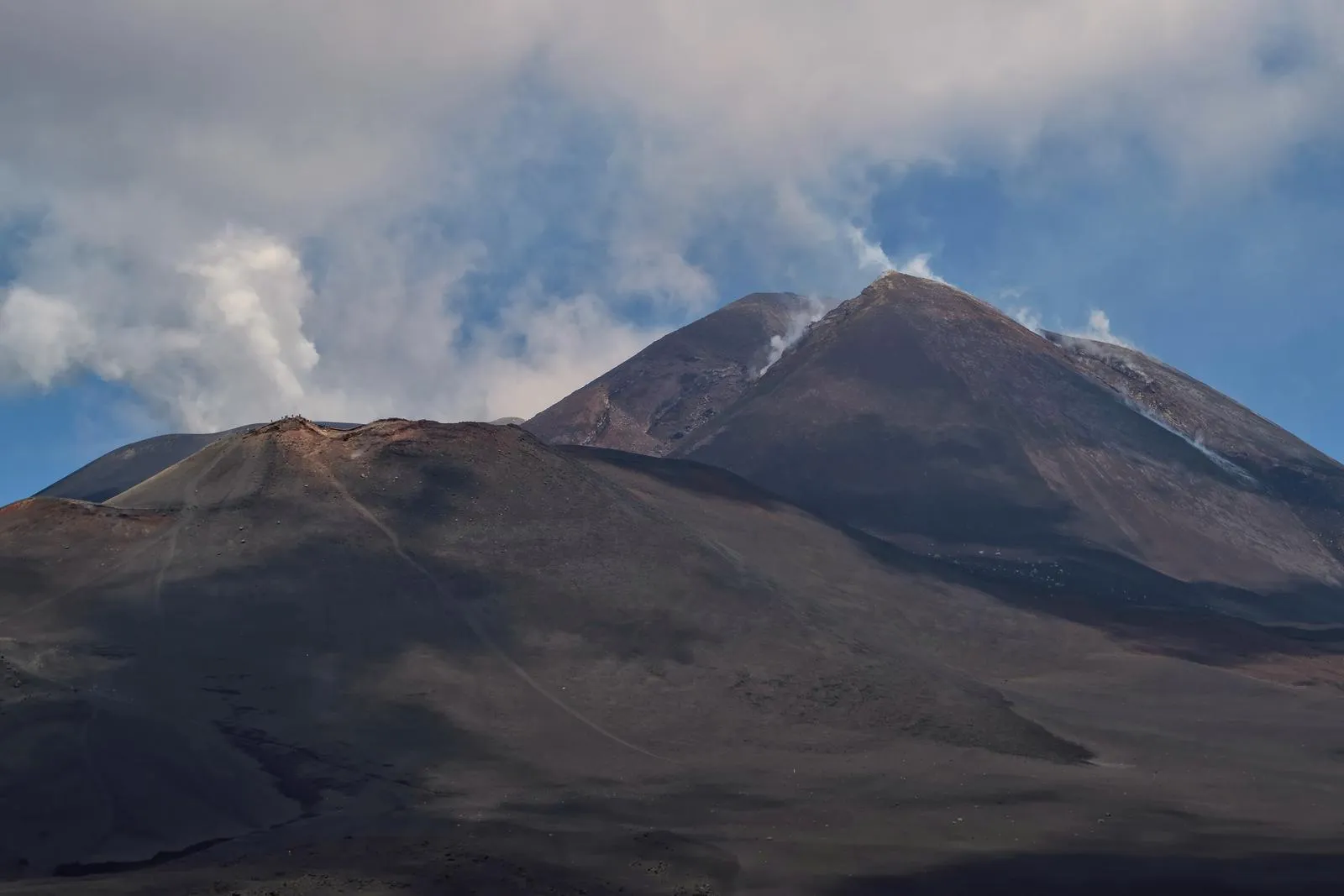
Mount Etna is the most active volcano in Europe, roughly 3,350 metres high, and it erupts several times a year, which is exactly why it is worth visiting. The south side, reached from Rifugio Sapienza above Nicolosi, is the developed and most popular approach: the cable car climbs from 1,923 metres to the 2,500 metre station, where a 4x4 bus and a volcanological guide continue toward 3,000 metres on the Tour 3000. The official cable car operator lists the round-trip cable car at 54 EUR and the Tour 3000 at 82 EUR, both depending on weather and eruptions.
If you would rather not pay for the summit, the Silvestri Craters sit beside the lower station at about 1,900 metres, reached by car or the AST bus from Catania, and the admission is a few euros. The landscape at any height is the point: black lava fields, old craters, and, on a clear day, the whole of eastern Sicily below you. The north side, from Piano Provenzana, is quieter and greener, with its own guides and a longer walk to the summit craters.
Two warnings. The mountain closes sections without notice when it is erupting or the wind is high, so treat any ticket as weather- and eruption-dependent and call ahead. And take the mountain seriously: it is cold and windy at altitude even in August, and the guided summit treks run five to six hours with boots and helmets provided, which is a different proposition from the cable car. Guided Etna tours from Catania and Taormina are the easy way to do it without a car.
Taormina
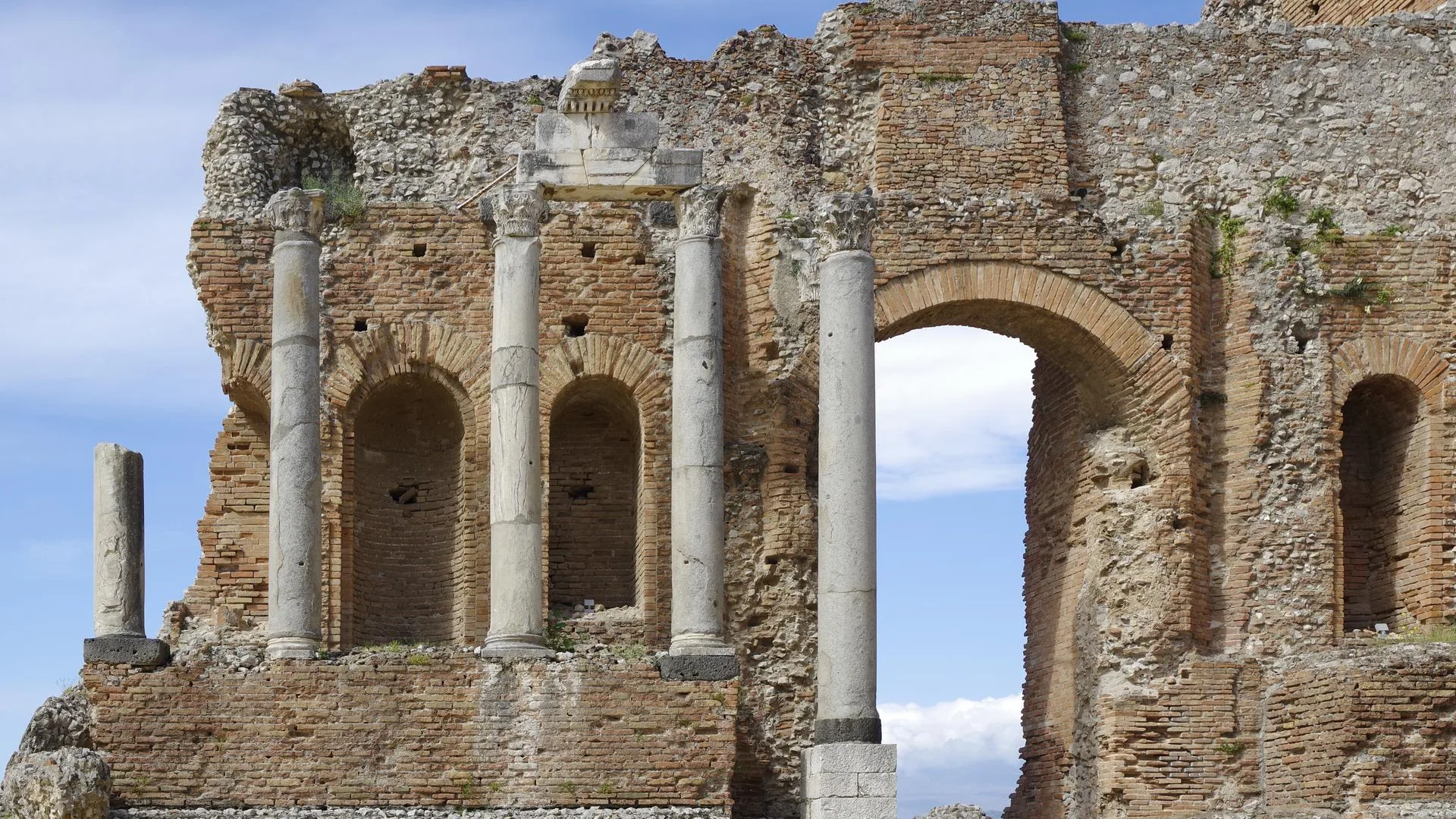
Taormina is the postcard of eastern Sicily, a town built on a cliff above the Ionian Sea, and its Greek theatre is the image that sells the island. From the cavea of the Teatro Antico you look down over the coast and straight at Etna, which smokes gently behind the ruined stage wall. The full ticket is 16 EUR and reduced 9 EUR in 2026, and the site closes when concerts and the film festival use it, so check before you build a day around it.
The town itself is small and elegant, with a pedestrian Corso Umberto full of shops and cafés, a public garden with another view of the bay, and a cable car down to the beach at Mazzarò and the nature reserve of Isola Bella, which is the swimming stop of the area. The cable car is a few euros each way, and Isola Bella is a small protected island reached by a sand spit, so it is a good beach to combine with a theatre visit.
The honest note about Taormina is that it is expensive and crowded, more so than anywhere else in Sicily, and in midsummer it can feel like a stage set. It works best as a base for two nights in the shoulder season, with Etna and the coast day trips on either side, and early mornings in the town before the coaches arrive.
Syracuse and Ortigia
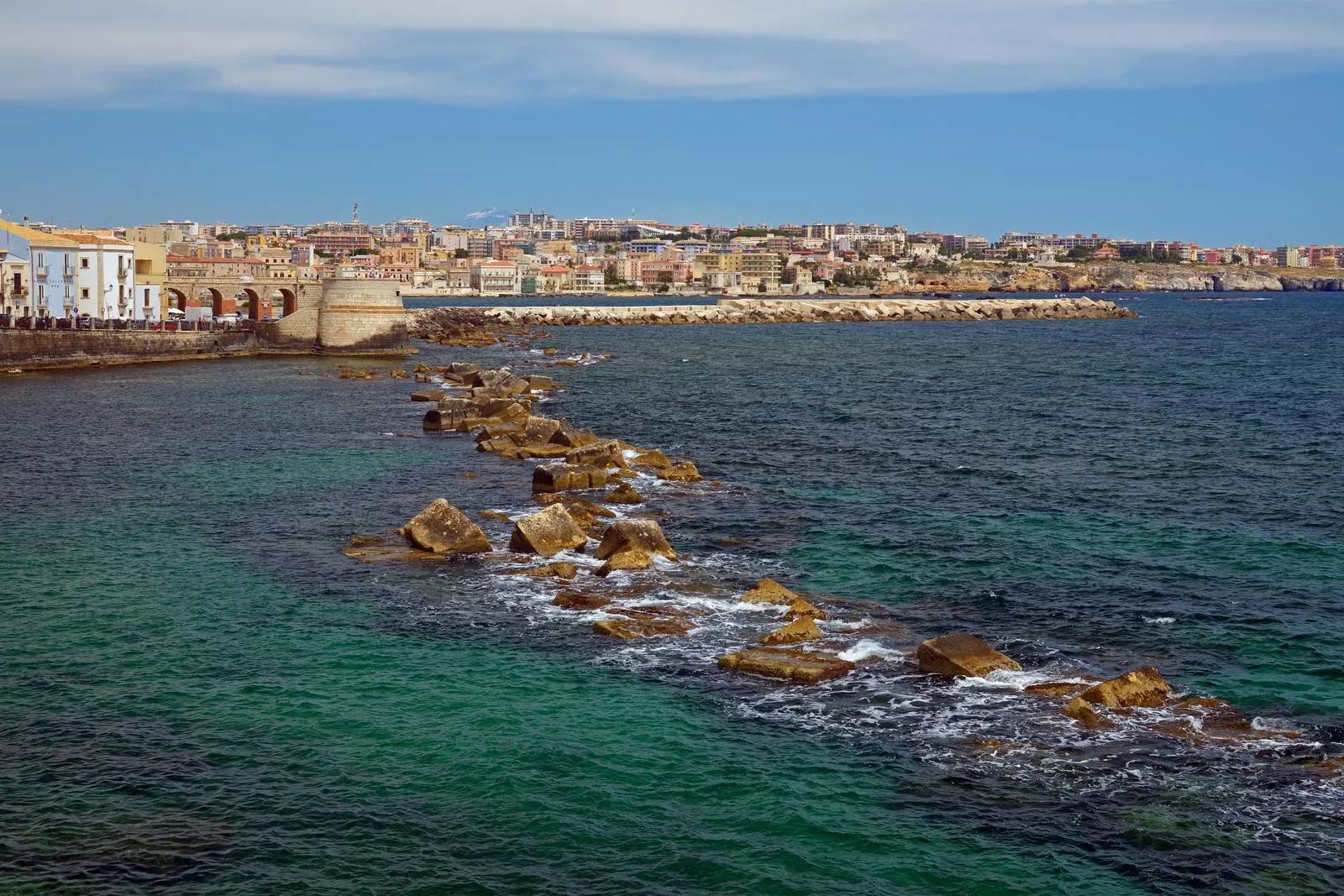
Syracuse was, for a while, the greatest Greek city in the western Mediterranean, and it defeated Athens in a war that should have ended it. Its heart is Ortigia, the small island where the original settlement stood, and where the Cathedral of Syracuse is built directly into the columns of a 5th century BC temple of Athena, the Doric columns still visible in the outer wall of a Baroque church. The lanes, the sea-front promenade, and the daily market on Ortigia make it the most liveable and rewarding city in Sicily for a city break.
On the mainland side, the Parco Archeologico della Neapolis holds the Greek theatre, still used for performances in summer, a Roman amphitheatre, and the Ear of Dionysius, the limestone cave with the strange acoustics. The city is compact and walkable, the trains run to Catania in about an hour and a half, and it makes the best base for the south-east baroque circuit. It is the one Sicilian city that works perfectly without a car.
Palermo
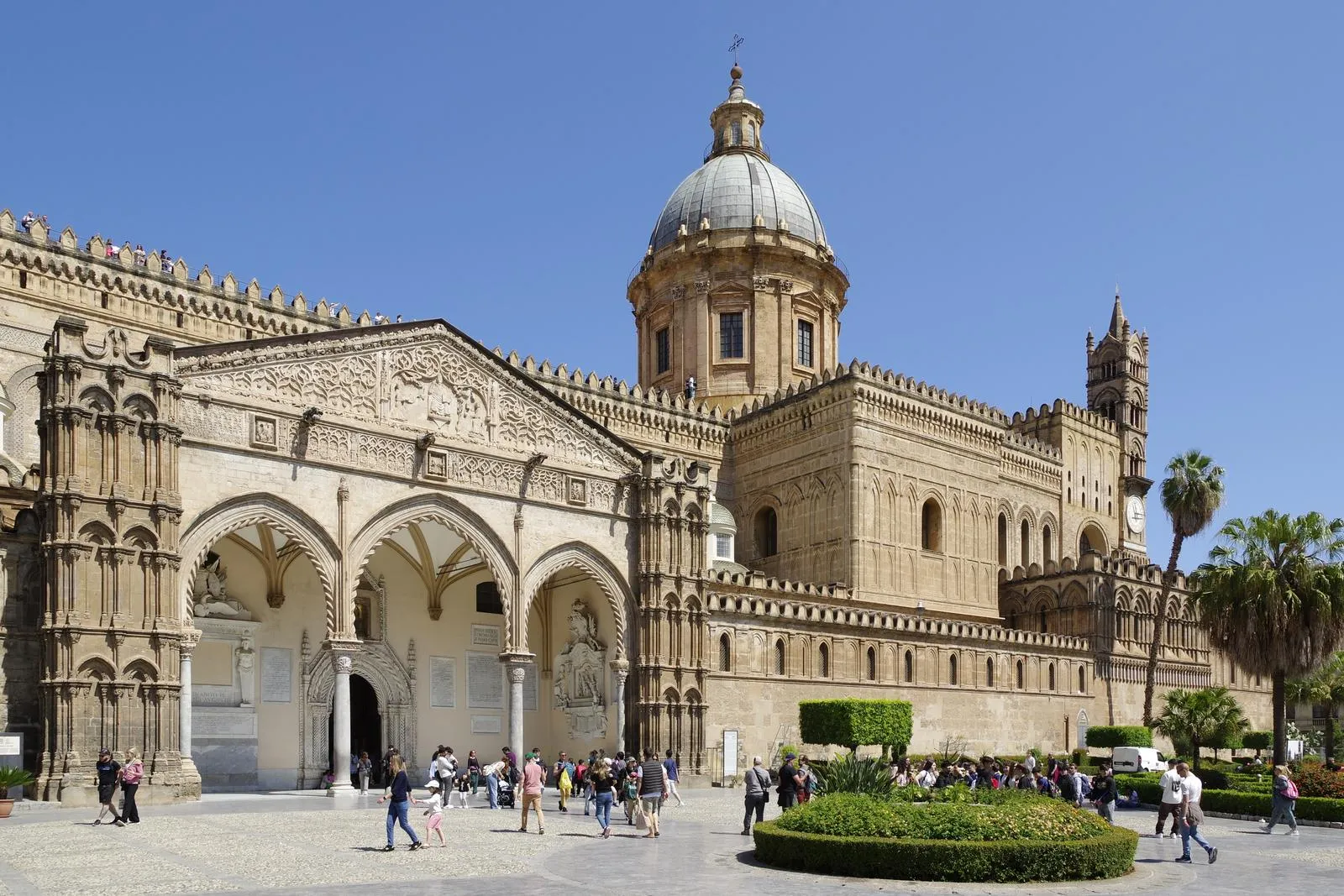
Palermo is the loudest, messiest, and most fascinating city on the island, and the one that best explains Sicily. Its centre is a layer cake of Arab, Norman, Byzantine, and Baroque, and the crowning sight is the Cappella Palatina in the Palazzo dei Normanni: a Norman chapel with a Byzantine dome and Arab wooden ceilings, glittering with gold mosaics, which is one of the great medieval rooms in Europe. A short ride out of town, the cathedral of Monreale covers almost every surface in gold mosaic and is even more overwhelming.
The city’s other glory is its street food and markets, and they are a meal in themselves. In the markets at Ballarò, Capo, and Vucciria you eat panelle, chickpea fritters, and the famous Palermo arancina, a fried rice ball the size of an orange, and sfincione, the local thick pizza. Do not leave without a granita with a warm brioche for breakfast, which is the Palermitan way to start the day.
Palermo is also the base for the west: the beaches at Mondello and San Vito Lo Capo, the Greek ruins at Segesta and Selinunte, and the island of Ustica offshore. It has the island’s other airport, and its own rhythm, which is slower and noisier than the east. Give it two days at least, and keep your wits about you in the traffic.
The Baroque south-east
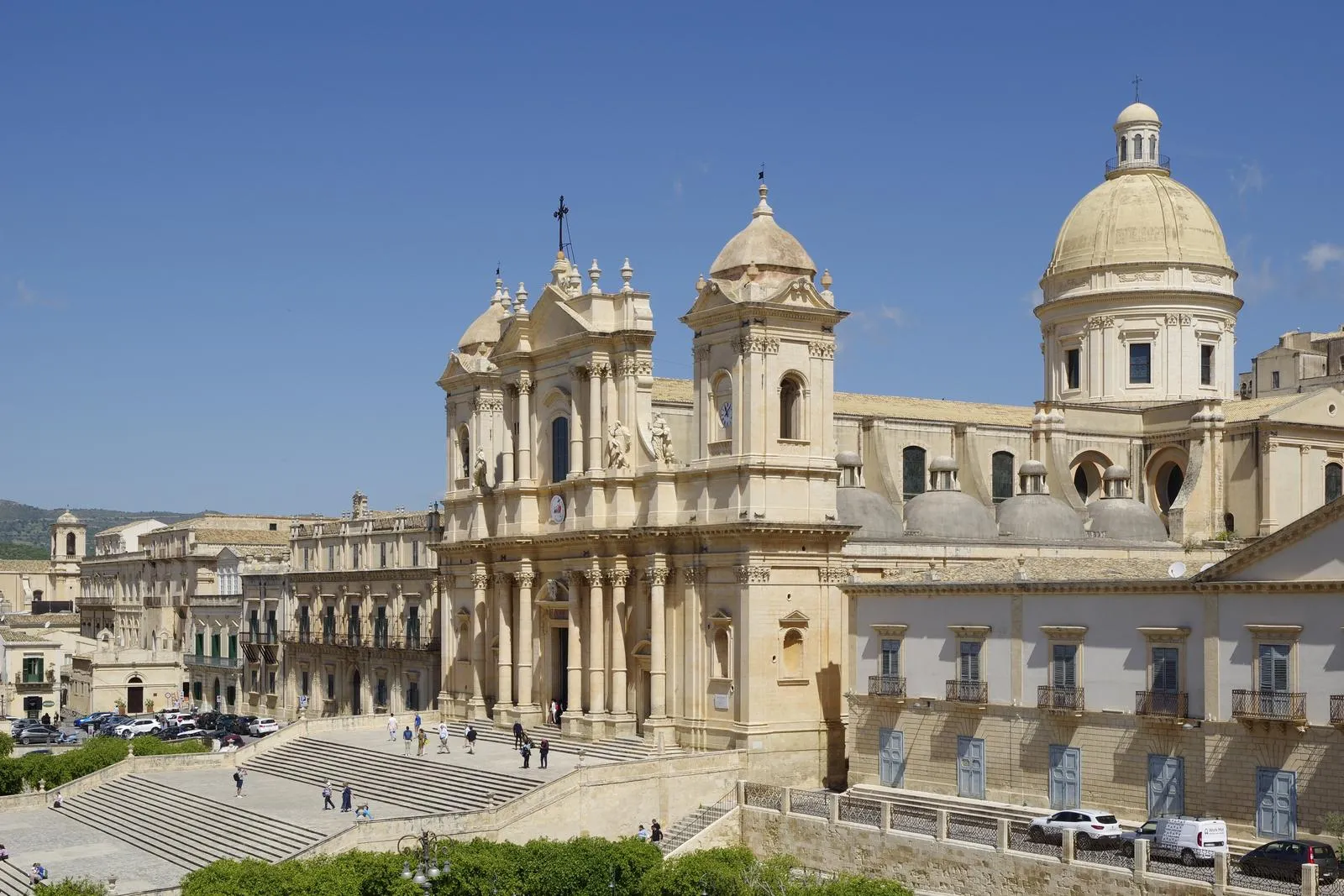
The south-east corner of Sicily is the island’s other great claim, and it exists because of an earthquake. In 1693 a quake levelled the Val di Noto, and the towns were rebuilt in a single, coherent late-Baroque style that is now a UNESCO World Heritage site across eight towns. Noto is the showpiece, a honey-coloured street of churches and palaces on one axis, with the cathedral at the top of the hill. Ragusa Ibla is prettier still, spilling down a ridge in narrow lanes, and Modica adds chocolate and more steps. Scicli and Palazzolo Acreide complete the set.
Inland from Catania, the Villa Romana del Casale at Piazza Armerina is the other UNESCO site of the interior, and it is unlike anything else in Italy. It is a late Roman country villa whose floors hold the largest and best-preserved collection of Roman mosaics anywhere, including the famous Room of the Ten Girls in bikinis, and the official ticket is 14 EUR full and 7 EUR reduced, open daily with a late evening session in summer. It is awkward to reach without a car, and it is worth the effort.
The Aeolian Islands
Off the north-east coast, the Aeolian Islands are a UNESCO World Heritage site in their own right, a chain of seven volcanic islands that feel like a separate country. Stromboli is the live one, a near-perfect cone that erupts almost continuously and can be climbed in the evening to watch the fire from the crater rim with a guide. Vulcano has the sulphur mud baths and black-sand beaches, Lipari is the largest and the ferry hub, and Salina grows the capers and the sweet Malvasia wine that ends every good meal on the islands.
The islands are reached by ferry and hydrofoil from Milazzo on the Sicilian coast, with fast boats taking about an hour to Lipari and a little longer to the rest, and there are also crossings from Palermo and Messina in season. They fill up in July and August and are best in June and September, when the water is warm and the paths are quiet. A few days here, after the cities, are the best possible end to a Sicilian trip.
The beaches
Sicily has more than a thousand kilometres of coastline, and it splits into very different seas. The east coast under Etna is dark volcanic rock and black sand. The south has long sandy bays and the shallow, warm water around Ragusa and Agrigento. The west and north have the big, wind-blown white-sand beaches like San Vito Lo Capo, which sits under a mountain and is one of the best beaches in Italy. And the islands add the clearest water of all, from Cala Rossa on Favignana to the Spiaggia dei Conigli on Lampedusa.
The easy picks by base: from Taormina, the pebble cove at Isola Bella and the beach at Giardini Naxos; from Palermo, Mondello, a short bus ride out; from Agrigento, the coast at Scala dei Turchi, the white marl cliff whose steps are fragile and protected, so view it rather than climb it; from Syracuse, the beaches at Fontane Bianche and the Vendicari nature reserve to the south. The water is warm enough to swim from June to October, and at its best in September, when the crowds have gone and the sea holds the summer’s heat.
Sicilian food
Sicilian food is the most varied and the most argued-about in Italy, because it is where the island’s invaders met on the plate. It is built on Arab sweets and citrus, Norman and Spanish influences, the Greek love of vegetables and fish, and an obsession with frying. The first thing to eat is an arancina in Palermo or an arancino in Catania, the fried rice ball stuffed with ragù or with butter and ham, and the second is a cannolo, the crisp shell filled to order with sheep’s ricotta and candied fruit.
Then work through the rest. Pasta alla Norma, with fried aubergine and salted ricotta, comes from Catania; caponata is the sweet-and-sour aubergine dish; panelle and crocché fill the Palermo markets; and a granita with brioche is breakfast, not dessert. On the coast, order the swordfish, pesce spada, grilled or rolled, and the sardines, and in the south the busiate pasta with pesto trapanese. To drink, Marsala from the west, and the Etna wines, the Nerello Mascalese reds and Carricante whites grown on the volcano’s slopes, which are now among the most interesting in Italy.
Eat in the markets and the trattorie, where the value is far better than the seafront restaurants, and remember that a Sicilian dinner is a long, late affair. The food is reason enough on its own to come.
Sicily or Sardinia?
They are the two big Italian islands, and they are almost opposites. Sicily is larger, older, cheaper, and far denser in sights: Greek temples, a live volcano, Norman-Arab Palermo, Baroque Noto, and the strongest street food in the country. It is also busier, rougher around the edges, and needs more planning, with a car useful for the west and interior.
Sardinia is quieter and wilder, with some of the best beaches in the Mediterranean, a distinct island culture with its own language, and a slower, more exclusive feel, especially in the north around the Costa Smeralda, where prices are the highest in Italy. It has less built heritage and fewer big cities, and its best coast is best in June and September. Choose Sicily for history, food, and cities; choose Sardinia for a beach holiday with a car and a very slow pace. For the wider picture, the Italy guide covers both, and the Amalfi Coast guide is the third option on the mainland.
When to go
May, June, September, and October are the best months. May and June are warm without being punishing, the countryside is green, and the archaeological sites are comfortable to walk in the middle of the day. September and October bring the warmest sea of the year, around 25 to 26 degrees, with the crowds gone and the grape and olive harvest filling the tables. July and August are hot, crowded, and expensive, with coastal highs above 32 degrees, inland heat near 40, and Italian holiday traffic on every road around Ferragosto on 15 August.
The sea lags the air by a month, which is the key to timing a beach trip. It is still cool in May, at around 18 degrees, reaches its peak in August and September at about 26, and stays swimmable through October on the south and east coasts. Winter is mild and quiet on the coast, around 15 degrees, and snow covers the top of Etna.
Getting there
By air, Sicily has two main airports. Catania (CTA) in the east is five kilometres from the city centre, with the Alibus shuttle into town for about 4 EUR, and it is the right arrival for Etna, Taormina, and Syracuse. Palermo (PMO) in the west is about 35 kilometres out, connected to Palermo Centrale by train in roughly an hour for under 6 EUR, and it is the right arrival for the west and the temples at Agrigento. Both take direct seasonal flights from across Europe, and Trapani and Comiso add smaller options.
By train, the journey from Rome is part of the trip. The Intercity Notte from Roma Termini to Palermo or Catania runs overnight in about 11 hours, and at Villa San Giovanni the carriages are physically loaded onto a ferry for the 20 minute crossing of the Strait of Messina before being reassembled on the island. It is the only place in Europe where a passenger train boards a ferry, and a couchette turns it into a night of sleep. Compare times and fares on Omio. Within Sicily, the trains are good on the north and east coasts, Palermo to Catania and Catania to Syracuse, but slow or absent in the west and interior, where buses and a car are the practical answer.
By sea, the Messina strait ferries run every 20 to 30 minutes from Villa San Giovanni and take about 20 minutes, which is the route for anyone driving. Overnight ferries connect Palermo with Naples, and there are crossings to the Aeolian Islands from Milazzo, to the Egadi Islands from Trapani, and to Malta from Pozzallo and Catania. For the wider country, browse the Italy guide and all the guides.
Where to stay
Base yourself by corner, not by hotel. For the east, Catania is the transport hub and the cheapest city base, noisy and full of life, and Taormina is the beautiful, expensive one above the sea. Syracuse and Ortigia are the most charming and the best base for the south-east baroque towns and the beaches at Vendicari. For the west, Palermo is the only real city base, with Mondello and San Vito Lo Capo for the beach, and Agrigento is the base for the temples and the south coast.
If you have a car, the countryside opens up: masserie, the fortified farmhouses turned into hotels, and agriturismi in the wine country around Etna, Noto, and Marsala, which are often the best value and the most memorable stays on the island. On the Aeolian Islands, stay on Lipari for the ferries and the restaurants, or on Salina for the quiet, and book well ahead for July and August.
Wherever you stay, air conditioning is essential in summer, and parking is the hidden cost in the historic centres, most of which are restricted or pedestrian. Check the access rules before you book a room inside a ZTL, the limited-traffic zone, or you will spend your holiday collecting fines.
What a day costs
Planning figures for 2026, per person per day and excluding flights, car hire, and accommodation: a budget day runs 40 to 65 EUR, a comfortable day 80 to 125 EUR, and a mid-range day 140 to 210 EUR. Sicily is cheaper than the Amalfi Coast or the big northern cities, and food and wine are the best value on the island: a market lunch of street food costs a few euros, and a trattoria dinner with local wine is a fraction of a tourist-menu restaurant. These ranges are planning estimates built from the ticket, transport, and food prices cited in this guide, not an official index.
The season moves the numbers more than the budget table does. July and August bring peak hotel rates, packed beaches, and the highest ferry and tour prices, while May, June, and September and October keep the island calmer and the rooms cheaper. Early autumn is the sweet spot, with the warmest sea of the year and prices already falling.
Practical information
| Getting around | Trains are good on the north and east coasts, Palermo to Catania and Catania to Syracuse, and the Circumetnea narrow-gauge line circles Etna. The west and interior are car or bus territory, and Agrigento and Piazza Armerina are easiest by car. Rentals are cheap outside peak weeks, motorways are mostly toll-free, and driving in Palermo and Catania is not for the faint-hearted. |
|---|---|
| When to go | May, June, September, and October are the best months, with warm sea and lighter crowds. July and August are hot and busy, above 32 degrees on the coast and near 40 inland, with Ferragosto on 15 August the peak. The sea is warmest in August and September, about 26 degrees, and still swimmable in October. |
| Money | Italy uses the euro. Cards are widely accepted in hotels, restaurants, and shops, but keep cash for markets, small trattorie, and some buses. State sites and the Etna cable car take cards or online tickets, and it is worth booking the major sites ahead in high season. |
| Health and safety | Sicily is a safe, well-developed island, and the main risks are the summer heat, the sun, and the roads. Carry water, use high factor sun cream, and avoid hiking Etna or the interior at midday in summer. In the cities, watch for traffic and keep an eye on your belongings in the busiest markets. |
| Sightseeing rhythm | Do the temples and archaeological sites at opening or in the evening, the cities in the late afternoon and after dinner, and Etna or the islands as a full day. Book the Valley of the Temples, the Etna cable car, and any ferry a day or two ahead in July and August, and check the Etna conditions the morning you go. |
Disclosure. This blog post contains affiliate links. If you book through them, Mediterranean Vibes may earn a small commission at no extra cost to you; it is how the site stays up.