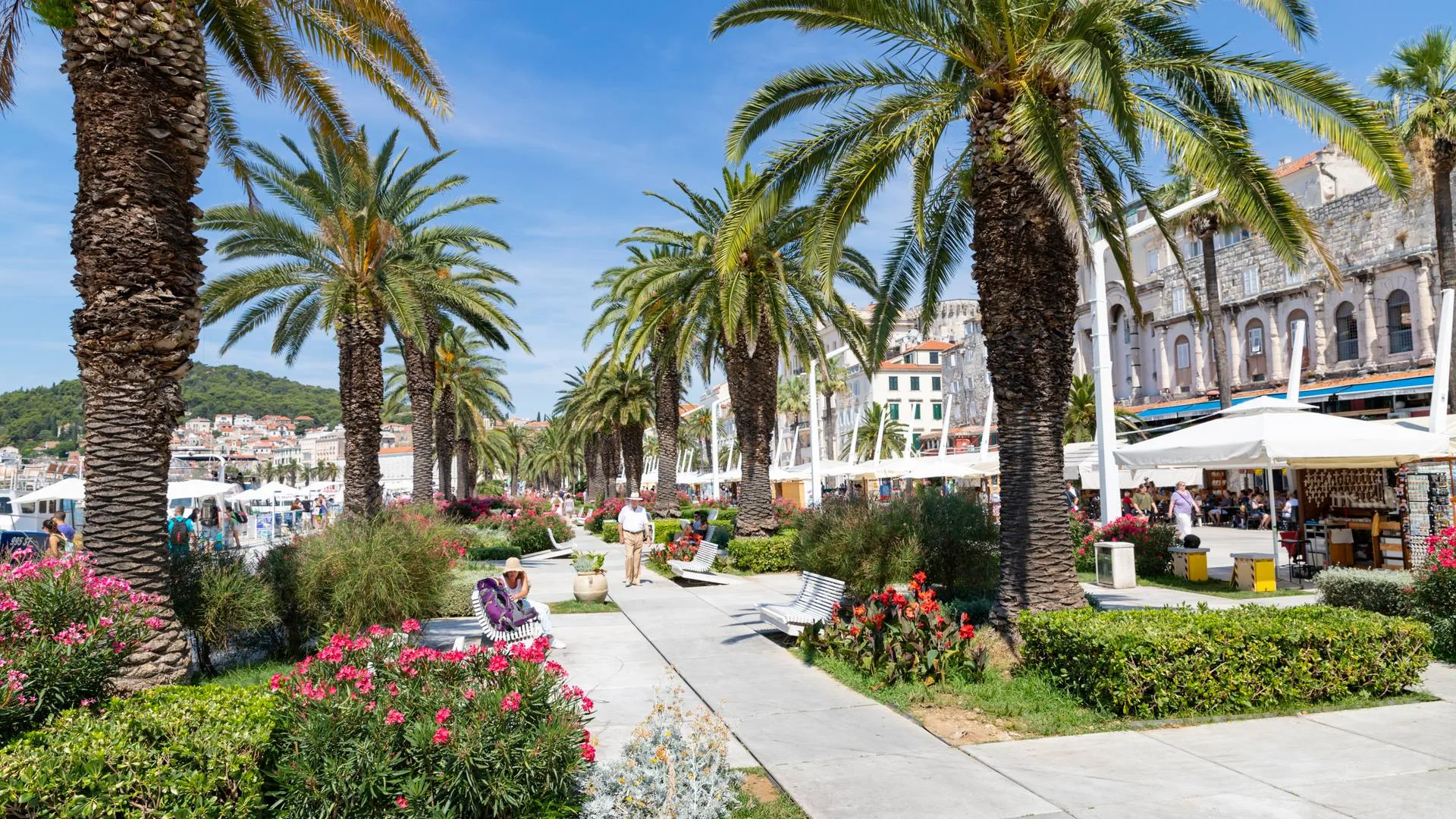
Split is the rare city where the sight and the city centre are the same thing. Diocletian’s Palace was built as a Roman emperor’s retirement home around 300 AD, and instead of being fenced off as a ruin it became the living heart of Split: roughly three thousand people still live inside the walls, in flats above shops, with a cathedral, a fish market, and a bar on every other corner. You do not visit it and then leave. You stay, eat, and sleep in it.
The city grew outward from the palace, along a harbour front that turns into the Riva promenade, up the pine-covered hill of Marjan, and out to the ferry port that makes Split the gateway to the Dalmatian islands. That combination is the point: a Roman monument in the morning, a swim at Bacvice in the afternoon, and a boat to Hvar the next day. It is also, in July and August, one of the busiest cities on the Adriatic, because the cruise ships dock right beside the old town.
This guide gives you the numbers that matter for 2026 with the source attached, because the palace interiors sell tiered tickets and the island ferries have two different ports that catch people out. What is free and what you pay for, how the airport transfer and the ferries work, which beaches are walkable and which need a bus, and a daily budget range. Every figure is checked against an official 2026 page, and the ones worth rechecking are linked as you go. If you are planning the wider trip, compare all seven countries in the country index.
Plan and book
3 partners- Flights
Find a route into Split (SPU) from wherever you start, and compare the summer fares early.
Search flights - Ferries and island hops
Compare the fast catamarans to Hvar, Brac, and Vis, and the crossings down to Dubrovnik.
Compare routes - Where to sleep
Rooms inside the palace, on the Riva, and in the neighbourhoods beyond, sorted by area and price.
Find a room
Diocletian’s Palace
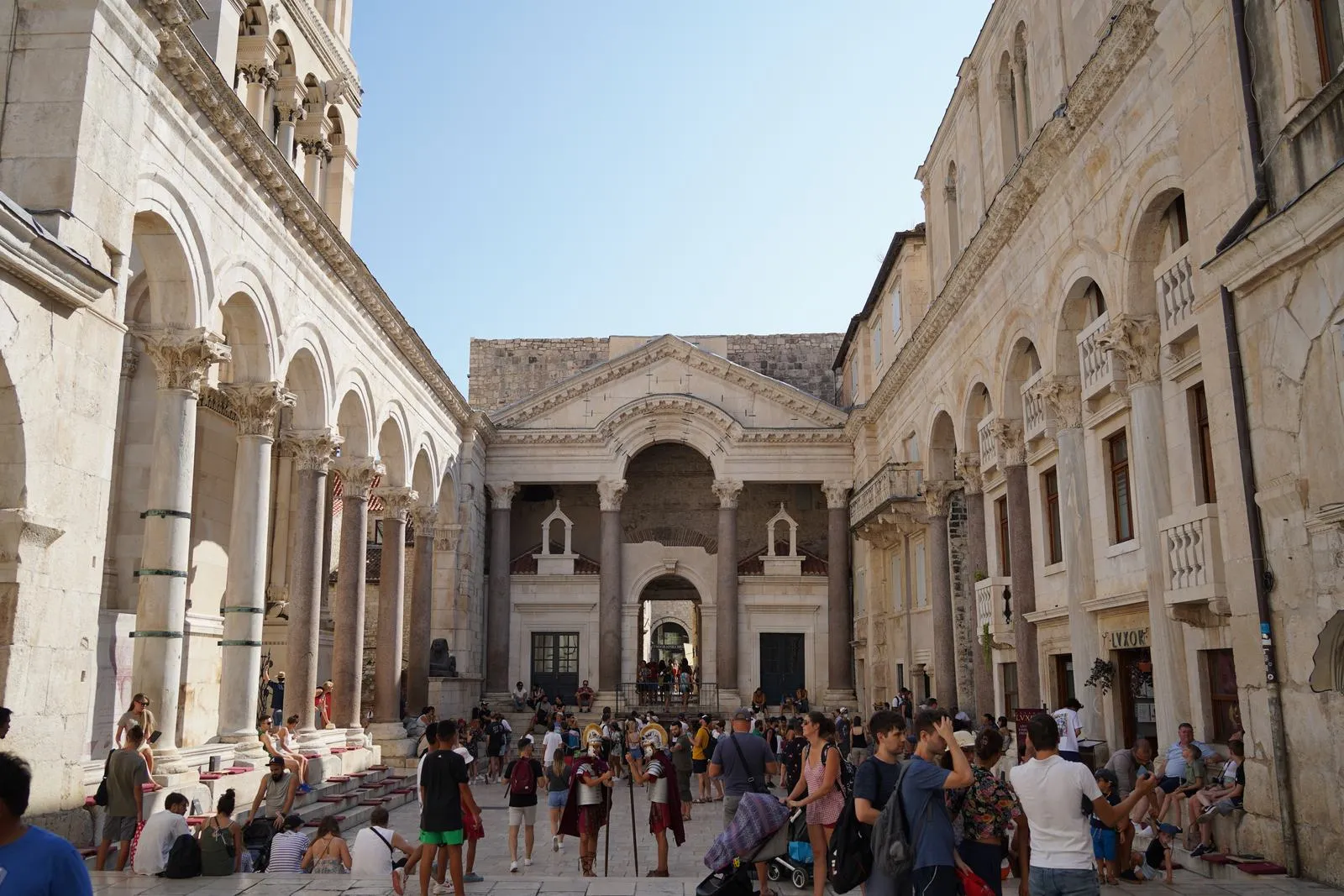
The palace is a walled rectangle about 215 metres by 180, with four gates named for the metals, Golden, Silver, Bronze, and Iron, and a cross of streets inside that still follows the Roman plan. Diocletian built it between 295 and 305 AD as a fortress villa for his retirement, and after the empire fell the locals moved in and turned the mausoleum into a cathedral and the temple into a baptistery. UNESCO listed the whole complex in 1979, and walking through it costs nothing. The gates never close.
Inside, the set pieces are worth knowing by name. The Peristyle is the central colonnaded square where the emperor would have received visitors, and the Vestibule behind it is the domed round hall that leads through to it. The underground cellars, or substructures, mirror the shape of the vanished imperial apartments above and are the part that most feels like a Roman ruin; they were also Daenerys’s dragon dungeon in Game of Thrones. The Cathedral of Saint Domnius is Diocletian’s own octagonal mausoleum, and its bell tower, climbed by a narrow 180-odd steps, gives the best view over the red roofs and the harbour.
Only the interiors are ticketed. The cathedral complex, which can include the crypt, treasury, baptistery, and the bell tower climb, is sold as combination tickets that run from around 10 to 18 EUR depending on which spaces you choose, and the underground cellars are a separate ticket of around 8 to 10 EUR managed by the city museum. Prices and bundles change, so check the Split tourist board or the ticket office board before you pay, and do not buy the largest option unless you actually want the tower and the treasury.
The old town and the Riva
The old town is the palace and the streets that grew around it, and the honest way to see it is on foot with no plan. Come through the Golden Gate from the north, where the huge statue of Gregory of Nin stands with its toe polished by decades of rubbing, and you arrive at the Peristyle. From there the lanes run between the four gates, past the fish market and the green market, the Prokurative square, and the People’s Square, known as Pjaca, which is the old civic heart of the city.
Below it all runs the Riva, the wide promenade along the harbour that is the front room of Split. It is a line of cafes under palms, and the local habit is to take a coffee there slowly and watch the ferries come and go. At the west end, near the Bronze Gate, the Republic Square and the remains of the Roman waterfront complete the circuit. In the evening the Riva fills and the palace courtyards turn into bars and restaurants, which is when the city is at its best.
The rhythm matters more here than in most cities. Between about 10:00 and 16:00 in summer the palace lanes belong to tour groups from the cruise ships, and the same streets at 08:00 or after 19:00 belong to residents and to you. Plan your walking and photographing for the edges of the day and save the middle for the beach or the shade.
Marjan hill
Marjan is the pine-covered hill that closes the city to the west, and it is the reason Split feels greener than its stone suggests. The whole peninsula is a protected forest park, with paths and stairs winding up through the trees, a handful of small chapels, and a viewing point at the top with the whole city and harbour laid out below. The climb from the town takes about half an hour at an easy pace, and the reward is the best free view in Split, especially at sunset.
Below the hill on its south side are the city’s other beaches, quieter and prettier than Bacvice. Jezinac, Kasjuni, and Bene are reached on foot through the park or by a short bus ride, and they are the locals’ choice for a proper swim away from the promenade crowds. A morning walk over Marjan and a swim at Kasjuni is one of the best half days in the city, and it costs nothing but the time.
Bacvice and the beaches
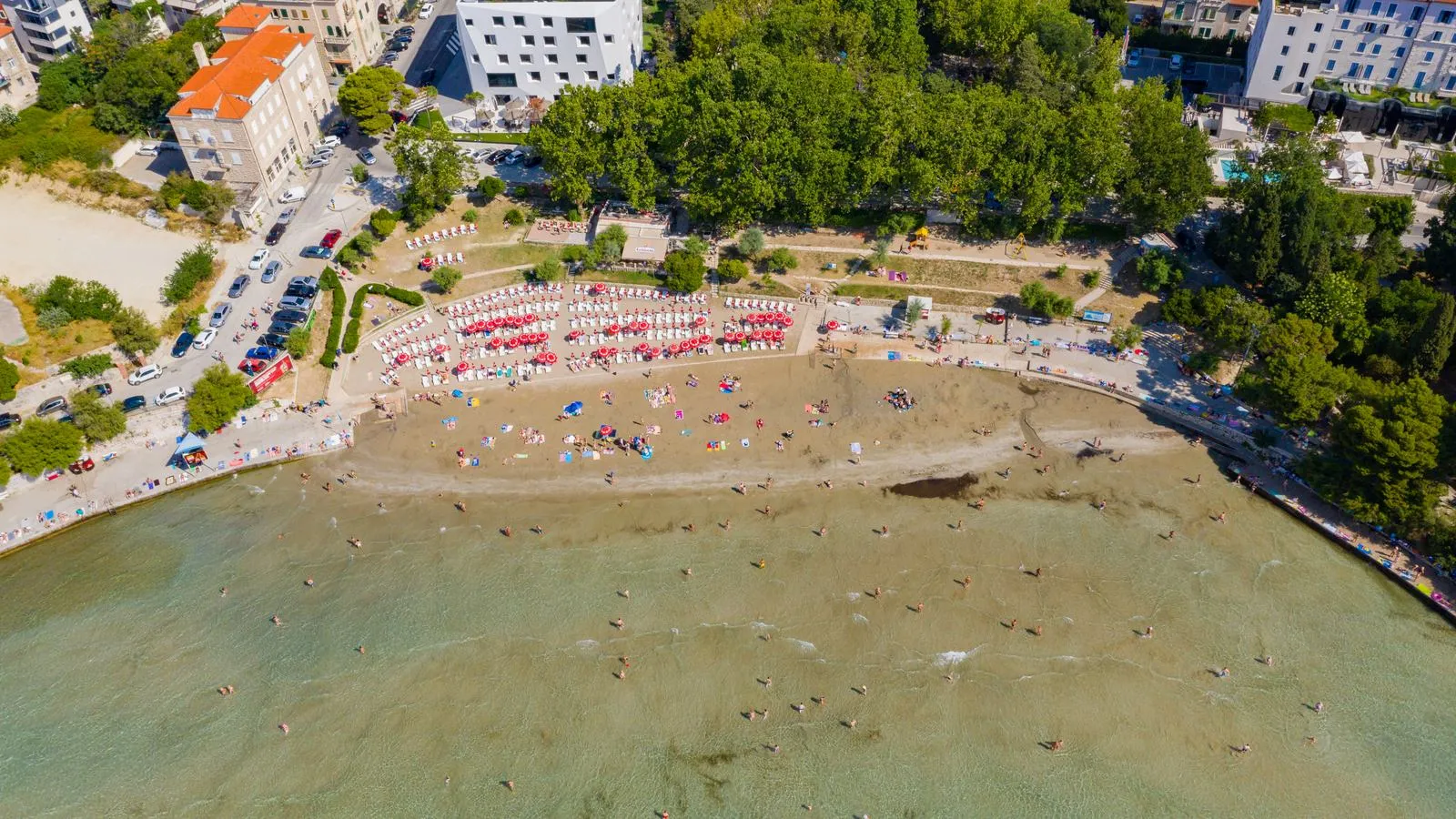
Bacvice is Split’s city beach, a sandy curve about fifteen minutes on foot from the old town, and it is unusual for Croatia because the sand is fine rather than pebbled. It is shallow for a long way out, which makes it good for families, and it is the home of picigin, the local game played in the shallows with a small ball and a lot of diving. In summer it is busy and full of life, with beach bars behind the sand and a beach club scene after dark.
If you want a calmer swim, head for the Marjan beaches on the far side of the hill, or take a bus out to the long pebble strips along the coast, which have clearer water and more space. The city beaches are for convenience and atmosphere rather than for pristine water, and the clearest swimming is always a short boat or bus ride away. Wherever you swim, the Adriatic is warm enough from June to October and reaches about 25 degrees in July and August.
Klis Fortress
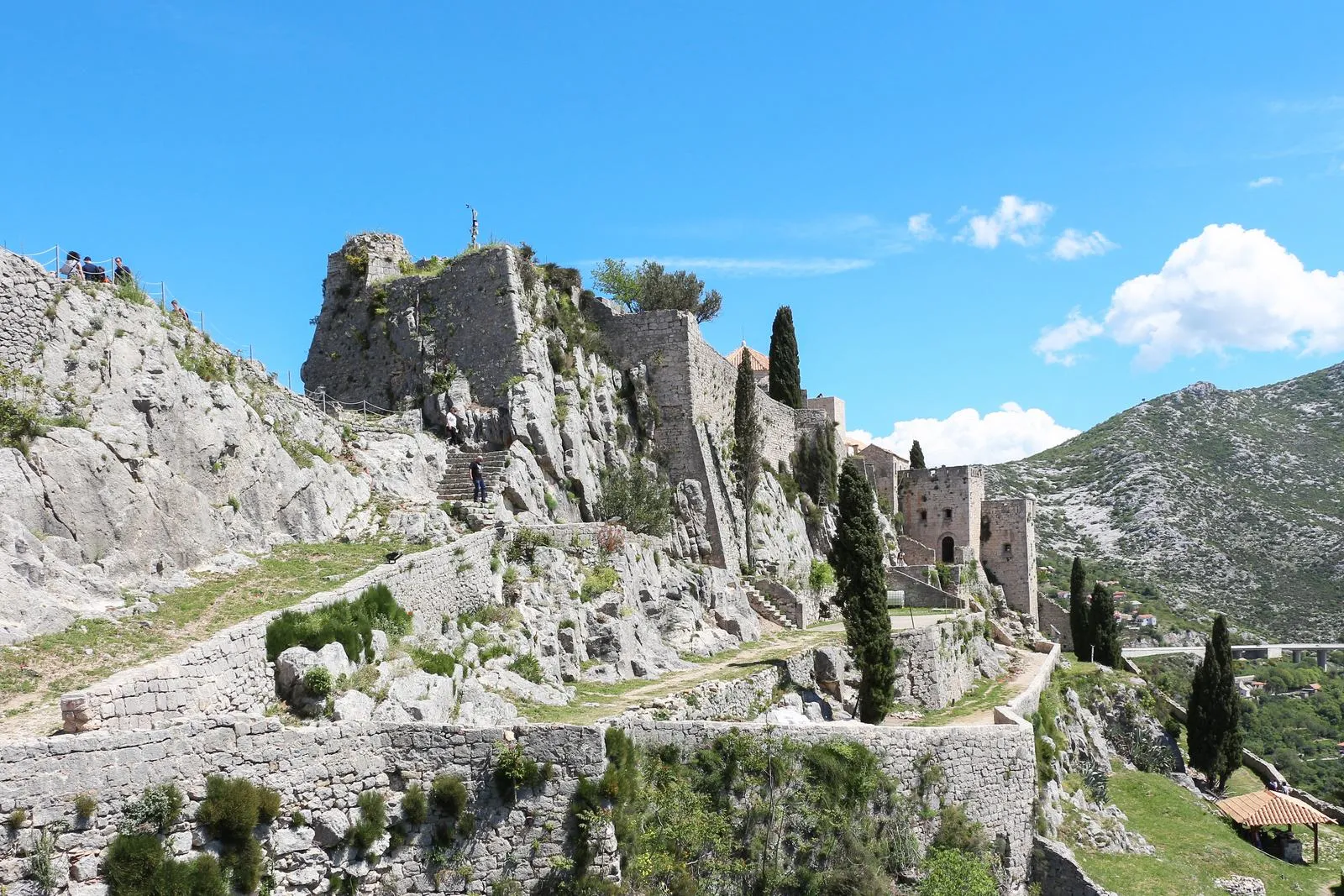
Klis Fortress is the ridge above Split that Game of Thrones used as the exterior of Meereen, and it is a half day that most people miss. It sits about 12 km inland, guarding the pass between the mountains and the sea, and it has been fought over for two thousand years, by Illyrians, Romans, Croats, Ottomans, and Venetians in turn. The walls climb the rock in layers, and from the top you look straight down over Split, the harbour, and the islands.
The official ticket is 12 EUR for adults and 4 EUR for children up to 15, open daily from 08:30 to 20:30, and the same ticket covers the interpretation centre in the village, the Stella Croatica estate, and the olive museum, per the fortress’s own site. Bus line 22 runs from Split to Klis in about half an hour for around 2 EUR with a prepaid ticket, or 4 EUR from the driver; check the timetable the morning you go, because departures are not frequent. A taxi is the easy alternative if you are short on time.
On the way back, the Roman ruins of Salona at Solin sit just below the fortress, once the capital of the Roman province of Dalmatia. The site is large and quiet, with an amphitheatre and early Christian basilicas, and it makes a natural pair with Klis if you have a car or a patient bus plan.
The islands
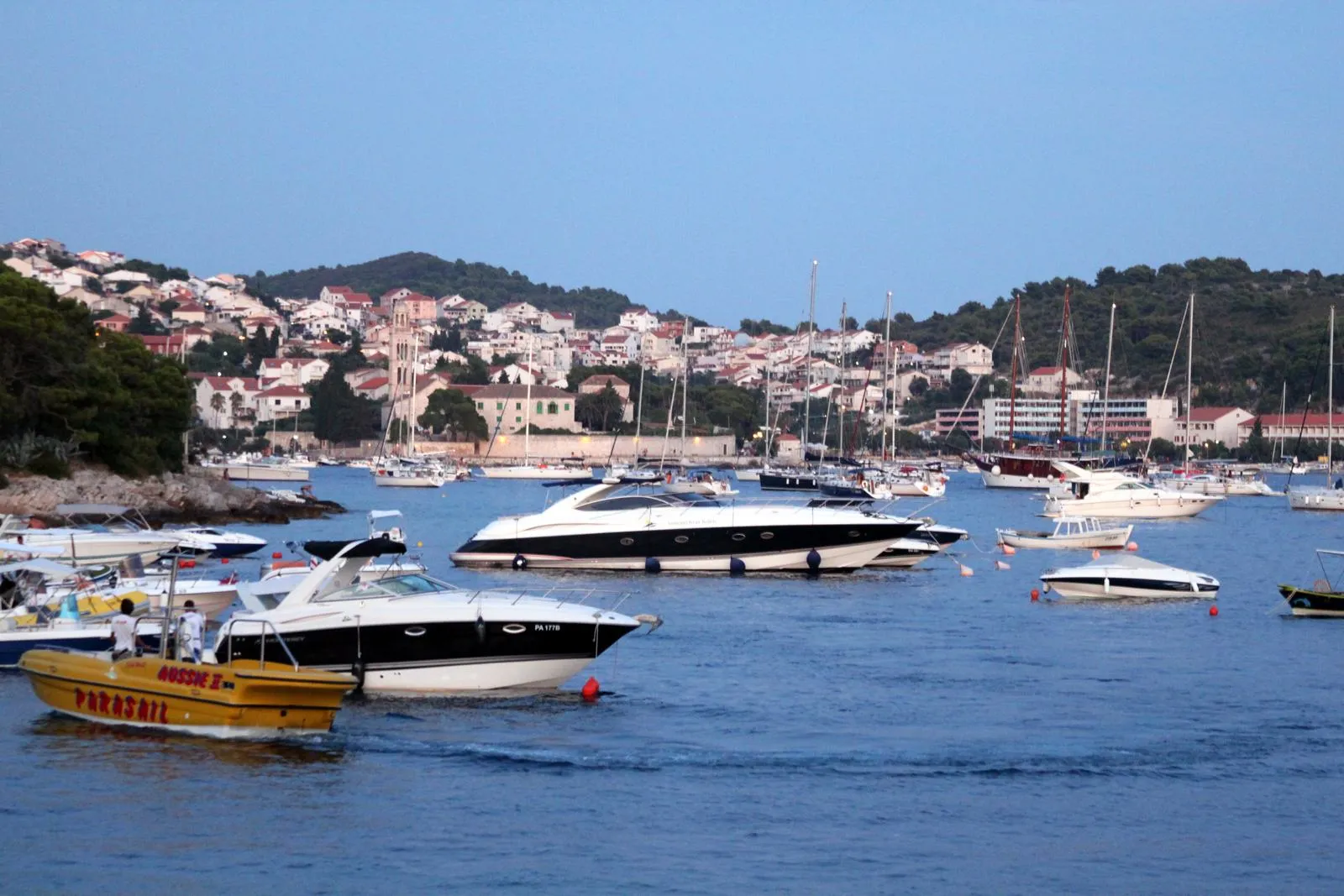
Split’s ferry port is the busiest in Croatia and the reason the city works as a base. Fast catamarans run to Hvar town in about 50 minutes to an hour, several times a day in summer, with adult fares from around 10 to 25 EUR depending on the operator and season, and the same port sends boats to Brac, Solta, and Vis. If you are staying on Hvar town and travelling on foot, take the catamaran, which docks in front of the old town; the car ferry goes to Stari Grad on the far side of the island, about a 20 km drive from Hvar town. If you are deciding between the islands, the Hvar vs Korcula comparison covers the differences.
Brac is the closest island, reached by the car ferry from Split to Supetar in under an hour, and it holds the long pebble beach at Bol, the spit of Zlatni Rat, which shifts shape with the wind. Vis, further out, is the quietest and most unspoiled, with the Blue Cave at Bisevo and a slow, wine-and-fishing rhythm. Solta is the small, sleepy one that locals use when they want a beach without a crowd. Compare times and book on Omio before you go, because morning catamarans sell out days ahead in July and August.
If you are heading south along the coast instead, fast ferries also run from Split to Dubrovnik in about four and a half hours, which is the scenic way to link the two cities without crossing back through the interior. The Dubrovnik guide picks up the other end of that route.
Dalmatian food
Split eats Dalmatian, which means fish, olive oil, and vegetables, cooked simply and served in konobas, the traditional taverns. The dish to order first is pašticada, beef slow-braised in wine, vinegar, and dried fruit until it falls apart, served with gnocchi. Alongside it come crni rižot, the black cuttlefish risotto, and brudet, a thick fish stew, and if you see peka on the menu, that is meat or octopus cooked under a metal lid buried in embers, which you usually need to order a few hours ahead.
For something quick and local, look for soparnik, a thin savoury pie of chard and onion, and fritule, the little fried dough balls dusted with sugar. The fish market at the edge of the palace sells the morning catch, and the green market beside it is where the city shops for produce. Eat at the Riva for the view and the atmosphere, but walk a few streets inland or into the neighbourhoods around the palace for better value on the same food.
Split or Dubrovnik?
They are the two cities most visitors to Croatia weigh up, and they are different sizes of the same idea. Split is the bigger, busier, more lived-in city, with a Roman palace at its centre, a real everyday life around it, and the country’s main ferry port. It is cheaper, easier to reach, and the better base for island hopping.
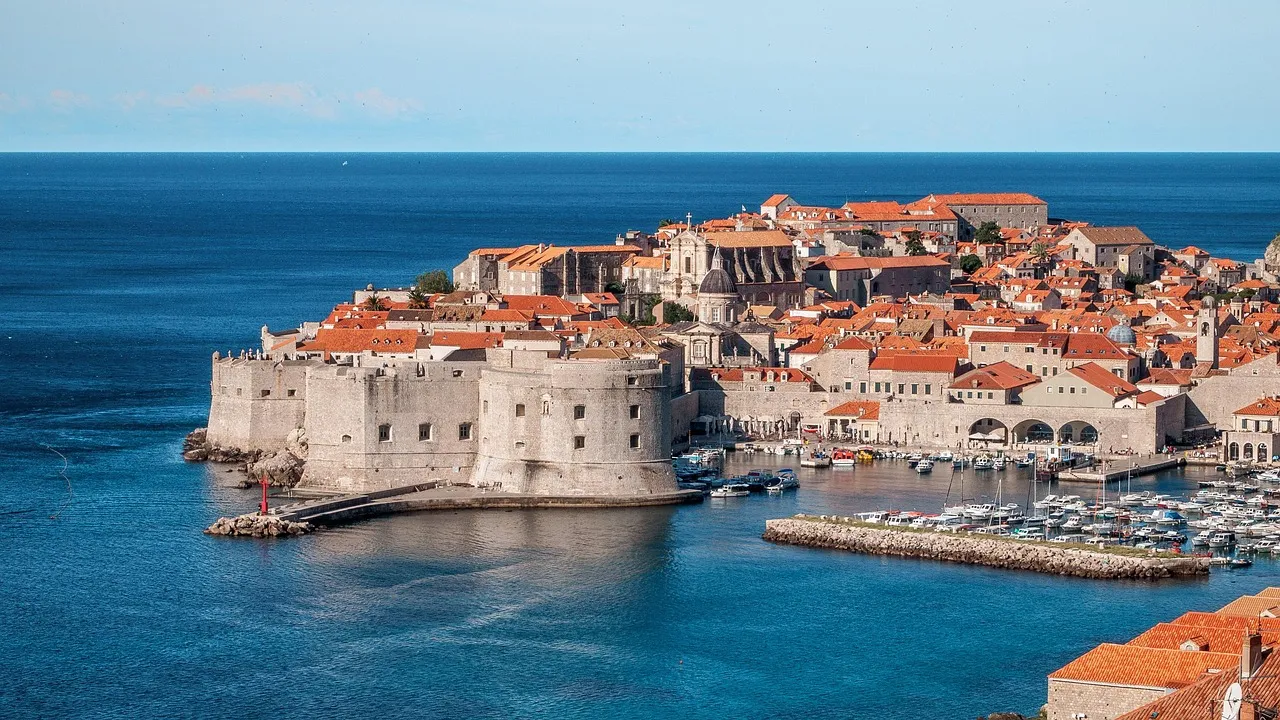
Dubrovnik is smaller and more beautiful, a medieval walled town on the sea where the whole point is the walls and the view, and it is priced accordingly and gets very crowded when the cruise ships are in. Pick Split if you want a city break with beaches, day trips, and ferries, and Dubrovnik if you want a short, polished stay inside the walls. The two link by ferry and by road, so a trip that includes both is easy. Read the Dubrovnik guide for the other side, and the Croatia guide for how the coast fits together.
When to go
May, June, September, and October are the best months. May and June are warm and green with the city not yet crowded, September and October hold the warmest sea of the year with the cruise crowds thinning, and early October is still warm enough to swim. July and August are the hottest and busiest, with daytime highs around 32 degrees and the palace lanes packed through the middle of the day.
The sea warms slower than the air, which is why late summer and early autumn are the best swimming. It is cold through the winter and spring, comfortable from June, at its warmest in July and August at about 25 degrees, and still near 21 degrees in October. If you can choose, aim for late June or early September for the balance of warm water and manageable crowds.
Getting there
Split Airport (SPU) is about 25 km west of the centre, near Kastela and Trogir, and the Platanus shuttle is the easy option: it meets arriving flights, runs to the main bus station in 30 to 40 minutes, and costs about 10 EUR one way. The bus station is a five minute walk from the old town, the ferry port, and the Riva, so you can often skip a taxi entirely. The public bus line 37 costs around 3 EUR but is slower and drops you further out, and a taxi or transfer is the fastest door to door option if you have luggage or arrive late.
By sea, Split is the hub of the Dalmatian coast. Fast catamarans run to Hvar, Brac, Solta, and Vis, and down the coast to Dubrovnik, and the car ferries to the islands leave from the piers just south of the bus station. Ferries from Italy also arrive here, from Ancona and Pescara, which makes Split a possible arrival point from across the Adriatic. Buy island tickets a day or two ahead in summer, and check whether your boat leaves from the catamaran quay in front of the old town or from the car ferry piers further south, because the two are a ten minute walk apart. For the wider country, browse the Croatia guide and all the guides.
Where to stay
Stay inside or beside the palace for a first visit. Rooms in the old town put the Peristyle, the Riva, and the market on your doorstep, and the evenings in the courtyards are the best thing about Split. The trade-off is noise, stairs, and price in peak season, so check the exact location and whether the lane is car free before you book, and expect to carry your bags the last stretch.
The neighbourhoods just outside the walls, around the green market, the bus station, and the streets behind the Riva, are cheaper and quieter while still walkable to everything. Further out, the areas along the coast toward Bacvice and Znjan suit beach-focused stays, and the hillside streets above the city trade convenience for views. Wherever you stay, air conditioning matters in July and August, and a room on a pedestrian lane will be quieter than one on a main street.
What a day costs
Planning figures for 2026, per person per day and excluding flights and accommodation: a budget day runs 45 to 65 EUR, a comfortable day 85 to 130 EUR, and a mid-range day 150 to 220 EUR. Split is cheaper than Dubrovnik but not cheap, and the comfortable number covers the palace interiors, a konoba lunch and dinner, a beach day, and transport. These ranges are planning estimates built from the ticket, transport, and food prices cited in this guide, not an official index.
The season moves the numbers more than the budget table does. July and August bring peak hotel rates and the busiest old town, while May, June, and September and October keep the city calmer and the rooms cheaper. If your dates are flexible, late June and early September give the best balance of warm sea and breathing room.
Practical information
| Getting around | The old town and the Riva are walkable, and the palace is car free in places, so leave the car outside the walls. Promet Split runs the city buses, with a single ticket from about 1.30 EUR if you buy it in advance and more from the driver, and the airport bus 37 runs along the coast. Catamarans leave from the quay in front of the old town and car ferries from the piers south of the bus station. |
|---|---|
| When to go | May, June, September, and October are the best months, with warm sea and lighter crowds. July and August are hot and busy, around 32 degrees, with the palace lanes packed through the middle of the day. The sea is warmest in July and August, about 25 degrees, and still around 21 degrees in October. |
| Money | Croatia uses the euro. Cards are widely accepted in hotels, restaurants, and shops, but keep some cash for markets, small konobas, and buses. Tipping is not obligatory, and rounding up or leaving a small percentage on a good meal is appreciated. |
| Health and safety | Split is a safe, well-developed city, and the main risks are the summer sun and the sea. Carry water, use high factor sun cream, and wear shoes with grip for the polished palace stone, which gets slippery. Watch for sea urchins on the rocky beaches, and keep an eye on your belongings in the busiest lanes. |
| Sightseeing rhythm | Walk the palace early or after 19:00 to miss the cruise crowds, do Marjan and the beach in the middle of the day, and save Klis or the islands for a full day. Check the cruise schedule if you want the quietest possible old town, and book island ferries a day or two ahead in July and August. |
Disclosure. This blog post contains affiliate links. If you book through them, Mediterranean Vibes may earn a small commission at no extra cost to you; it is how the site stays up.


.jpg)

