Crete is not one holiday, which is why it confuses people who book it like a small island. It runs about 260 km from west to east, has three international airports or ports to choose between, and packs a Minoan palace, three Venetian old towns, two of the most photographed beaches in Greece, and the country’s most distinctive food onto one landmass the size of a small country. A week is the minimum. Ten days is better.
The island also has three climates in one. The north coast, where Heraklion, Chania, and Rethymno sit, is the busy, developed side. The south coast faces the Libyan Sea, runs warmer and drier, and holds the quietest beaches. And the mountains down the middle, the White Mountains and the Lasithi and Ida ranges, stay cool enough to hike in August and hold snow into spring. Where you base yourself decides what kind of trip you get.
This guide gives you the numbers that matter for 2026 with the source attached, because Greek state sites set entry prices and hours centrally and they change by season. What Knossos and the museums cost, how the airports and the Athens ferries work, which beaches belong to which coast, the real length of the Samaria walk, and a daily budget range. Every figure is checked against an official 2026 page, and the ones worth rechecking are linked as you go. If you are planning the wider trip, compare all seven countries in the country index.
Plan and book
3 partners- Flights
Find a route into Heraklion from wherever you start, and compare the summer fares early; Chania is the western alternative.
Search flights - Ferries and island hops
Compare the Piraeus to Heraklion crossing with the summer hops to Santorini and the Cyclades.
Compare routes - Where to sleep
Rooms in Chania, Rethymno, Heraklion, and the south coast, sorted by area, price, and review score.
Find a room
Heraklion and Knossos
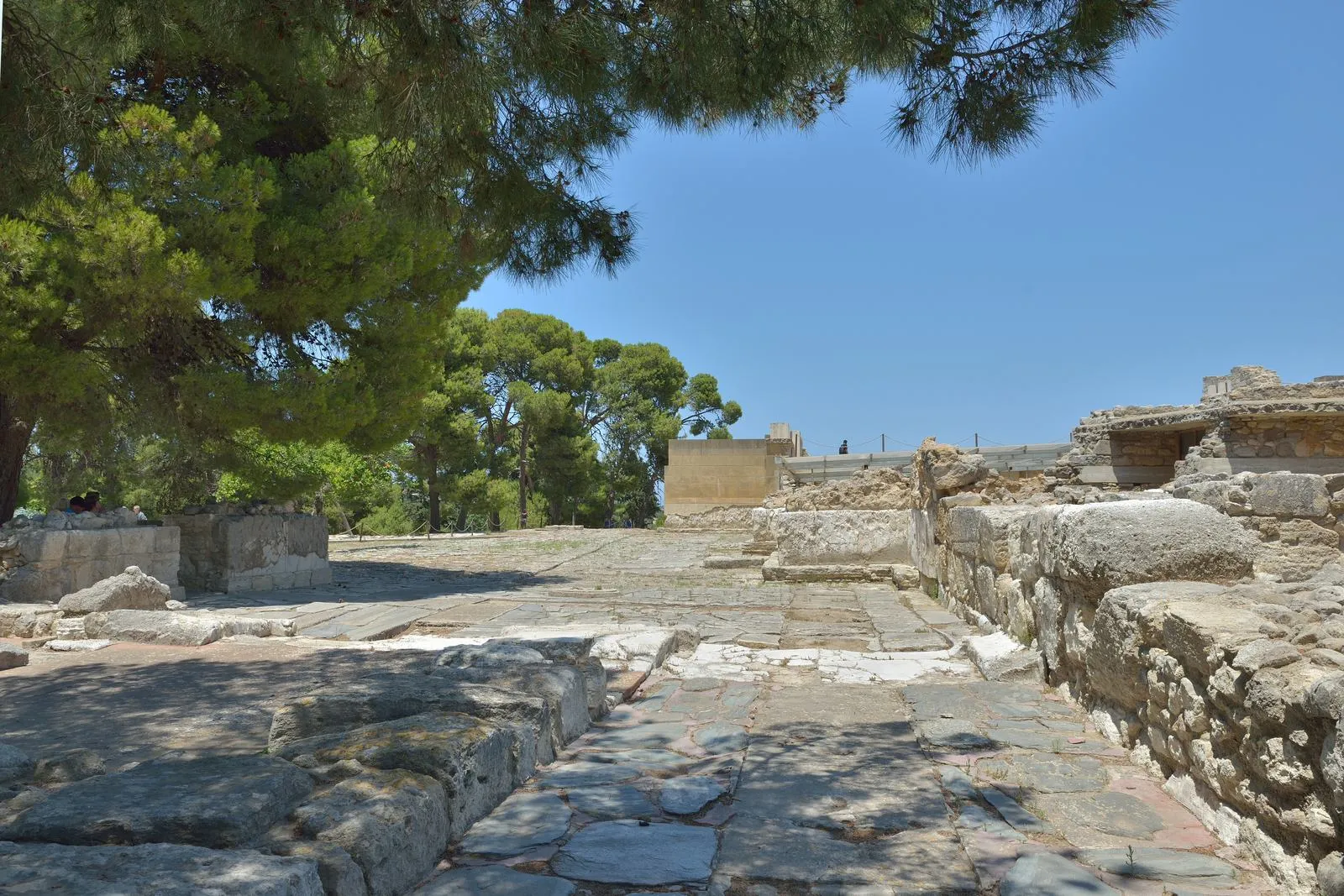
The Minoan palace at Knossos is the reason most people start in Heraklion, and it is worth the fuss. It is the largest Bronze Age palace on Crete and the ceremonial centre of a civilisation that ran the island from about 2000 to 1400 BC, with a throne room, storerooms of giant pithoi jars, a Grand Staircase, and the bull court that fed the Minotaur legend. The site is partly reconstructed by the archaeologist Arthur Evans, and that is the honest argument about it: the concrete and the painted columns are twentieth-century additions, but they make the plan legible in a way bare ruins do not.
The official 2026 ticket is 20 EUR for adults and 10 EUR reduced, sold with timed entry through the Ministry of Culture portal at hhticket.gr. The old combined ticket with the Heraklion Archaeological Museum has been discontinued, so the museum is now a separate 20 EUR ticket. Summer hours run 08:00 to 20:00 from April, stepping down through the autumn to 08:30 to 17:00 in winter; check the Ministry listing before a plan depends on the closing time. The site is about 5 km from Heraklion centre, reachable on city bus line 2 from the port and the centre in around 20 minutes.
Pair the palace with the Heraklion Archaeological Museum, which holds the originals the site stands in for: the bull-leaping fresco, the Prince of the Lilies, and the Phaistos Disc. Do Knossos at opening and the museum in the afternoon, because the tour groups move between the two in the middle of the day. Heraklion itself is a working city rather than a pretty one, but the Venetian Koules Fortress on the harbour and the old market lanes are worth a wander.
Chania
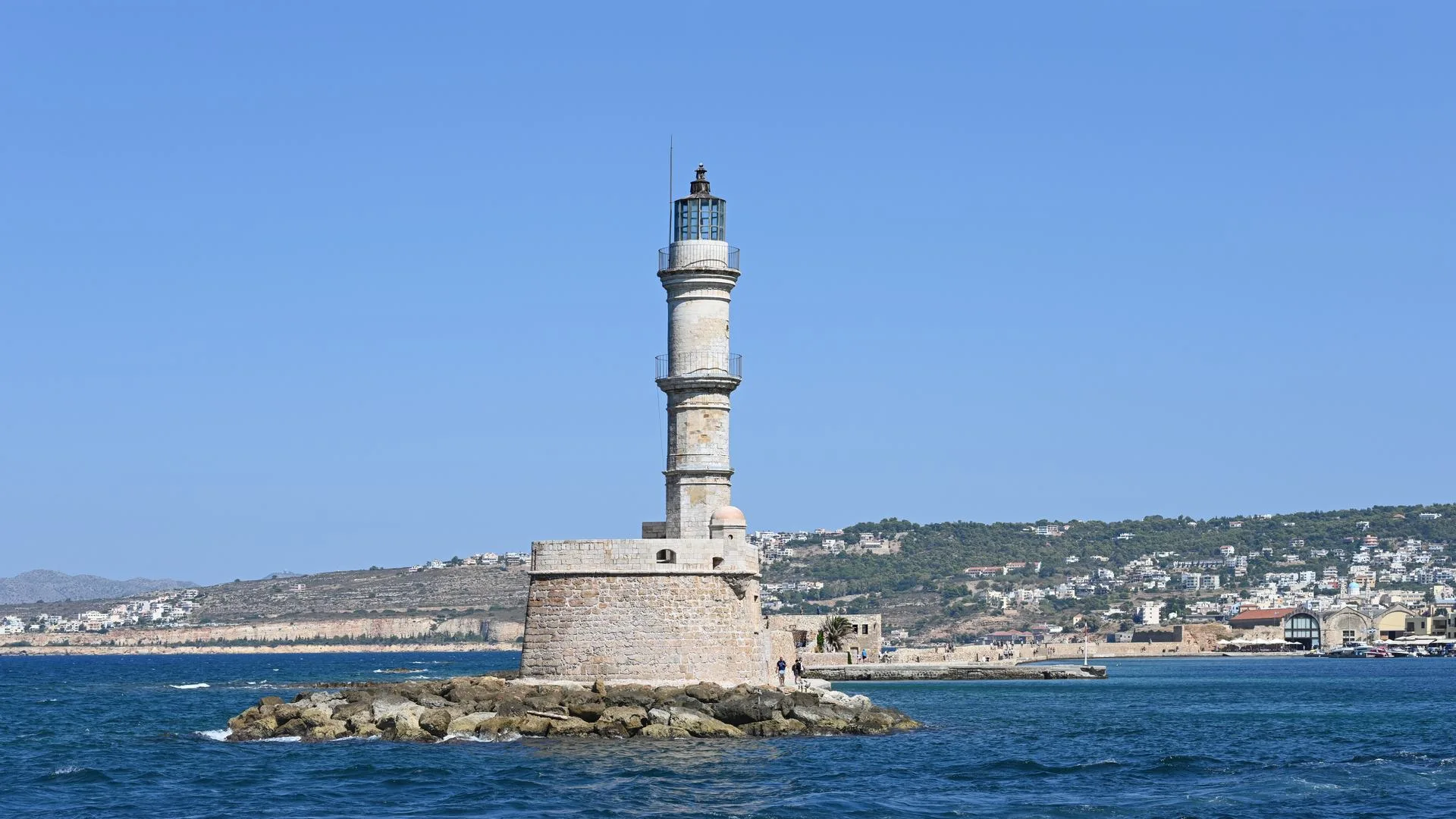
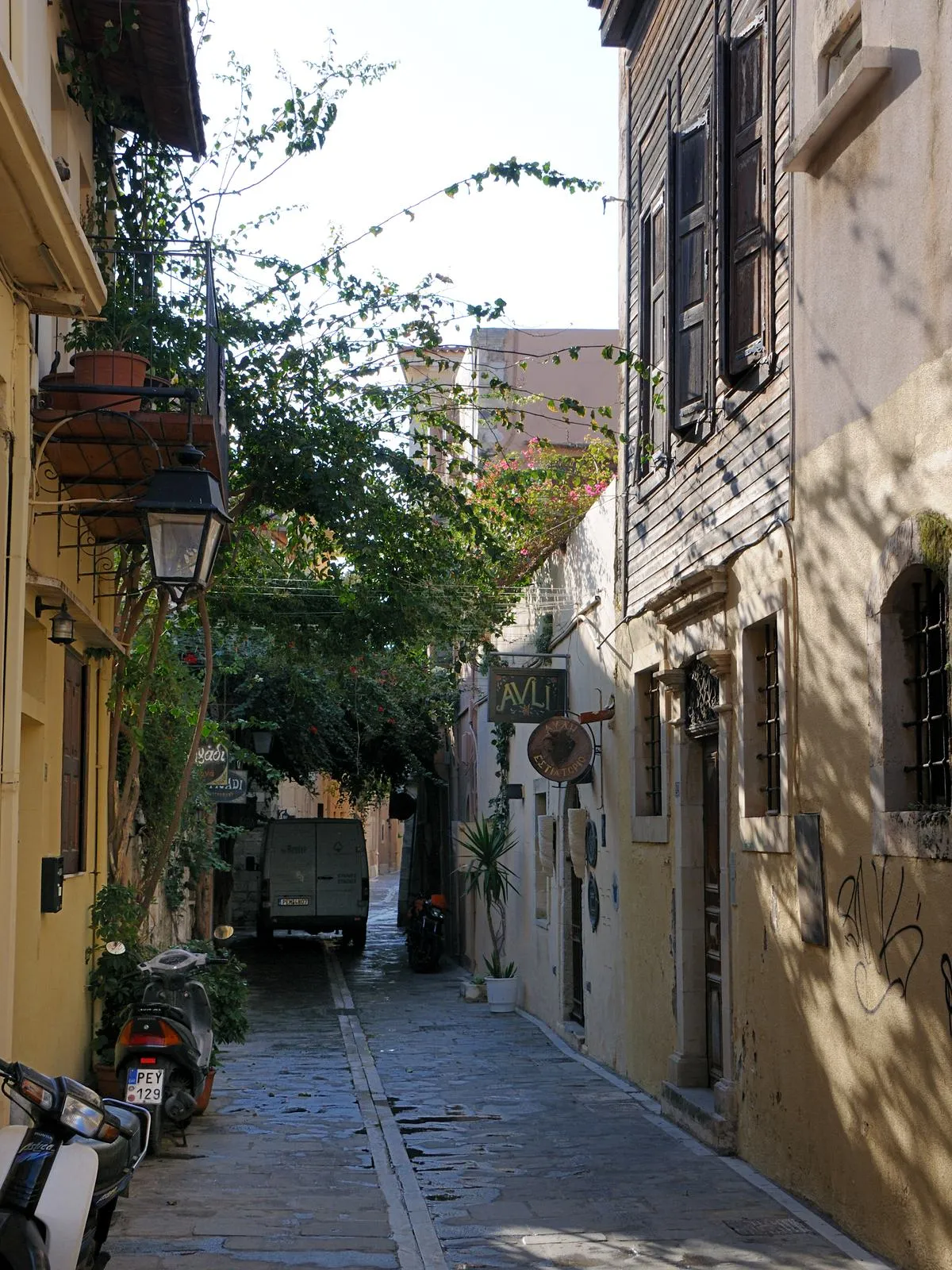
Chania is the island’s most beautiful city and the best base in the west. Its Venetian harbour curls around a lighthouse that is the postcard of Crete, and behind it the old town is a maze of Venetian and Ottoman lanes, a Turkish mosque on the waterfront, and a covered market at its centre. The harbour was built by the Venetians from the fourteenth century and later fortified by the Ottomans, and the mix shows in the architecture more than on any other Greek island.
Base here for the west: the Samaria Gorge, Elafonissi, Balos, and the beaches of the Akrotiri peninsula are all day trips, and the city itself rewards two slow days. The waterfront tavernas are priced for the view, so walk a few lanes inland for the better food. Chania also has its own airport at Souda, about 15 km away, which makes the west reachable without driving from Heraklion.
Rethymno
Rethymno sits between the two big cities and is often skipped, which is a mistake. Its old town is nearly as handsome as Chania’s, with a Venetian fortress above the sea, a working fishing harbour, and a long sandy beach running east from the town, so you get a city break and a beach day in one place. It is smaller and calmer than Chania, and the food and hotel prices are gentler.
The Fortezza, the vast Venetian citadel on the hill, is the sight, with views down over the rooftops and the sea. Below it, the lanes around the Neratze Mosque and the Rimondi Fountain hold the cafés and the craft shops, and the beach at the east end of town runs for kilometres. Rethymno is also the best compromise base if you want to see both Knossos and the west without moving hotels.
The beaches
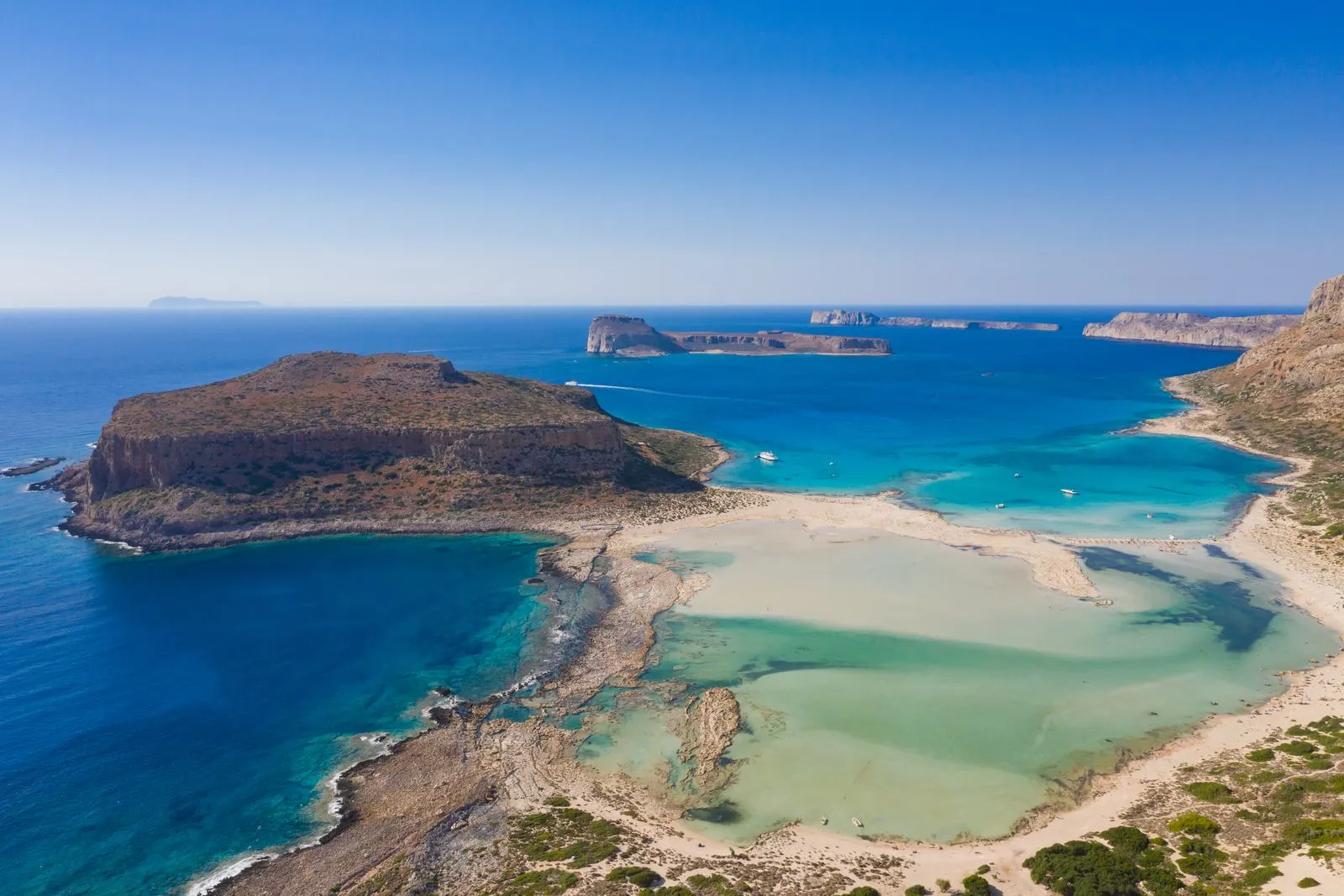
Crete’s beaches are spread over two coasts, and the difference matters. The north coast, where the cities sit, is developed and often windy, with the meltemi blowing from June to September. The south coast, from Plakias to Matala and Ierapetra, is warmer, calmer, and drier, often in sun while the north sits under cloud. The two famous beaches, Balos and Elafonissi, are in the far west and both are protected nature reserves.
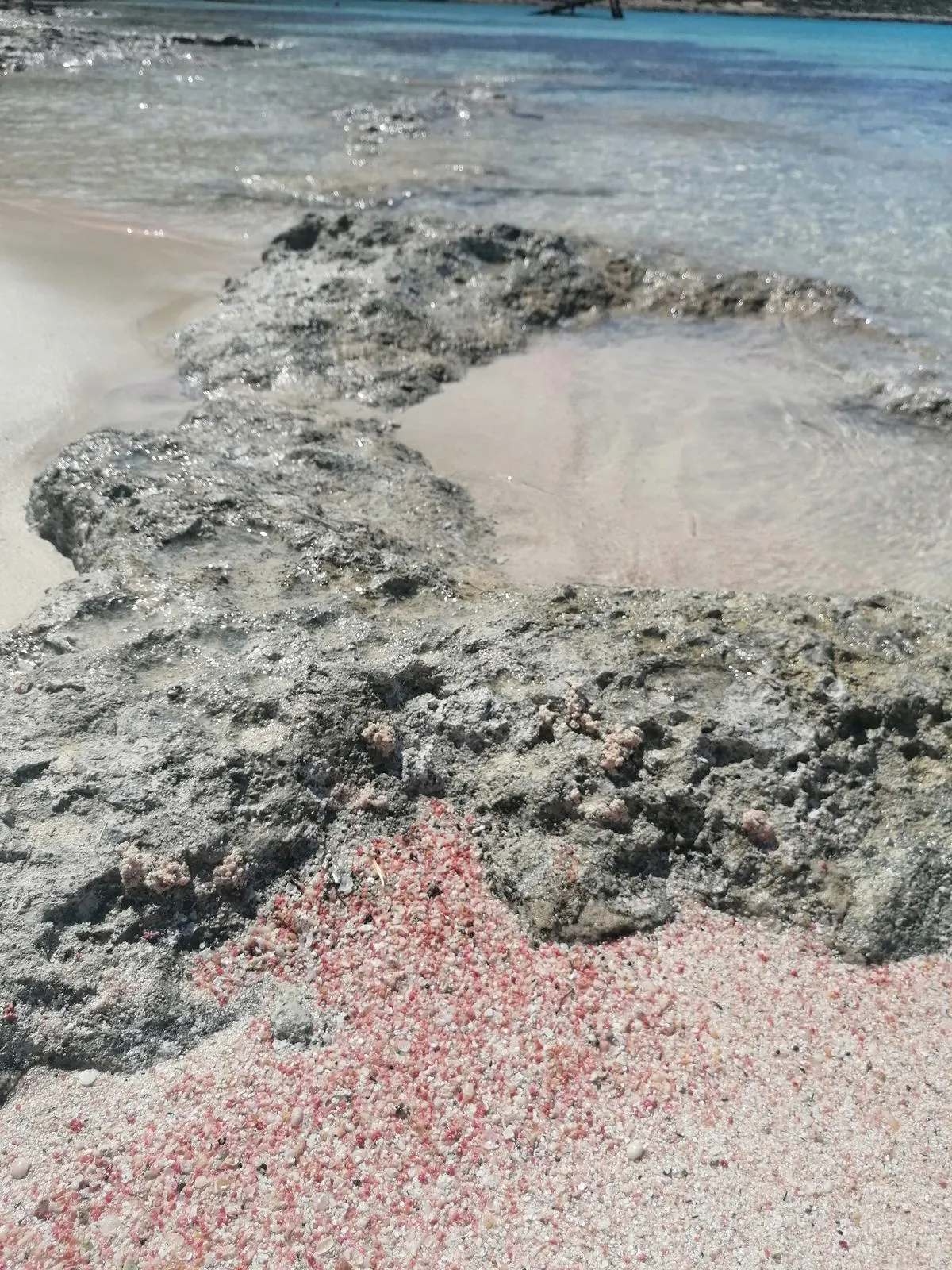
Balos is a lagoon and sandbar on the Gramvousa peninsula, reached by boat from Kissamos or by a rough dirt road and a long walk, and it is one of the most photographed places in Greece. Elafonissi, further south, is the pink sand beach, where crushed shells tint the sand at the waterline and you can wade across a shallow lagoon to a small island. Both get packed in July and August, and both are best at opening time or on an early boat. Fines apply to anyone taking sand or shells, because the sites are protected.
Beyond the two stars: Preveli, where a palm gorge meets the sea on the south coast, is one of the loveliest. Vai, in the far east, has a natural palm forest behind the sand. Matala, on the south coast, is the former hippie cave beach. And the long organised strips at Platanias, Rethymno, and Hersonissos on the north coast are where the sunbeds and water sports are. Choose the north for facilities, the south for warmth and space.
Samaria Gorge and the mountains
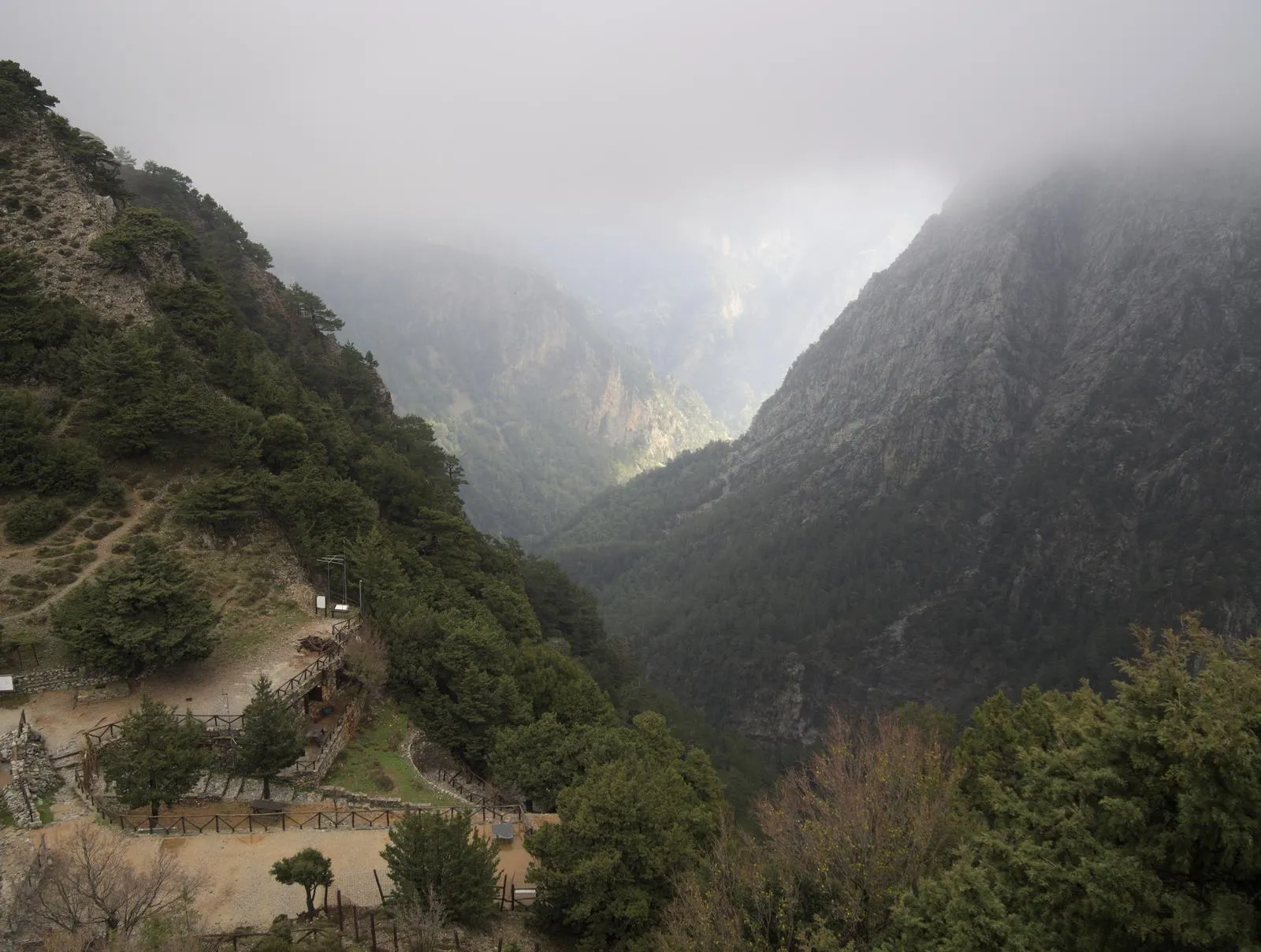
The Samaria Gorge is Europe’s longest gorge walk and the classic Cretan hike. The national park opens for the 2026 season on 19 May, and the full walk runs from Xyloskalo on the Omalos plateau down to Agia Roumeli on the Libyan Sea. It is about 13 km inside the park plus another 3 km from the exit to the village, so 16 km in total, with a descent of more than 1,200 metres that takes most people five to seven hours. The famous Iron Gates, where the walls narrow to a few metres, come near the end.
The entry fee is 10 EUR, free for children under 18 and for EU visitors over 65, and tickets are sold through the official park system. The rules matter: you have to start in the morning, because walkers are not allowed past the first section after about 14:00, and you hand in your ticket on the way out so the wardens know nobody is left inside. Wear proper shoes, carry water and sun protection, and arrange your return, either the ferry from Agia Roumeli or a bus back over the mountains. The official ticket portal and the park site have the current details.
Samaria is not the only walk. The Imbros Gorge is shorter and easier, the Kourtaliotiko and Kotsifou gorges cut dramatic scenery on the road south, and the White Mountains hold high routes for the prepared. The Lasithi Plateau, ringed by windmills in the east, is the easy mountain day, cool and green when the coast is baking.
Cretan food
Cretan food is the best in Greece and the reason many people come back. It runs on olive oil, wild greens, mountain herbs, and whatever the sea and the hills give: this is the original Mediterranean diet, eaten as everyday food rather than a health programme. The dish to order first is dakos, a barley rusk softened with tomato, olive oil, and myzithra cheese, which is Crete’s answer to bruschetta.
Then work through the rest. Kalitsounia are small cheese or herb pastries, fried or baked, found everywhere. Chochlioi are snails stewed with rosemary and tomato, a local speciality worth trying once. The cheeses are excellent: graviera, kefalotyri, and the soft myzithra. Lamb is slow-roasted with potatoes and herbs, and the seafood is whatever came off the boat, grilled whole. To drink, it is raki, the local grape spirit that arrives free at the end of a meal, and the island’s own wine, which has improved out of all recognition.
Eat in the villages rather than the harbours for the value: a mountain taverna in Anogeia or a village on the Lasithi plateau serves a meal that costs half the waterfront price and tastes better. In the cities, the market lanes of Chania and Heraklion are where the locals eat.
Crete or Rhodes?
They are the two Greek islands most people weigh up, and they suit different trips. Crete is the one for a road trip: it is far bigger, wilder, and more varied, with the Samaria Gorge, the food, and long stretches of south coast that feel remote. It is also the one that rewards a week or more and a car, because the distances between the highlights are real.
Rhodes is more compact and easier without a car, built around a single walled medieval town with the Acropolis of Lindos and short ferries to Symi and Turkey. If you have four or five days and want history within walking distance, Rhodes is the easier choice. If you have a week and want gorges, beaches, and the best food in Greece, choose Crete. Read the Rhodes guide for the comparison from the other side, and the Greece guide for how the island groups fit together.
When to go
May, June, September, and October are the best months. May and June are warm and green, the gorges are open, and the beaches are not yet crowded. September and October hold the warmest sea of the year, around 25 to 26 degrees, with the peak crowds gone and prices dropping. July and August are the hottest and busiest, with coastal highs around 31 degrees, inland temperatures above 35, and the famous beaches packed by mid-morning.
The sea lags the air by a month or two, which is the key to timing the trip. It is still cool in May, at around 19 degrees, peak conditions arrive from July through September, and the south coast holds its warmth into October when the rest of Greece has cooled. The north coast catches the meltemi wind in high summer, which can churn up the exposed beaches, while the south stays calmer and warmer.
Getting there
By air, Crete has two main airports. Heraklion (HER) in the centre is the busier and closer to Knossos, about 5 km from the city. Chania (CHQ) in the west is the better arrival for Chania, Rethymno, and the western beaches. Both take direct charter and scheduled flights from across Europe in season, and both have bus links to their city centres. Renting a car at the airport is the standard move, because public transport between the regions is slow.
By sea, overnight ferries run daily from Piraeus in Athens to Heraklion and to Chania, taking roughly 8 to 10 hours, with fares from around 33 EUR for a deck seat, according to Ferryhopper, and cabins available for the crossing. The conventional ferries sail overnight and arrive early, so a cabin turns the crossing into a night of sleep. There are also high-speed ferries in summer, plus seasonal connections from Crete to Santorini, Mykonos, and the Cyclades, which makes island-hopping possible without returning to Athens. Omio compares the sailings. For the wider country, browse the Greece guide and all the guides.
Where to stay
Base in the west for a first visit. Chania is the best-looking city on the island and the natural hub for the Samaria Gorge, Elafonissi, and Balos, with the old town and the harbour on your doorstep. Rethymno is the smaller, calmer alternative in the middle, with a long beach and easy access to both coasts. Both work well for two or three nights each if you would rather not move too often.
Heraklion is the base for Knossos and the east, but it is a working city and less charming than the other two. Further east, Agios Nikolaos and Elounda are the upscale resort end, with calm water and a string of luxury hotels. The south coast, around Plakias, Paleochora, and Matala, is the quiet, bohemian choice, and Ierapetra in the far south-east has the longest warm season on the island.
Wherever you stay, book early for July and August, and check whether you need a car. The west works with buses to the main beaches, but the south and the gorges are much easier by car, and the distance between the two ends of the island is a full day of driving.
What a day costs
Planning figures for 2026, per person per day and excluding flights, car hire, and accommodation: a budget day runs 40 to 60 EUR, a comfortable day 80 to 120 EUR, and a mid-range day 140 to 200 EUR. Crete is cheaper than Santorini or Mykonos and roughly in line with Rhodes, and the food is the best value on the island: a village taverna lunch can cost half what you would pay on a waterfront. These ranges are planning estimates built from the ticket, transport, and food prices cited in this guide, not an official index.
The season moves the numbers more than the budget table does. July and August bring peak hotel rates and full beaches, while May, June, and September and October keep the island quieter and the rooms cheaper. Early autumn is the sweet spot, with the warmest sea of the year and prices already falling, and the south coast stays swimmable into late October.
Practical information
| Getting around | A car is the difference between seeing Crete and queuing for it. The main road along the north coast links Heraklion, Rethymno, and Chania, and the south is reached over mountain passes. KTEL buses cover the cities and many beaches, but services to the gorges and the south coast are slow and infrequent. Book car hire early for July and August, and take the mountain roads slowly. |
|---|---|
| When to go | May, June, September, and October are the best months, with warm sea and lighter crowds. July and August are hot and busy, around 31 degrees on the coast and higher inland. The sea is warmest from July to October, at about 25 to 26 degrees, and the south coast stays swimmable into late October. |
| Money | Greece uses the euro. Cards are widely accepted in hotels and restaurants, but keep cash for village tavernas, markets, and buses. State sites and the Samaria park take cards or e-tickets, and it is worth buying the timed tickets online before you go. |
| Health and safety | Crete is a safe, well-developed island, and the main risks are the summer heat and the sea. The Samaria walk is a serious full-day hike, so wear proper shoes, carry water, and start early. On the coast, use high factor sun cream, watch for sea urchins on rocky beaches, and respect the protected status of Balos and Elafonissi, where removing sand or shells is fined. |
| Sightseeing rhythm | Do Knossos at opening and the museum later, the old towns of Chania and Rethymno in the evening, the gorges early, and the beaches before the wind builds in the afternoon. Book the Knossos and Samaria tickets and any ferry a day or two ahead in July and August. |
Disclosure. This blog post contains affiliate links. If you book through them, Mediterranean Vibes may earn a small commission at no extra cost to you; it is how the site stays up.