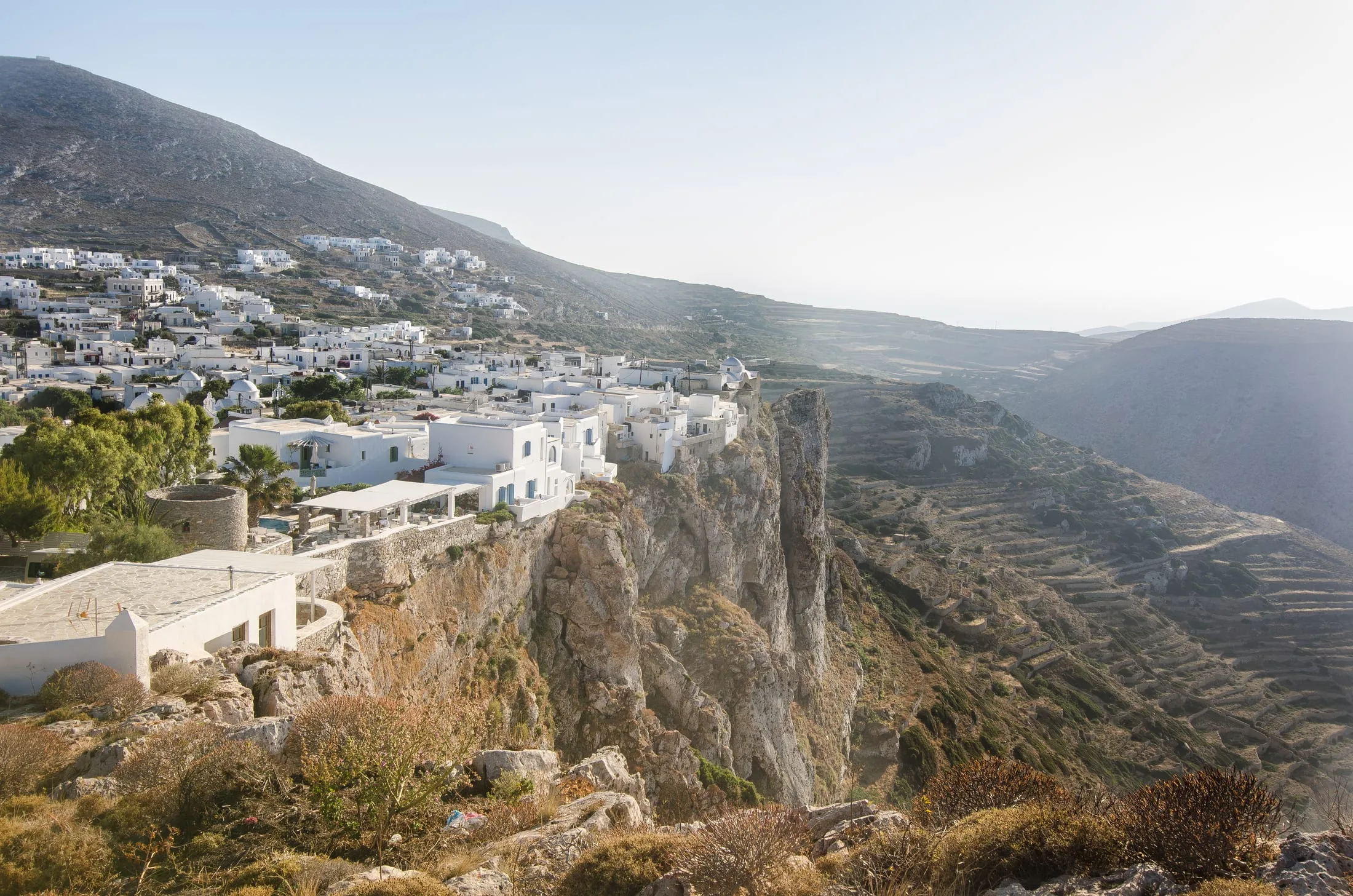
The quiet Greek islands are not a secret list of places nobody has heard of. They are the islands that stayed off the cruise map because they are hard to reach, too small for a resort strip, or simply not trying. Only about 227 of Greece’s roughly 6,000 islands are inhabited, and a much smaller number carry the crowds, which leaves a long tail of places where the ferry still sets the rhythm of the day.
What the quiet islands share is a structural reason for the peace. Most have no airport, no cruise berth, and no direct international flights, so the only way in is a ferry from Athens or a hop from a bigger neighbour. That friction is the feature. Anafi is an hour from Santorini yet feels like a different country, and Alonissos sits inside a protected marine park while its Sporades neighbours fill up around it.
This guide covers nine islands that are genuinely quieter than the headline destinations, with the 2026 ferry times and prices from Athens and the nearby hubs, which ones have an airport, what each is best for, and the months when even these places fill up. Every figure is checked against a current operator or ferry comparison page, and the quiet-island picks draw on 2026 lists from The Times, The Independent, and Lonely Planet. If you want the fuller picture, start with the Greece country guide and our Milos and Santorini guides.
Plan and book
3 partners- Flights
Find the Athens hop or a direct route into Greece, then connect to the island by ferry.
Search flights - Ferries and trains
Compare Greek ferry routes and prices, including the island hops between these nine.
Compare routes - Where to sleep
Rooms on the quiet islands, from port towns to hilltop villages, sorted by price and review score.
Find a room
What makes an island quiet
Quiet is a consequence, not a marketing label, and three things create it. The first is access: an island with no airport and no direct international flights takes real effort to reach, which filters the weekend crowd. The second is size and infrastructure: a place with one village and a handful of rooms cannot absorb a large group even in August. The third is the cruise schedule, because a berth that takes a 3,000-passenger ship turns a calm harbour into a morning rush and empties it again by four.
That is why the islands below read as a list of ferry-only places with a few exceptions. Sifnos, Folegandros, Amorgos, Alonissos, Nisyros, and Anafi have no airport at all. Ikaria, Astypalea, and Syros do, but only with small domestic flights from Athens, which keeps volume low. None of them is a major cruise call, and several have no cruise berth at all. If you want the purest version of the experience, aim for the ferry-only islands and travel in the shoulder season, when even the locals slow down.
Ikaria
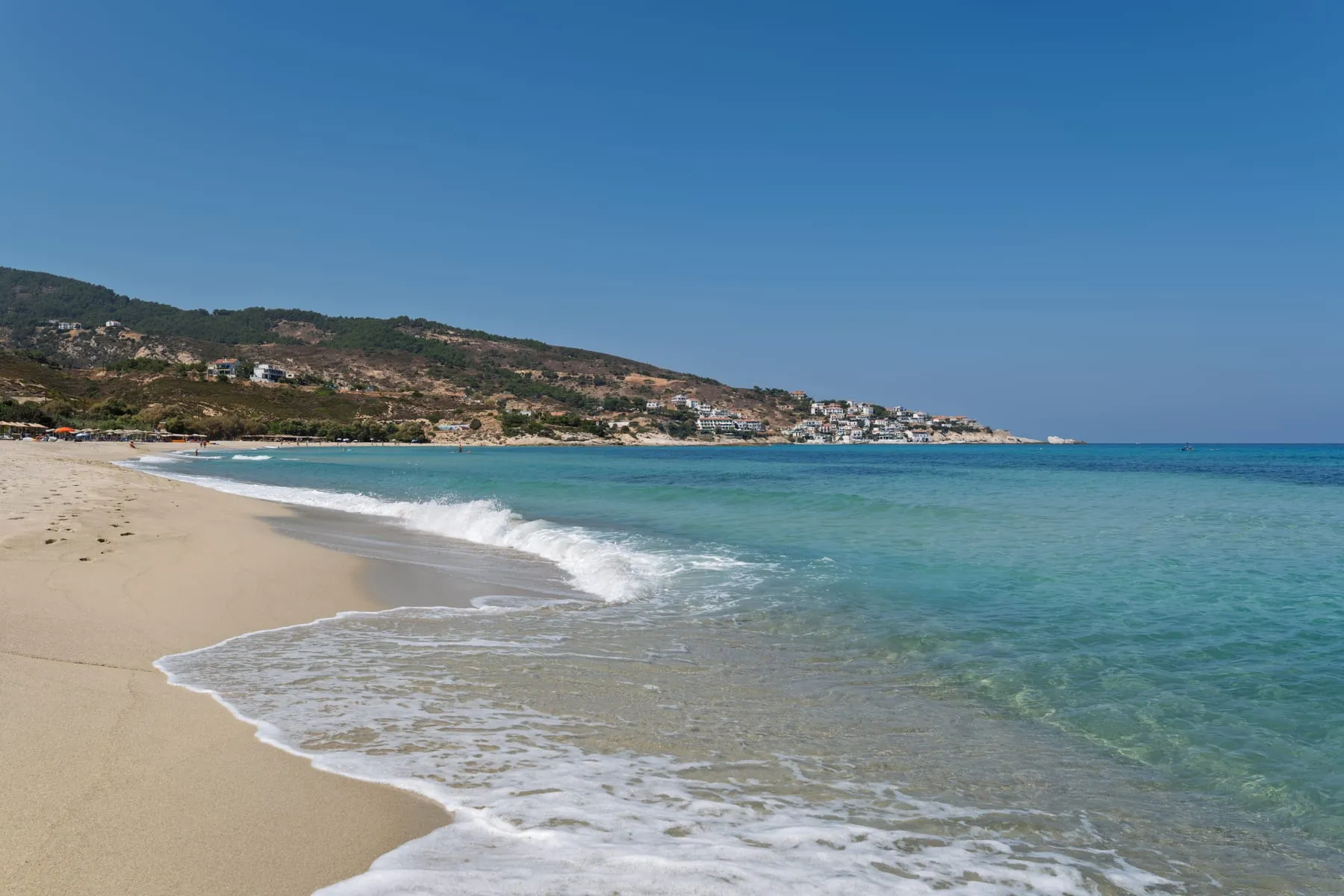
Ikaria is one of the world’s five Blue Zones, a place where people routinely live past ninety, and the island’s pace is part of the explanation. Life runs on Ikarian time: shops open late, the village panigiria run all night with wine and dancing, and the mountains are crossed by old footpaths rather than tour buses. The beaches at Messakti and Nas are excellent, and the interior is green and wild in a way most Cycladic islands are not.
It is quieter than its reputation suggests because it is genuinely awkward to reach. There is a small airport with flights from Athens, but most people come by sea: the fastest 2026 ferry from Piraeus to Evdilos takes about 6 hours 10 minutes. Base in Armenistis or Evdilos and give it at least three nights. Ikaria suits hikers, slow travellers, and anyone who has already done the postcard islands and wants the opposite.
Sifnos
Sifnos is the quiet island for people who plan trips around food. It has the strongest home cooking in the Cyclades, from slow-baked chickpea soup to almond sweets, along with a pottery tradition that goes back centuries. The main town, Apollonia, sits inland, while the whitewashed village of Kastro and the monastery of Chrisopigi anchor the coast. It is relaxed without being empty, and it has enough tavernas to keep a week interesting.
There is no airport. The 2026 ferry from Piraeus reaches Sifnos in about 2 hours 30 minutes at its fastest, with standard tickets from around 35 to 43 EUR depending on the operator. That short crossing makes it one of the easiest quiet islands to add to an Athens trip, and it links well with Milos and Folegandros. Stay in Apollonia for convenience or Kamares for the beach.
Folegandros
Folegandros is a small, steep island with one of the prettiest villages in Greece. Chora sits on a cliff edge above a car-free tangle of lanes, with a Venetian kastro at the top and a path down to the beach at Agali. The island is only about 12 km long, so nothing is far, but the terrain gives every walk a view. It is the quiet Cyclades with just enough restaurants to feel looked after.
It has no airport. From Piraeus the ferry averages around 5 hours depending on the routing, and the better trick is to come from Santorini, about 50 minutes away, which turns Folegandros into an easy add-on to a busier island. The ferry links continue to Milos, Sifnos, and Ios. Two or three nights is plenty, and it is at its best in June and September.
Amorgos
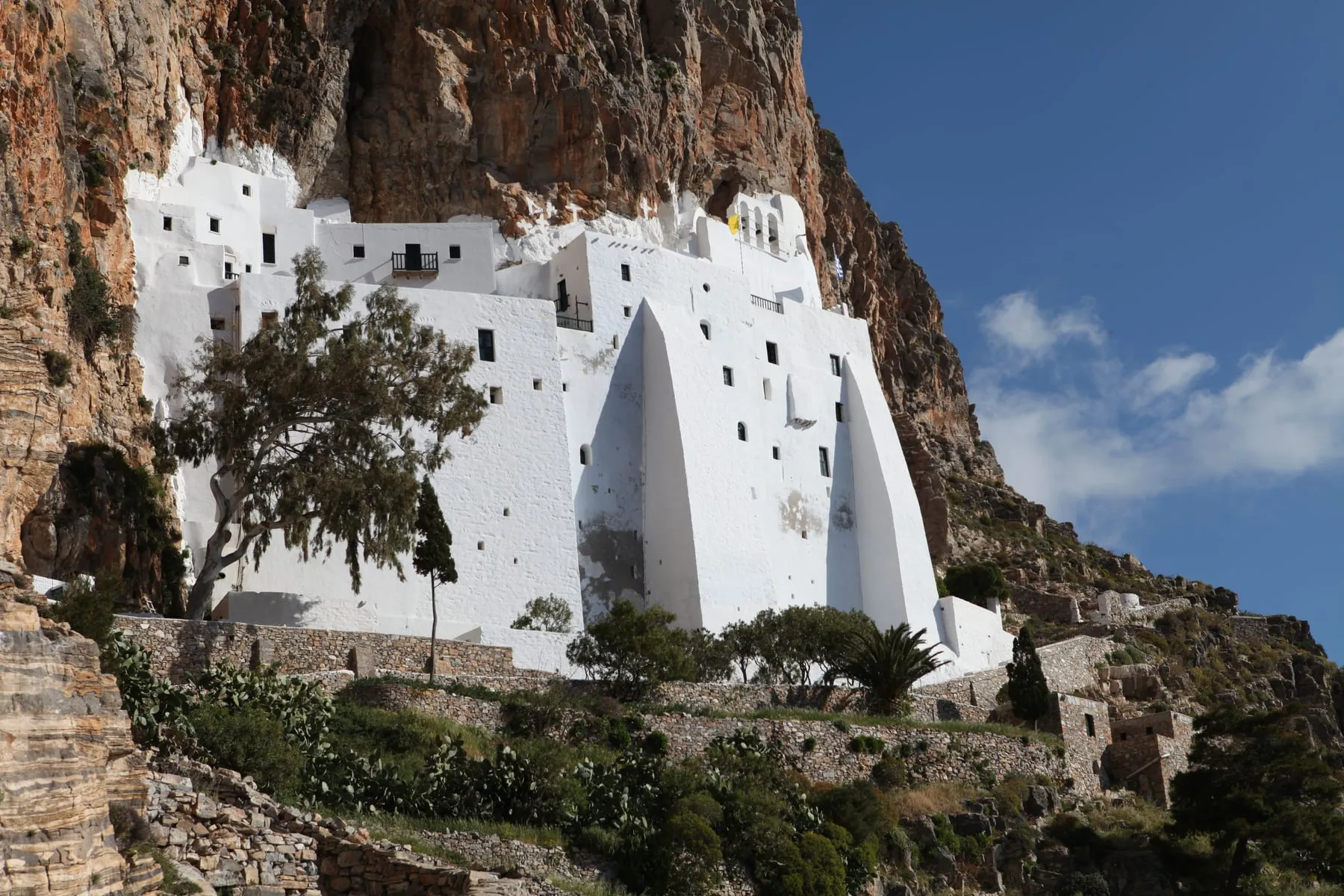
Amorgos is long, mountainous, and dramatic, best known for the monastery of Panagia Hozoviotissa, a white building wedged into a cliff above the sea, and for the shipwreck from Luc Besson’s The Big Blue. The island has two ports, Katapola and Aegiali, and two very different moods: Katapola is the calm southern harbour, while Aegiali has the longer beach and the better sunsets. Chora, in the middle, is the classic Cycladic village.
There is no airport, and that is central to its character. The fastest 2026 ferry from Piraeus takes about 4 hours 35 minutes, with advance tickets from around 42 EUR and the average closer to 67 EUR. It connects by ferry to Naxos, Santorini, and the small Cyclades. Give it three nights, hire a car if you want the beaches, and do not miss the monastery in the early morning.
Syros
Syros is the quiet island that is not really quiet, and that is the point. Ermoupoli, its capital, was the commercial centre of Greece in the nineteenth century, and it still looks it: neoclassical squares, a grand theatre, and a working year-round city rather than a seasonal resort. Ano Syros climbs the hill above, all stepped lanes and Catholic history. The island has real culture and real food, and it does not shut down in winter.
Syros does have an airport with domestic flights from Athens, but it is also one of the easiest islands to reach by sea: the 2026 ferry from Piraeus takes about 2 hours at its fastest, with prices from around 36.50 EUR. Because it is a ferry hub, it works as the first stop on a Cyclades loop, connecting to Mykonos, Paros, Naxos, and Tinos. Two nights in Ermoupoli is a strong start to any quiet-island route.
Alonissos
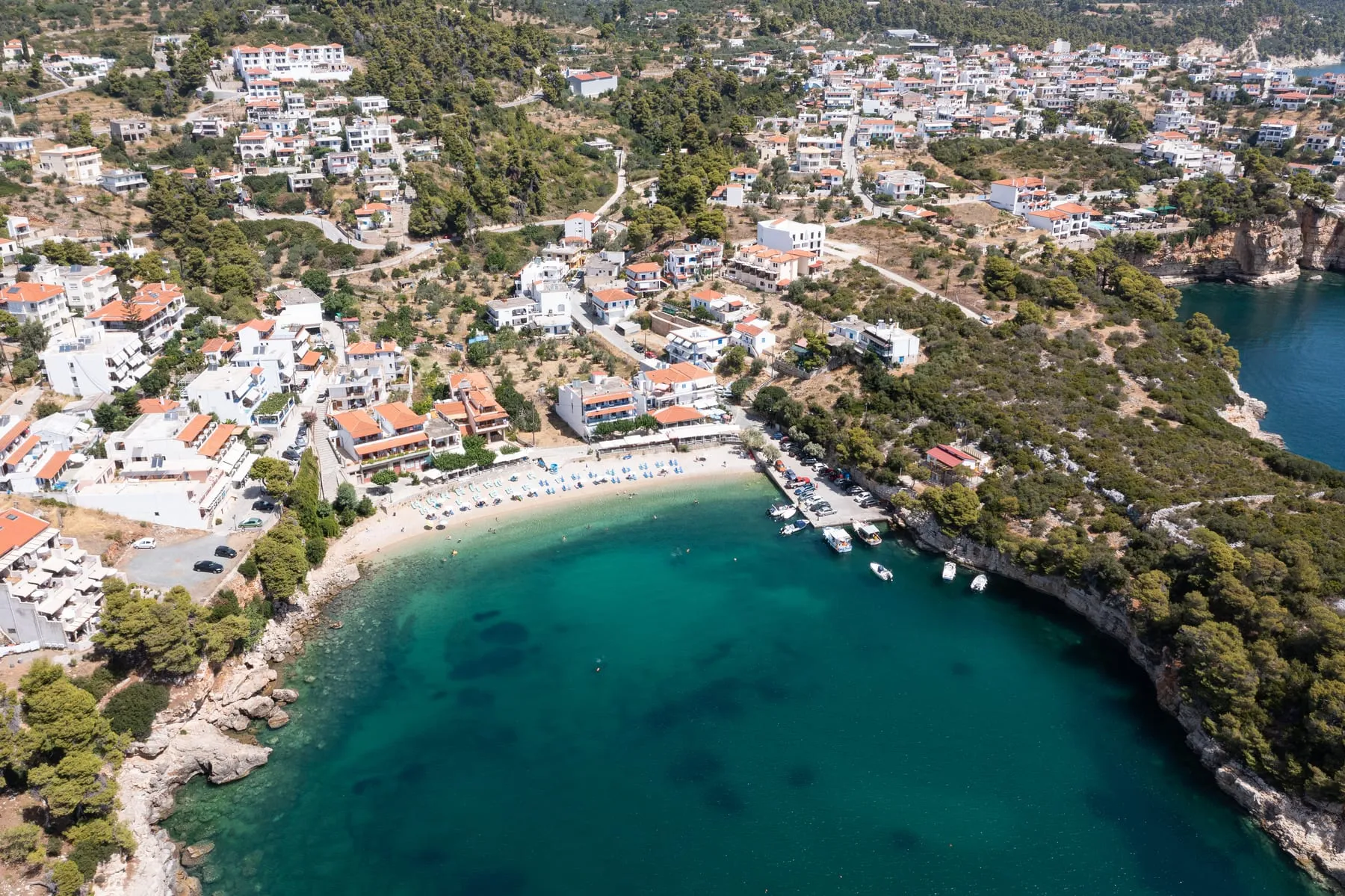
Alonissos sits inside the National Marine Park of Alonissos, the largest marine protected area in Greece, and the park is the reason to come. The waters hold the endangered Mediterranean monk seal, along with dolphins and seabirds, and the diving and swimming are exceptional. Patitiri is the port, Chora is the old hill town above it, and the beaches at Votsi and Rousoum Gialos are the postcard. It is the greenest quiet island on this list, more pine than bare rock.
There is no airport. Most visitors fly to Skiathos and connect by ferry, about 55 minutes, or come from Volos on the mainland in about 2 hours 40 minutes, with tickets from around 15 EUR and 37 EUR respectively. The island is small and calm, best for couples and families who want nature rather than nightlife. Pair it with Skopelos and Skiathos if you want the full Sporades loop.
Nisyros
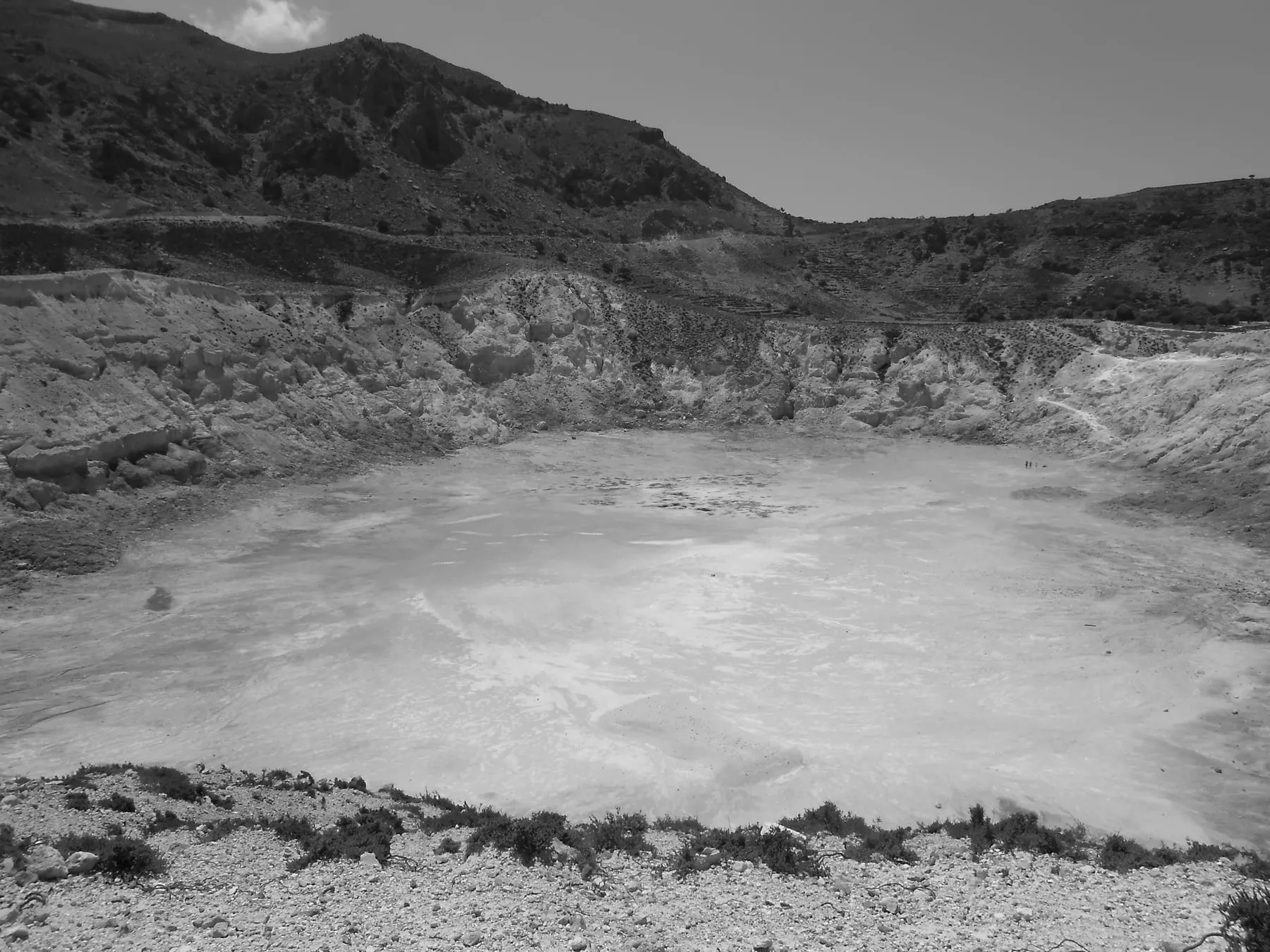
Nisyros is a volcano with a village on top. The Stefanos crater is one of the best accessible craters in Greece, sitting in the middle of an island that is part of the UNESCO Global Geoparks Network. Mandraki, the port, is a maze of white houses under a medieval castle, and Nikia perches on the crater rim with a view straight into it. The island is small, slow, and unlike anywhere else in the Dodecanese.
It has no airport. The nearest is Kos, and from Kos the ferry to Nisyros takes about 50 minutes from Kardamena, with tickets from around 10 EUR, or a little longer from Kos town. That short hop makes Nisyros an easy two-night stop on a Dodecanese trip, and it connects by ferry to Tilos, Rhodes, and Kos. Go early for the crater before the day-trippers arrive, and stay the night to get the island to yourself.
Astypalea
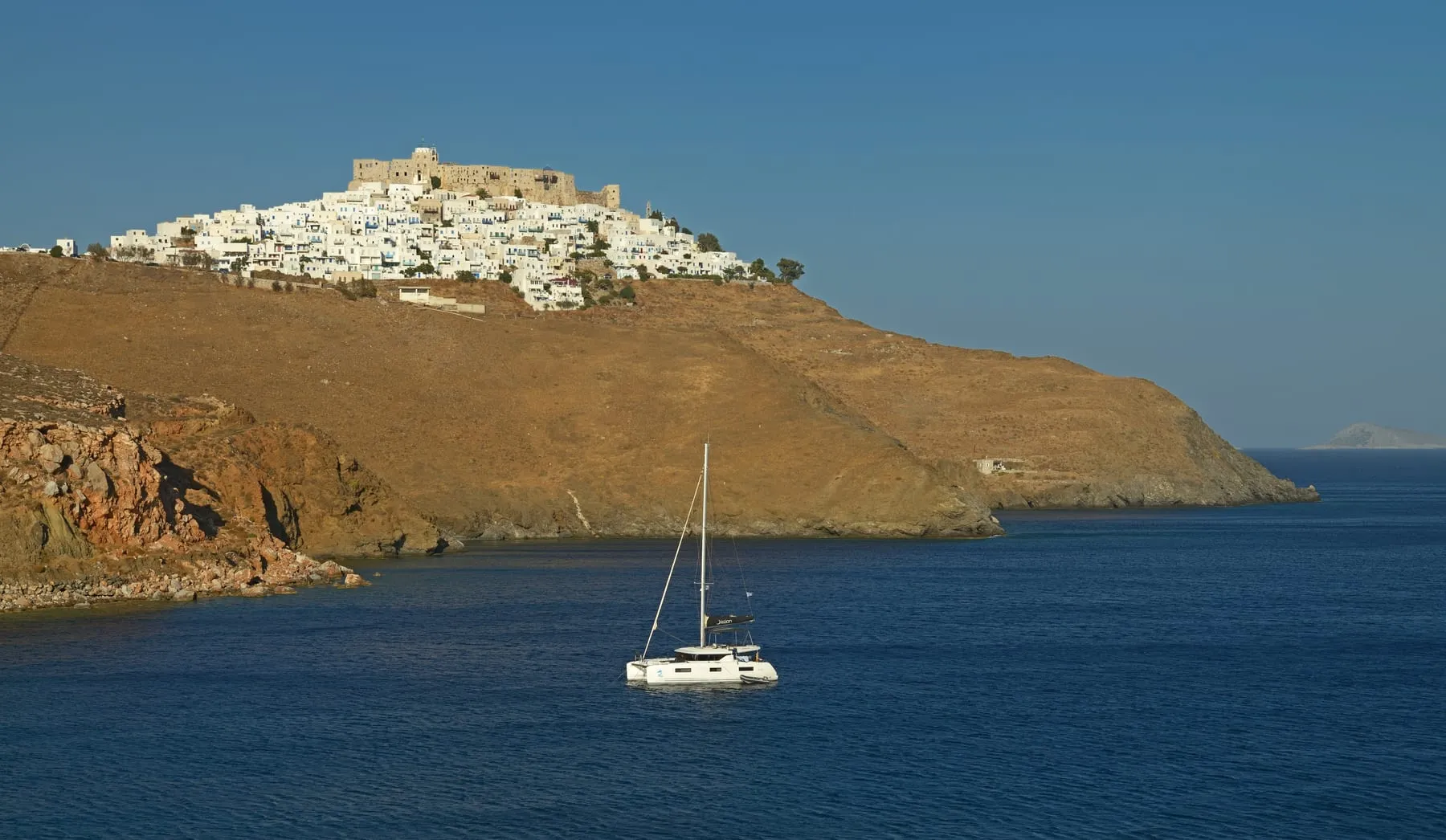
Astypalea is shaped like a butterfly, with a narrow isthmus joining its two halves, and its hilltop Chora is one of the most photogenic in the Aegean. The castle above the village, the windmills, and the little port of Pera Gialos give it the look of a quieter Santorini with none of the crowd. The island has been making a name for slow, low-impact tourism, and there are very few cars relative to its size.
Astypalea has a small airport with seasonal flights from Athens, about an hour, run by Sky Express. By sea it is a longer commitment: the ferry from Piraeus takes roughly 7 to 10 hours, while the hop from Kos is about 1 hour 45 minutes to 4 hours, with tickets from around 10.50 EUR. The practical move is to fly in and ferry out, or fold it into a Dodecanese route via Kos. Either way, plan for at least three nights.
Anafi
Anafi is the answer to the question of where to go when Santorini is too much. It sits just over an hour away, has one hilltop village, and no airport or cruise berth. The south coast holds a string of quiet beaches, and the Kalamos rock on the east side is one of the largest sea cliffs in the Mediterranean. There is very little to do and that is exactly the appeal: swim, walk, eat, repeat.
There is no airport, and the ferry is the only way in. From Santorini the crossing takes about 1 hour 10 minutes to 1 hour 30 minutes, with tickets from around 7 EUR, which makes Anafi the cheapest quiet-island add-on on this list. From Piraeus the journey is far longer and only worth it if you are already committed to the deep Cyclades. One or two nights is enough, and it is at its most peaceful outside July and August.
Getting around
Ferries are how these islands connect, and most routes run through a hub. Syros, Naxos, Paros, Kos, and Santorini are the main interchange points, so a sensible quiet-island route links two or three of them rather than trying to cross the Aegean in one go. Summer schedules run daily on the main lines and drop to a few sailings a week in winter, and the small inter-island boats that serve places like the Small Cyclades are the first to be cut, so leave a day of slack around any tight connection.
On the islands themselves, the car question matters. Alonissos, Sifnos, Folegandros, and Amorgos reward a rental car because the beaches sit away from the main village, and you should book one early in high season. Anafi, Nisyros, and Astypalea are small enough for buses, taxis, and walking. If you want a trip with no car at all, the Saronic island of Hydra bans vehicles outright, and Spetses and Kastellorizo barely use them, so they make good car-free companions to this list.
When to go
June and September are the best months for the quiet islands. The sea is warm, the tavernas are open, the ferries run daily, and the crowds are a fraction of August. Late May and early October are even quieter and cheaper, with the trade-off of the occasional windy day or a beach bar that has not opened yet. If you are chasing real solitude, that is your window.
July and August change the calculation. The ferry-only islands fill up too, the meltemi wind builds across the Aegean and makes the exposed north coasts rough, and prices peak. The quiet islands are still calmer than Santorini or Mykonos in August, but they are no longer empty. If your dates are fixed to high summer, book ferries and rooms well ahead and expect the wind to shape your days.
Practical information
| Island | Ikaria, Sifnos, Folegandros, Amorgos, Syros, Alonissos, Nisyros, Astypalea, Anafi. Six have no airport at all; Ikaria, Astypalea, and Syros have small domestic airports with flights from Athens only. |
|---|---|
| Getting there | Fly or train to Athens, then ferry from Piraeus. Shortest crossings are Sifnos (about 2h30), Syros (about 2h), and Anafi via Santorini (about 1h10). Longest are Astypalea (7 to 10h) and Ikaria (about 6h10). Nisyros and Astypalea are easier from Kos, and Anafi from Santorini. |
| When to go | June and September for the best balance of weather, open businesses, and low crowds. Late May and early October for the quietest and cheapest trip. Avoid August if you want space, because the meltemi wind and the Greek holiday peak reach the quiet islands too. |
| Costs | Cheaper than Santorini and Mykonos. Ferry tickets run from about 7 EUR for a short hop to about 67 EUR average for the longest routes, and rooms, food, and boat trips sit below the headline islands. Budget for the fixed cost of getting to a remote island in the first place. |
| Booking | Book long ferry routes and any rental car a few weeks ahead in summer, and book the short inter-island hops once the operator schedules are published, usually in spring. Rooms on the smallest islands are limited, so do not leave those to the last minute. |
| Health and safety | These are low-risk islands with basic medical facilities; for anything serious you are transferred to a larger island or Athens. The meltemi wind makes exposed swimming rough in high summer, Nisyros is an active volcano with marked paths only, and Anafi’s cliff edges have no railings. |
Disclosure. This blog post contains affiliate links. If you book through them, Mediterranean Vibes may earn a small commission at no extra cost to you; it is how the site stays up.



.jpg)

