Turkish food is at its lightest along the country’s Aegean and Mediterranean coasts, where the cooking is built on olive oil, vegetables, herbs, seafood, and small plates rather than heavy sauces. It shares the same pattern as the rest of the Mediterranean: seasonal produce, grilled fish, beans and greens, flatbread, and a table that fills with dishes meant to be shared. The difference is the setting and the ritual, because in Turkey the meal is a long, social event with tea at the end of it.
Two things define it more than any single dish. The first is meze, the spread of small cold and hot plates eaten slowly with bread and, if you like, raki. The second is kahvalti, the Turkish breakfast, which is not a pastry on the way out of the door but a table of cheese, olives, eggs, jams, and endless tea. Both are cheap by Western European standards, though prices in Turkey move quickly, which is why this guide gives ranges and the inflation figure behind them.
Below is what to eat, dish by dish, how to order it without over-ordering, and what it costs in 2026. Prices are approximate ranges from the 2026 season, and everything is linked to the official tourism, heritage, or government source it comes from. If you want the wider trip, the Antalya guide covers the Turkish Riviera, and the Mediterranean diet explainer covers why this way of eating is studied so closely.
Plan and book
3 food experiences- Food tours
Walk a market or a bazaar with a local guide and taste the difference between regions.
Find a food tour - Cooking classes
Learn to roll lahmacun, fill a pide, or build a meze table from a local cook.
Book a cooking class - Street food walks
Simit, midye dolma, and a fish sandwich from the boats, tasted in one afternoon.
Join a food walk
What it is
Turkey is not one kitchen. The official tourism board divides the country into several culinary regions, and the Aegean and Mediterranean coasts are the ones that eat closest to the Mediterranean pattern. Aegean cooking is vegetable-led and seasonal, much of it served at room temperature under the name zeytinyagli, which means cooked with olive oil. The Mediterranean coast adds more seafood and, as you move southeast, more grilled meat and chilli, so the same dish can arrive light and herby in Izmir and hotter and meatier around Adana.
That coast-to-coast difference matters for a first visit. The Aegean is where you eat artichokes, wild greens, olive oil beans, and fish by the water. The Mediterranean is where you eat kebabs, tahini bean salad, and the sharp, bright cooking of Hatay. The southeast, around Gaziantep and Adana, is the kebab and baklava heartland. Istanbul, meanwhile, mixes the whole country together with a layer of Ottoman palace cooking on top.
The other useful thing to know is that this is one of the easiest cuisines in Europe for vegetarians. The olive oil dishes alone, from stuffed vegetables to beans and greens, mean a meatless table is never a compromise. The official tourism board makes the same point, calling the range of olive oil vegetable dishes a strength for vegan and vegetarian travellers.
The Turkish breakfast
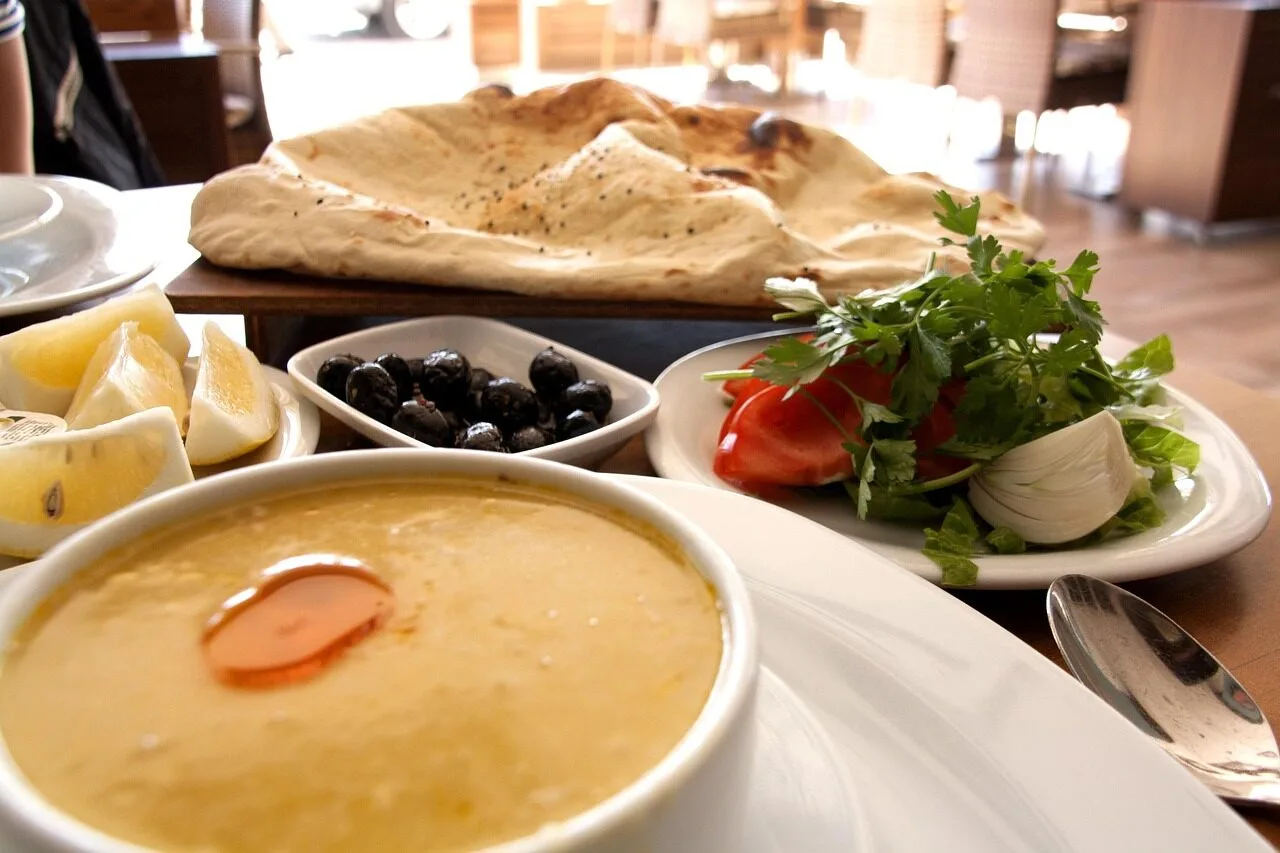
Kahvalti means, roughly, before coffee, and the restaurant version is called serpme kahvalti, a breakfast spread that covers the table end to end. It is a collection of small dishes rather than a single plate: white cheese, black and green olives, sliced tomato and cucumber, honey with clotted cream, several jams, butter, and warm bread, alongside hot dishes such as menemen, eggs stewed with tomato and green pepper; cilbir, poached eggs over garlic yoghurt; and sucuklu yumurta, eggs with spiced sausage. Borek, filo pastries with cheese or spinach, and simit, the sesame bread ring, usually appear too.
The Turkish tourism board lists exactly this mix, and it is worth ordering the full spread once even if it looks like too much food. The rhythm is slow: you eat a little, drink tea, talk, and eat a little more. A mid-range spread runs about 250 to 350 lira a person, and a waterfront version 350 to 500, with tea refilled without asking. Many hotels and neighbourhood cafes do a simpler version for less, which is how most Turks actually eat breakfast at home.
Meze
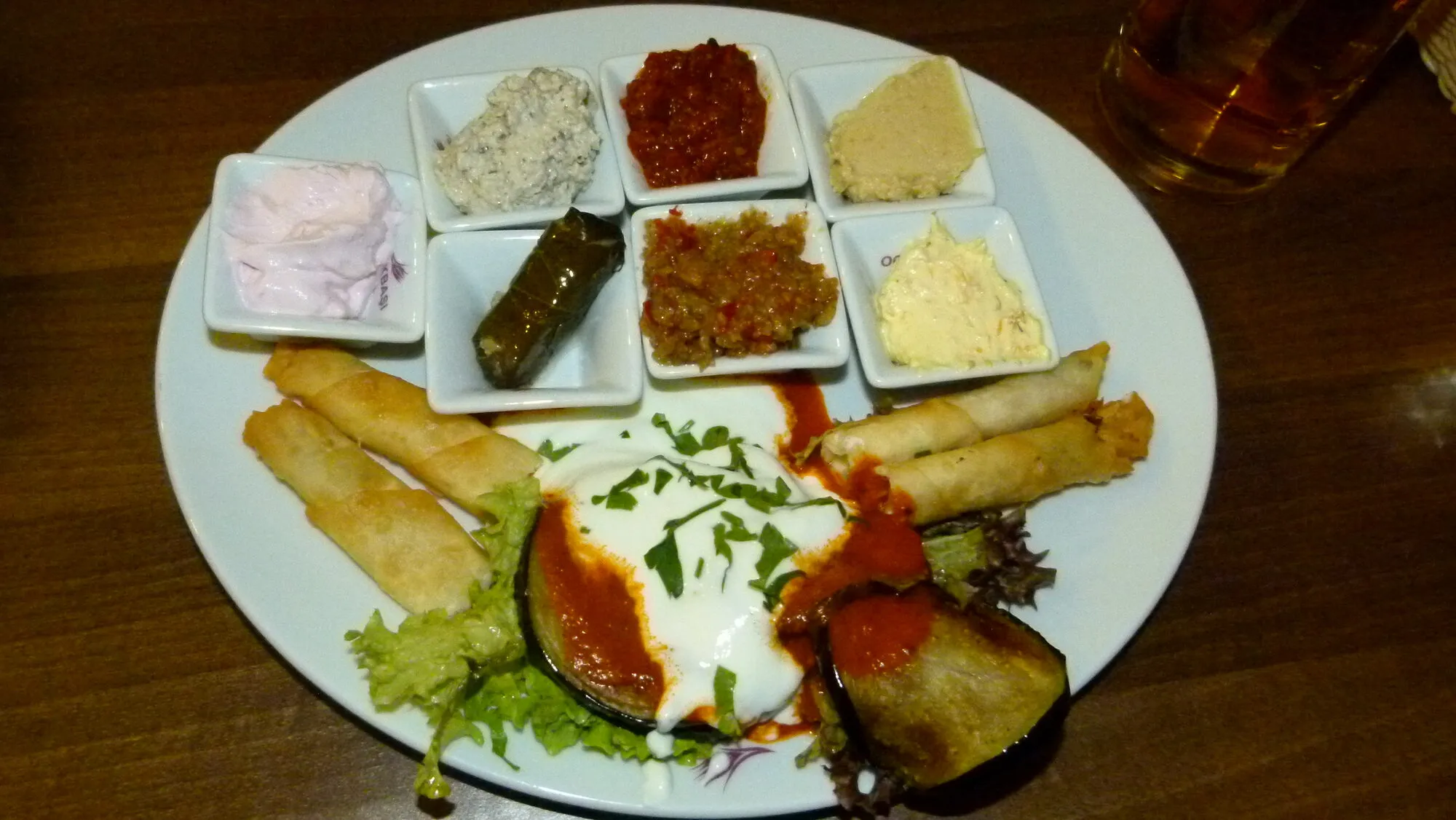
Meze is the heart of a night out on the coast: small plates, eaten slowly with bread, usually with raki. The official tourism board describes it as a way of life around the table rather than a starter course, and that is the right way to approach it. Cold meze come first, then hot. On the Aegean and Mediterranean coast the cold ones lean on olive oil and seafood, while the southeast versions are spicier and richer.
The classics to look for are haydari, thick yoghurt with garlic and herbs; patlican salatasi, smoky aubergine; humus; acili ezme, a spicy chopped tomato and pepper paste; atom, hot peppers in garlicky yoghurt; fava, a smooth broad bean puree; yaprak dolma, stuffed vine leaves; and deniz borulcesi, samphire, the salty marsh green. Hot meze include borek, arnavut cigeri (fried liver), kalamar, and shrimp baked in a clay dish. Coastal menus also add octopus, marinated anchovies, and stuffed artichokes.
The ordering rule that saves you money and a stomach ache is Michelin’s: one cheese meze, one aubergine, one yoghurt, one olive oil vegetable, one seafood, and one legume. Four to six plates are plenty for two people. You rarely need a main course at all, because the meze table is the meal.
Kebabs
Kebab is a big word in Turkey, and the two you will see everywhere are Adana and Urfa. They are the same idea, hand-minced meat kneaded with onion and garlic and packed onto a flat skewer, but Adana is the spicy one, made with red pepper flakes, and Urfa is the milder one, seasoned with a gentler paprika. Both are grilled over charcoal and served with flatbread, grilled tomato and pepper, and a handful of parsley and onion.
Beyond those, look for sis kebab, cubes of meat or chicken on a skewer; kofte, minced meat patties or fingers; and doner, which in Turkey is made from beef or lamb and served in a wrap as a durum. The kebab heartland is the southeast, around Adana, Gaziantep, and Sanliurfa, and each city guards its own version. Iskender, sliced doner over bread with tomato sauce and yoghurt, comes from Bursa. A kebab meal with sides and a drink is usually 250 to 600 lira.
Seafood on the coast
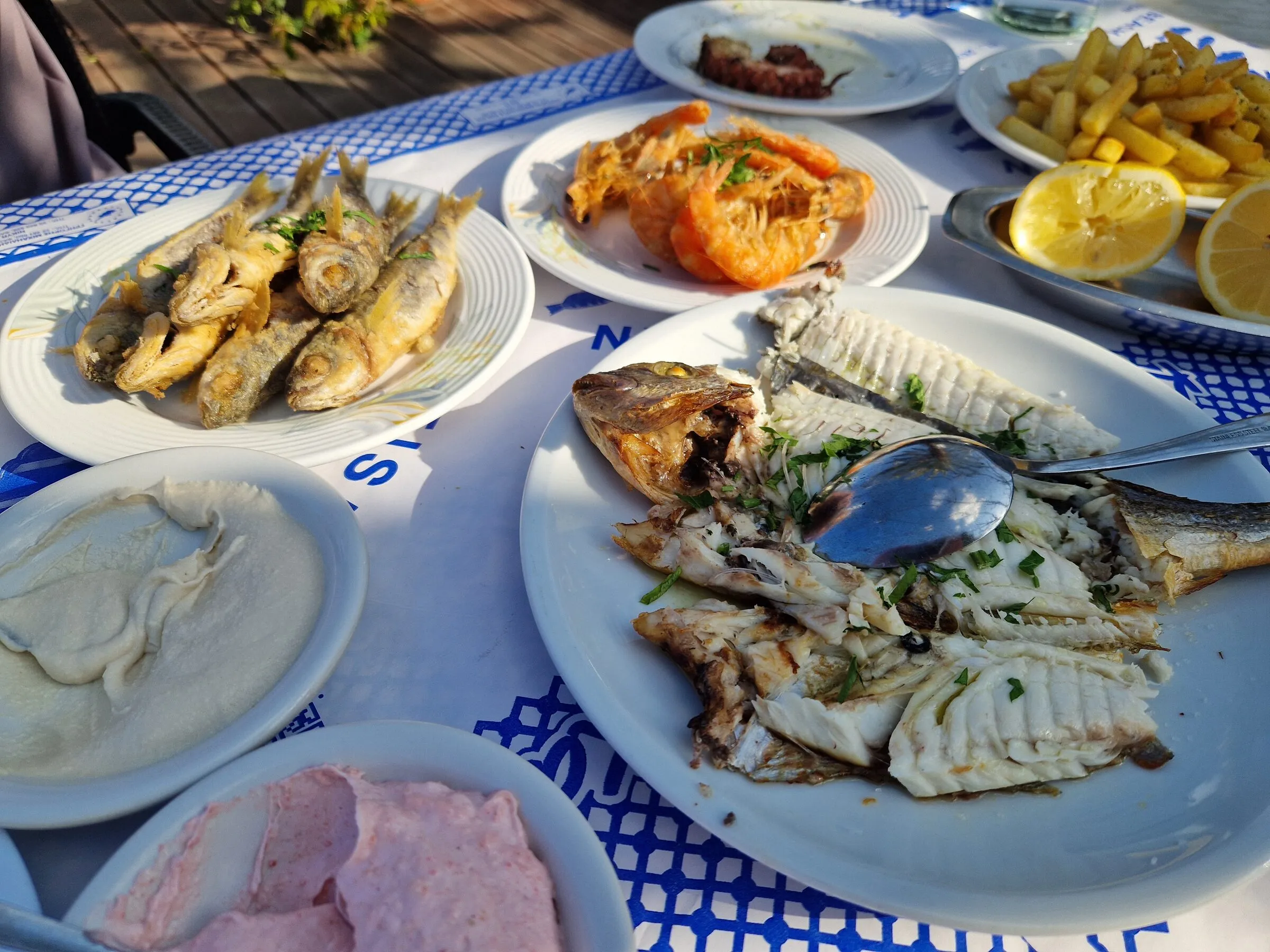
The coastal fish restaurant, the balikci, is its own format. Some have no menu at all: you choose the fish from an ice display and the staff tell you how it will be cooked, which is usually grilled simply with olive oil, sea salt, and lemon. Sea bass (levrek) and sea bream (cupra) are the everyday fish, with kalamar, octopus salad, and shrimp to start. It is the most expensive way to eat on the coast, and the most rewarding when the fish is fresh.
Two coastal staples cost far less. Balik ekmek, a grilled fish sandwich, is sold from boats and stands, and the official tourism board names it as one of the country’s iconic street foods. Midye dolma, mussels stuffed with spiced rice, pine nuts, and currants, are sold by the shell on trays with a squeeze of lemon. One caution: mussels are filter feeders, so buy them from busy stalls with high turnover. And note that hamsi, the famous anchovy, is a Black Sea specialty rather than a Mediterranean one, so enjoy it in season in the north.
Street food
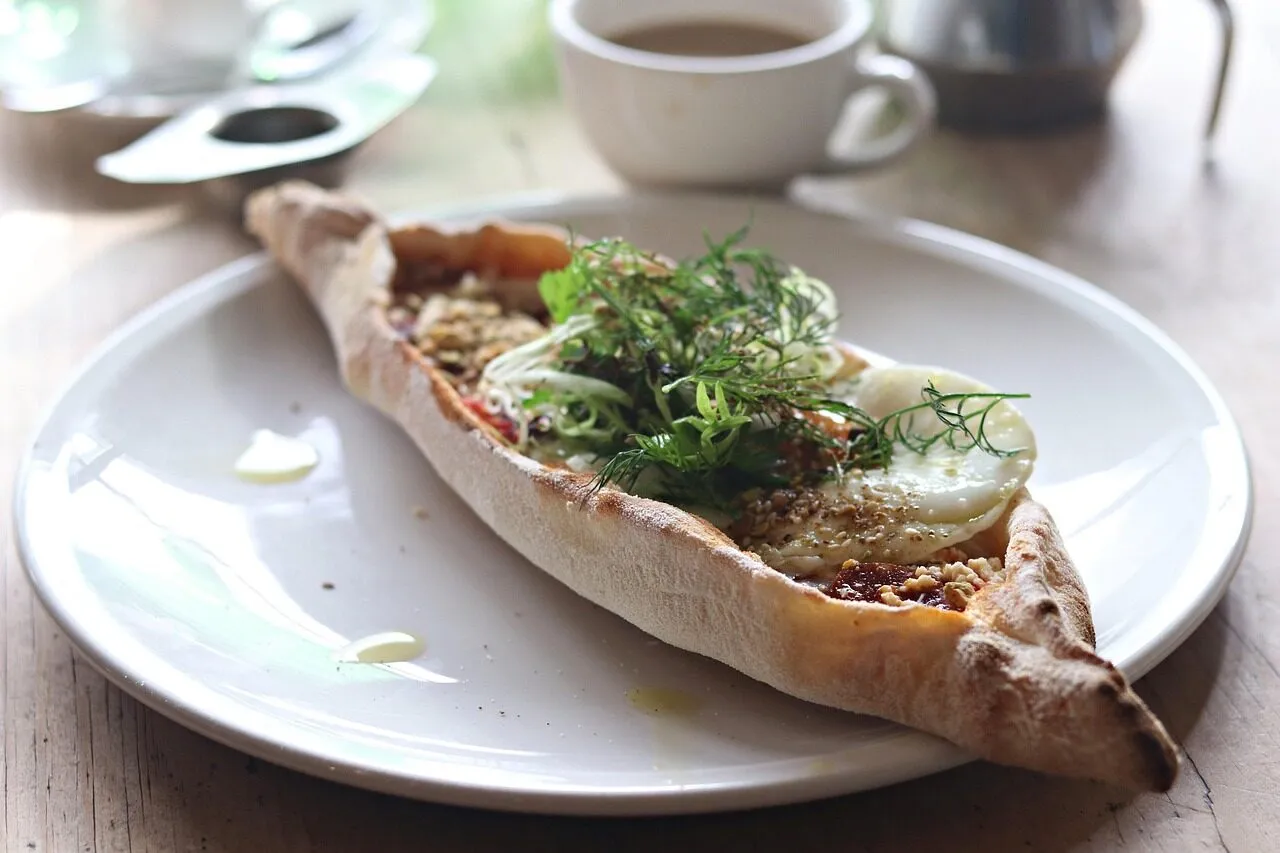
Turkish street food is a full meal category, not a snack. Simit, the molasses-dipped sesame ring, is the national breakfast on the move and costs less than a euro. Lahmacun is a thin flatbread with spiced meat, rolled up with parsley and lemon; pide is the boat-shaped flatbread baked with cheese, meat, or an egg. Gozleme is a stuffed flatbread griddled to order, and borek is filo with cheese, potato, or spinach. Later at night come kokorec, chopped grilled offal in half a loaf, and kumpir, a loaded baked potato.
One thing worth knowing: street cig kofte, the bulgur patty sold from trays, is vegetarian. The raw-meat version is banned, so what you buy is bulgur, onion, tomato and pepper paste, and spices. The official tourism board includes it in the country’s iconic street foods. Tavuklu pilav, chicken and rice, is the other cheap and reliable standby, and a glass of pickle juice, tursu suyu, is the traditional partner to a fish sandwich.
Sweets and drinks
The two great sweets are regional and both protected by the European Union. Baklava, thin layers of pastry with clarified butter, sugar, and pistachios, is the specialty of Gaziantep, which holds a protected geographical indication for it. Kunefe, shredded pastry baked around unsalted stringy cheese and soaked in syrup, comes from Antakya in Hatay, which has its own protected status. Both are best eaten fresh, and both cities hold UNESCO Creative City of Gastronomy status.
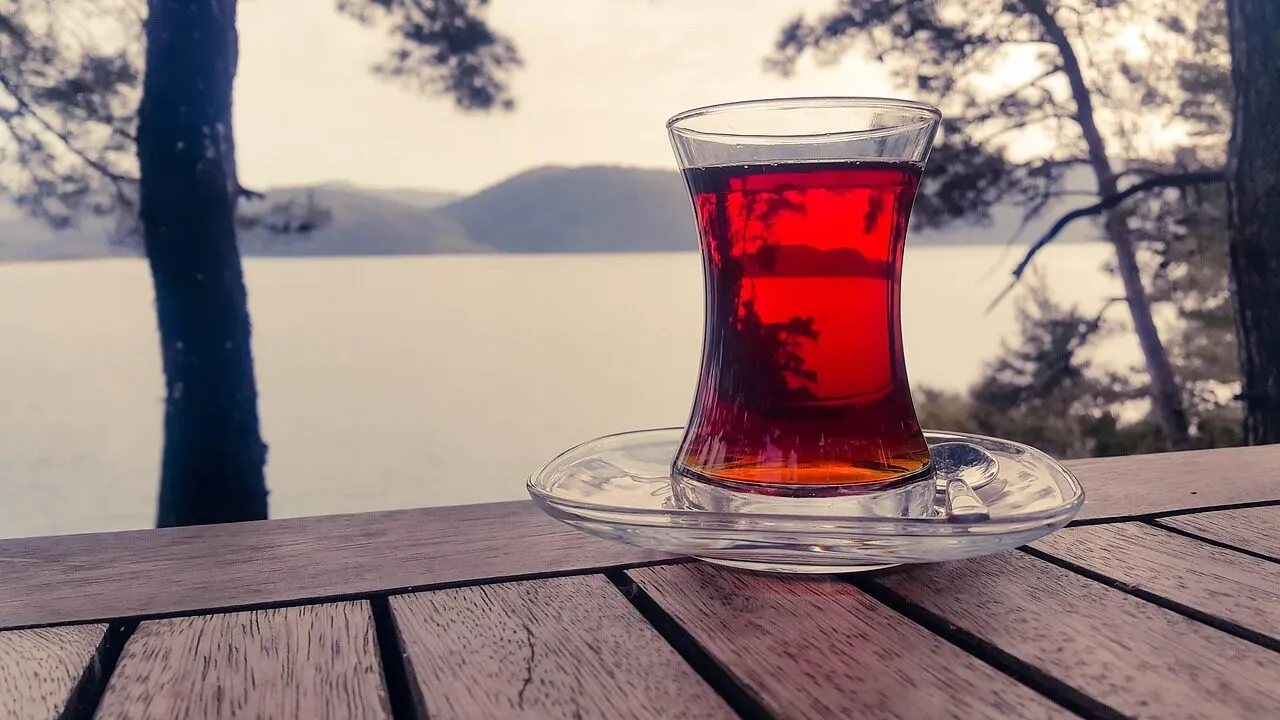
To drink, tea comes first. Cay, black tea served in small tulip-shaped glasses, is drunk all day, and UNESCO inscribed the culture of cay on its intangible heritage list in 2022. Turkish coffee, brewed slowly and served with a glass of water and a piece of lokum, was inscribed in 2013. For something cold and savoury, ayran is a salted yoghurt drink that cuts through grilled meat, and salgam is the sour turnip juice from Adana. Raki, the anise spirit at around 45 percent alcohol, turns milky white when you add water, which is why it is nicknamed lion’s milk. Alcohol is heavily taxed in Turkey, so a night of raki costs considerably more than a night of tea.
How to order and eat
Start with meze and order fewer plates than you think you need, using the one-of-each rule above. Bread and water arrive without being asked. If you are drinking raki, the glass is filled a third to a half and topped up with water, and you say tamam when you have had enough. Toasts are serefe; the custom is to clink the bottoms of the glasses rather than the rims. The point of the table is conversation, and getting drunk is not the aim.
The meal runs in stages if you let it: cold meze, hot meze, a main if anyone still wants one, then fruit, dessert, and coffee or tea. It can easily stretch past midnight. Tipping is 5 to 10 percent in casual places and 10 to 15 percent in smarter ones, and it is worth checking whether a service charge is already on the bill. For vegetarians, ask for etsiz, and watch for meat stock in lentil soup and rice. Pork is uncommon, and most of what you will eat is halal by default.
Where to eat it
On the Aegean, Izmir is the everyday-eating capital, with its own breakfast pastry, boyoz, and the kumru sandwich, plus thick-sliced kokorec and gevrek, the local simit. Alacati is the best-known food town, with around 200 restaurants and a traditional no-menu style where you pick meze from the cold counter and add fresh fish. Bodrum and the Urla wine route, which grows indigenous grapes, are the other food stops.
On the Mediterranean, Antalya has its own white bean and tahini salad, piyaz, and the Antalya guide covers the rest of the Turkish Riviera. Mersin is known for tantuni, a spiced meat wrap. Further east, Adana is the kebab and salgam city, and Antakya in Hatay is the kunefe capital, with hundreds of dishes in its repertoire. Gaziantep, inland from the coast, is the baklava and kebab city, and it is worth the detour if you are eating your way across the country. Browse all the guides for the wider trip.
What it costs
Prices in Turkey move fast, so treat all of these as approximate 2026 ranges and check locally. At the cheap end, a simit is less than a euro, a glass of tea is small change, midye dolma run 10 to 20 lira a shell, and lahmacun 50 to 100 lira. A pide is 120 to 250 lira, a doner or durum wrap 100 to 350 lira, a balik ekmek 150 to 250 lira, and a full Turkish breakfast 250 to 500 lira a person. A kebab meal with sides is 250 to 600 lira, and a plate of baklava 80 to 250 lira. In a sit-down restaurant, a mid-range meal is roughly 500 to 1,500 lira a person, and a meyhane night of meze and raki at the top of that range or above.
For a daily estimate, a street-food day of simit, tea, lahmacun or durum, a cheap lokantasi lunch, and coffee runs about 500 to 800 lira, roughly 9 to 14 euros. A sit-down day with a proper breakfast, a kebab or fish lunch, and a meze dinner is more like 1,500 to 2,500 lira, or 27 to 45 euros, and it climbs fast if alcohol is involved. These ranges are planning estimates built from the component prices above, not an official index. The reason to treat them loosely is the inflation context: Turkey’s official food price index was running at about 37 percent year on year in July 2026, so the numbers drift upward through the year. At around 56 lira to the euro, the value is still excellent.
Practical information
| How a meal runs | Breakfast is a spread, lunch can be a kebab, pide, or lokantasi canteen plate, and dinner often runs cold meze, hot meze, a main, then fruit, dessert, and tea. Meze is the main event on the coast; a main course is optional. Meals are social and unhurried, and the table can last for hours. |
|---|---|
| Breakfast | Serpme kahvalti is the restaurant spread: cheese, olives, tomato, cucumber, honey and clotted cream, jams, bread, and hot dishes such as menemen and cilbir, with endless tea. It is a weekend ritual rather than an everyday meal, and 250 to 500 lira a person is typical. |
| Meze and raki | Order four to six meze plates for two, one from each family (cheese, aubergine, yoghurt, olive oil vegetable, seafood, legume). Raki is diluted with water, toasted with serefe, and sipped over a long evening. Tea and ayran are the no-alcohol alternatives, and both are everywhere. |
| Dietary needs | Easy for vegetarians thanks to the olive oil dishes. Ask for etsiz (meatless) and check for meat stock in lentil soup and rice. Street cig kofte is vegetarian. Pork is uncommon, and most restaurant food is halal by default. Mussels should come from busy stalls with high turnover. |
| Prices | Cheap and excellent street food sits alongside optional fine dining. Expect a simit for under a euro, a tea for small change, a kebab meal for 8 to 18 euros, and a meyhane dinner for more. Food inflation of about 37 percent in 2026 means ranges, not fixed prices, so check the menu and confirm the bill. |
| Etiquette | Bread and water arrive unrequested, and a bowl of lemon water is for washing hands, not eating. Tipping is 5 to 10 percent casually and 10 to 15 percent in nicer places; check whether service is already included. Eating kebabs, lahmacun, and stuffed mussels with your hands is normal, and cutlery is always provided. |
Disclosure. This blog post contains affiliate links. If you book through them, Mediterranean Vibes may earn a small commission at no extra cost to you; it is how the site stays up.