These are the two most famous coastlines in Italy, and the two people most often weigh against each other. Both are a run of pastel villages stacked above a blue sea, both are UNESCO-listed or protected, and both are on the crowded, expensive, photograph-everything end of Italian travel. The differences, though, are real, and they decide which one suits your trip: one is a train-linked cluster of five villages with the best coastal hiking in the country, and the other is a glamorous, warmer coast of larger towns with the sea and the islands at its heart.
This guide sets out the honest comparison, from the transport to the cost to the crowds, and matches each coast to a kind of trip, so you can choose without regretting it. Whichever you pick, the deeper guides are the Cinque Terre and the Amalfi Coast, and the Italy itinerary shows how each fits a longer route.
Plan and book
3 partners- Flights
Fly into Pisa or Genoa for the Cinque Terre, or Naples for the Amalfi Coast. Compare routes.
Search flights - Trains
The high-speed line links the cities between the two coasts, and local trains serve the Cinque Terre.
Compare trains - Where to sleep
Rooms on both coasts, from the Cinque Terre villages to Positano, Amalfi and Sorrento.
Find a room
The short answer
If you want to hike, to see five distinct villages in a compact area, and to travel easily without a car, choose the Cinque Terre. If you want the sea, the beaches, the boats, the bigger towns and the access to Capri and Pompeii, choose the Amalfi Coast. The Cinque Terre is the walker’s and the photographer’s coast; the Amalfi Coast is the swimmer’s and the glamour-seeker’s.
Two more things decide it. The Cinque Terre is in the north-west, cooler and wetter, with a shorter season, and the Amalfi Coast is in the south, warmer and with a longer beach season. And the Cinque Terre is train-linked, which makes it far easier without a car, while the Amalfi Coast has no train to its main towns, so it runs on ferries and buses and a slow cliff road.
The Cinque Terre
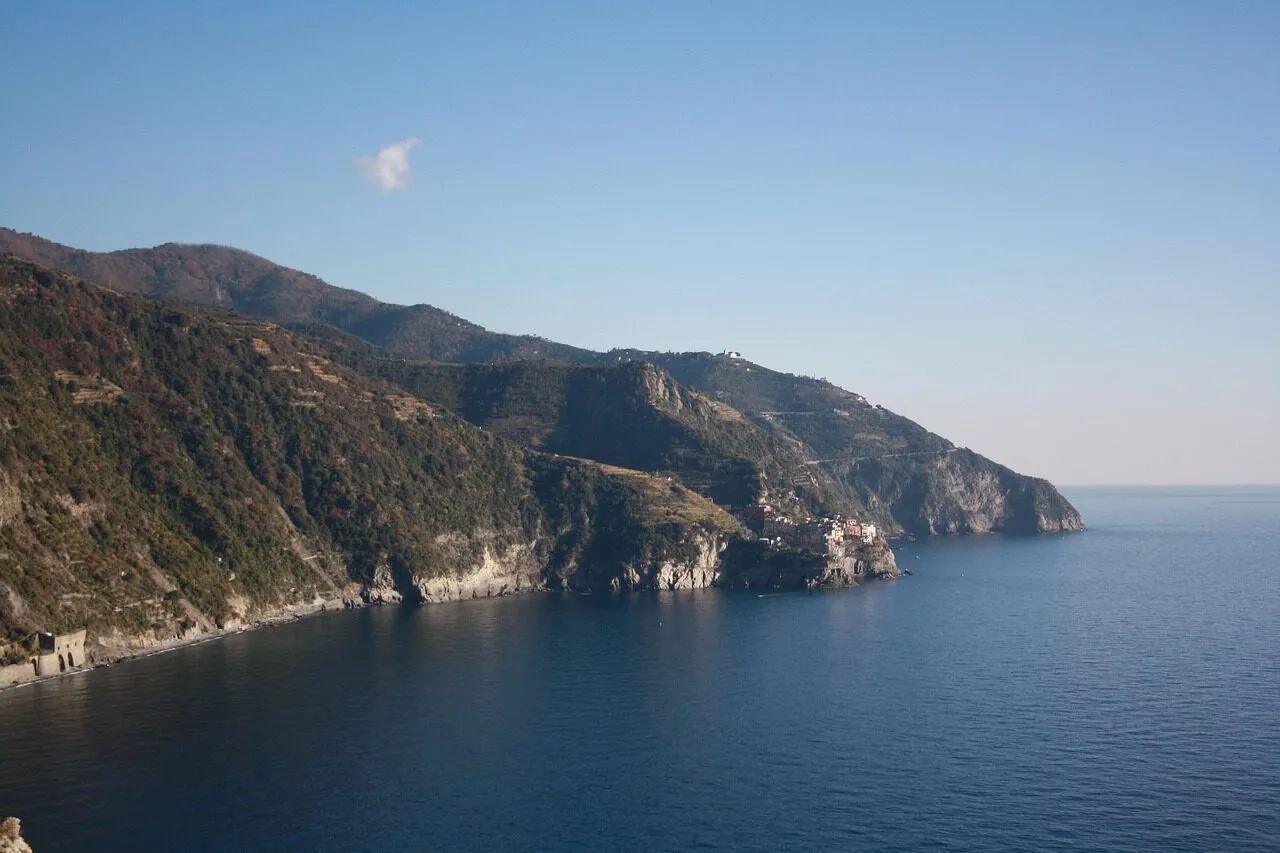
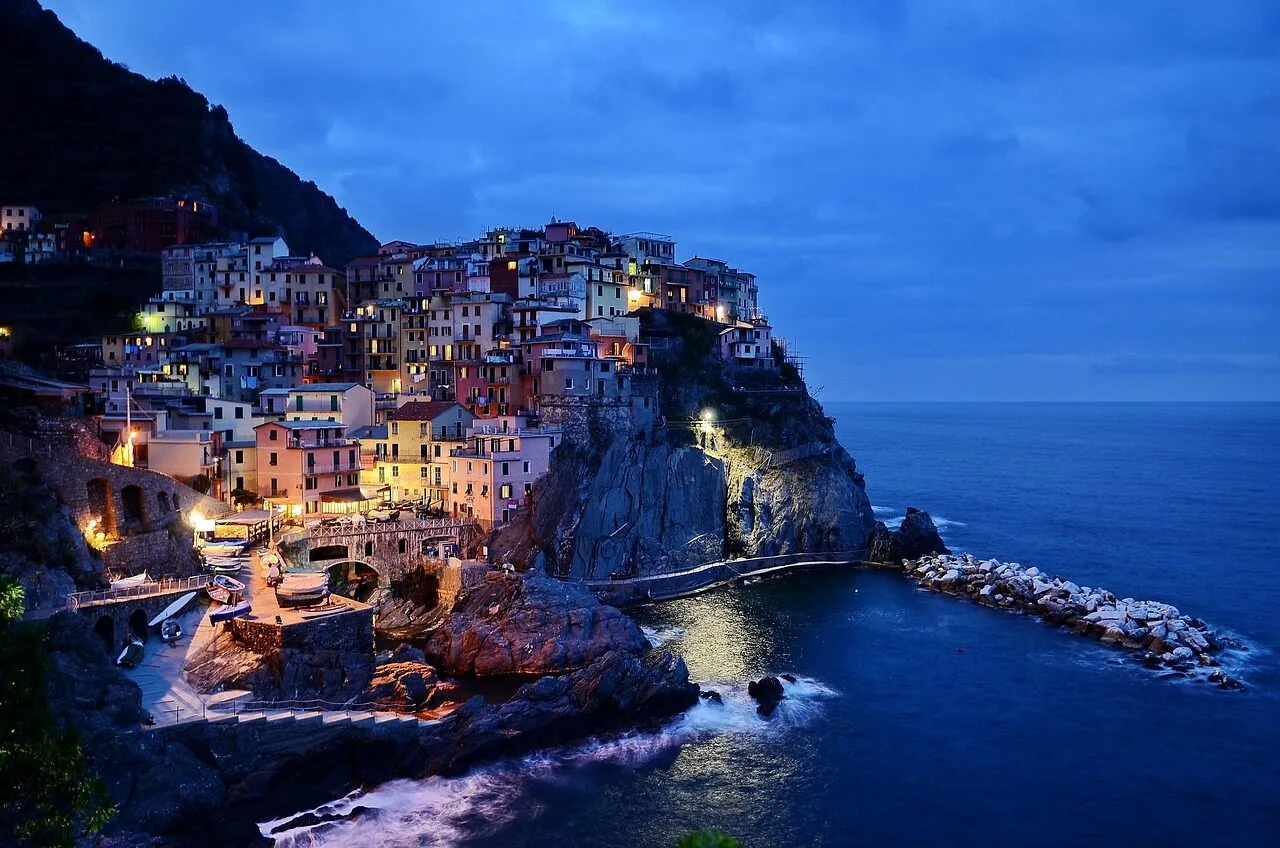
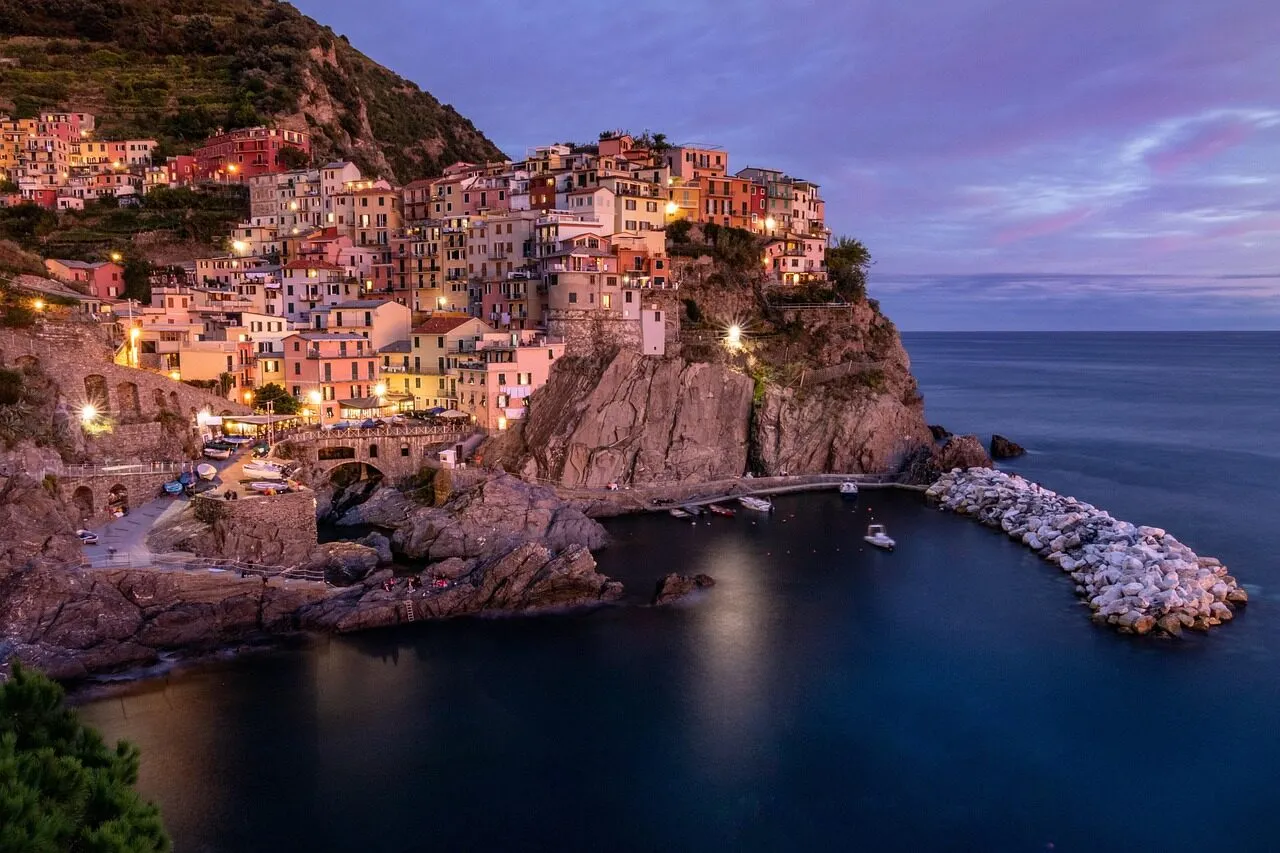
The Cinque Terre is five villages, Monterosso, Vernazza, Corniglia, Manarola and Riomaggiore, strung along a short stretch of the Ligurian coast and linked by a train that runs every few minutes. The appeal is the density and the walking: the Blue Trail runs along the cliffs between the villages, the Via dell’Amore links two of them, and the views from the terraced vineyards above are among the best in Italy. The villages are small, pastel and car-free in feel, and the Cinque Terre Card makes the trails and the trains easy.
Its limits are the crowds and the scale. In summer the villages and the trails fill, and the one-way rules kick in on the busiest stretch. There is only one real beach, at Monterosso, and the coast is more about walking and looking than swimming. It is also the cooler and wetter of the two, so the season is shorter and the sea is brisker. But for hiking and for an easy, car-free few days, nothing in Italy matches it.
The Amalfi Coast
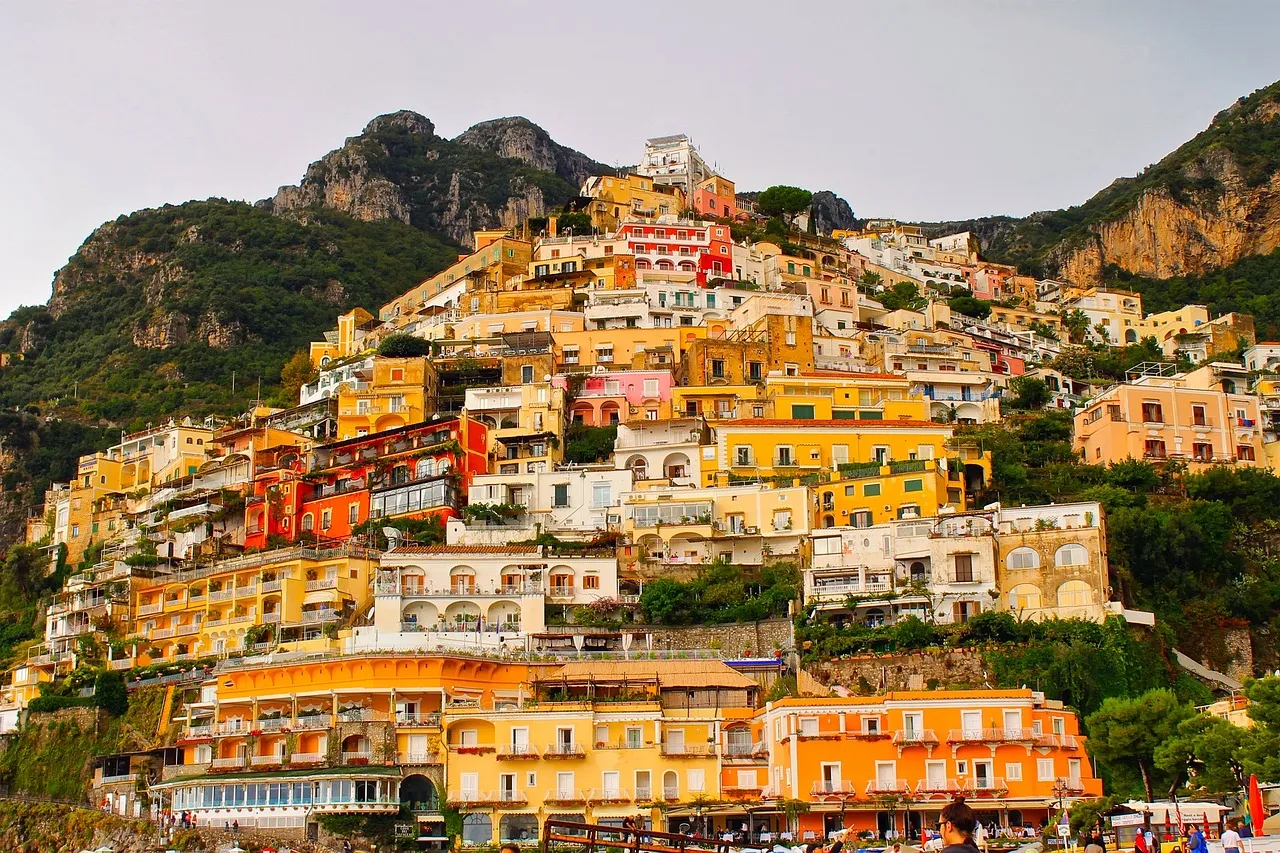
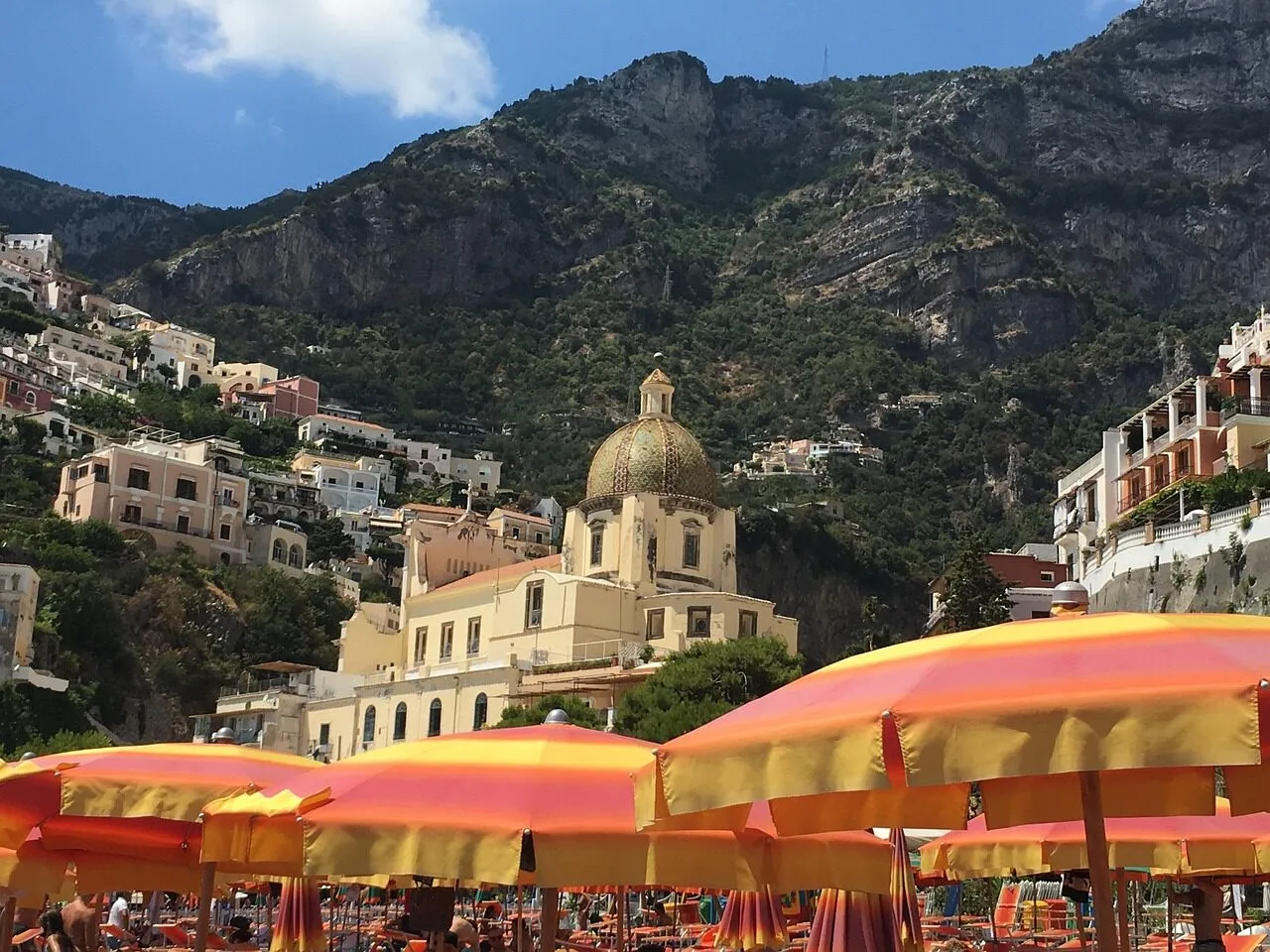
The Amalfi Coast is a longer, grander stretch of the Campanian coast south of Naples, with Positano, Amalfi and Ravello as its stars and the Lattari mountains falling straight into the sea. It is warmer, greener and more vertical than the Cinque Terre, with lemon groves and vineyards on the terraces and a coast road that is a spectacle in itself. The towns are bigger and more polished, Positano is the most photographed village in Italy, and the sea is genuinely swimmable, with beaches at Positano, Amalfi and the smaller coves.
What it adds over the Cinque Terre is the wider region: Capri and its Blue Grotto, Pompeii and Vesuvius, Sorrento and Naples, all within reach, which makes the Amalfi Coast a fuller trip. The cost is that it is harder to get around, with no train to Positano or Amalfi, ferries that stop in bad weather, and a cliff road that crawls in summer. It is also the more expensive of the two, especially in Positano, and just as crowded in the peak.
Getting there
The transport is the clearest difference. The Cinque Terre is reached by train from La Spezia or Levanto, with the nearest airports at Pisa and Genoa, and once there a train links all five villages every few minutes, so you never need a car. The Amalfi Coast is reached by ferry or the SITA bus, usually from Sorrento or Salerno, with Naples as the nearest big airport, and there is no train to Positano or Amalfi, so the coast road and the boats do the work.
For bases, the Cinque Terre has the five villages plus La Spezia and Levanto, all on the train line, and the Amalfi Coast has Amalfi, Positano, Sorrento and Salerno, with Sorrento and Salerno the practical ones because they have rail links. Both are best done without a car, but if you must drive, the Amalfi cliff road is the more stressful of the two.
Cost and crowds
The Amalfi Coast is the more expensive, with Positano among the priciest places in Italy for hotels, and the ferries, the taxis and the beach clubs adding up. The Cinque Terre has more mid-range rooms and a cheap train, and the Cinque Terre Card, from about 10 EUR a day, is the best value on that coast. Both are at their most expensive and most crowded in July and August, when the rooms, the ferries and the trails are at their fullest.
The crowds follow the same pattern. The Cinque Terre fills in summer, with the trails and the trains packed and the one-way rules in force, and the Amalfi Coast fills just as hard, with Positano and Amalfi shoulder to shoulder and the buses and ferries full. The answer for both is the same: come in May, June, September or October, and go early in the day.
Which to pick
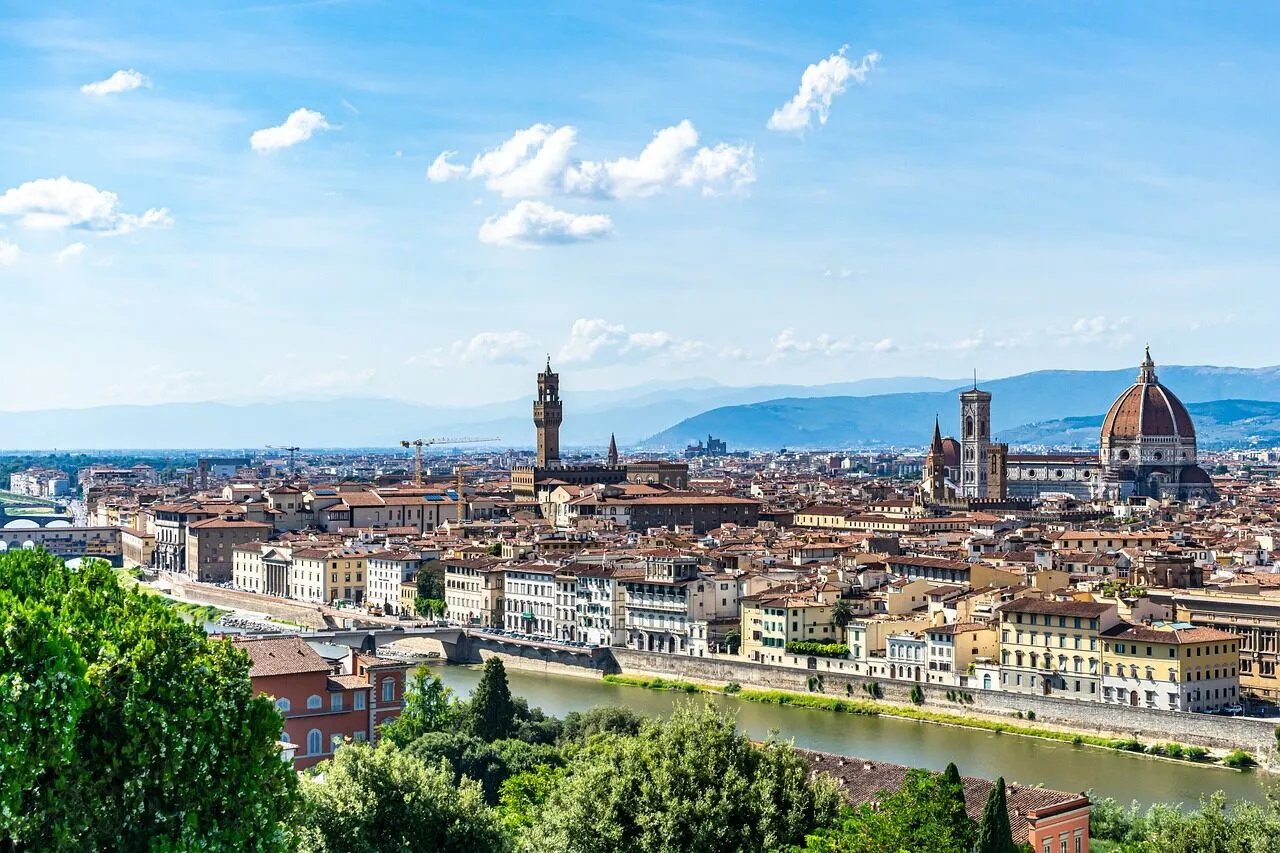
Choose the Cinque Terre if you are a walker, if you want five villages in a small area, if you want to travel by train without a car, or if you are combining it with Florence, Pisa or Tuscany in the north. Choose the Amalfi Coast if you want the sea and the beaches, if Positano and Capri are on your list, if you want the wider region of Pompeii, Naples and the islands, or if you are combining it with Rome in the south.
For a first trip to Italy that includes one coast, the Amalfi Coast is the more complete, because it sits next to Rome, Naples, Pompeii and Capri. For a trip focused on hiking and villages, or one based in the north, the Cinque Terre is the better fit. Both reward the shoulder season, and both are worth the trip.
Doing both
If you have two weeks, you can do both, but not in a week. The two coasts are about six hours apart, in the north-west and the south, so combining them means a long transfer, usually by high-speed train through Rome or Florence. With two weeks it works well: the Cinque Terre on the Ligurian leg, with Florence and Tuscany, then south to Rome and on to the Amalfi Coast with Naples and Pompeii. The Italy itinerary sets out the route, and each coast has its own guide for the detail.
Practical information
| Best for | Cinque Terre: hiking, five villages, car-free travel by train. Amalfi Coast: the sea, beaches, boats, Positano and Capri, and the wider Naples region. |
|---|---|
| Transport | Cinque Terre is train-linked from La Spezia and Levanto, easy without a car. The Amalfi Coast has no train to Positano or Amalfi, so it runs on ferries and the SITA bus, and the cliff road is slow in summer. |
| Cost | The Amalfi Coast is the more expensive, especially Positano; the Cinque Terre has more mid-range rooms and a cheap train, with the Cinque Terre Card from about 10 EUR a day. |
| When to go | May, June, September and October for both. July and August are hot, crowded and peak-priced. The Amalfi Coast has the longer, warmer season. |
| Doing both | About six hours apart, so allow two weeks. Link them by high-speed train through Rome or Florence. |
Disclosure. This blog post contains affiliate links. If you book through them, Mediterranean Vibes may earn a small commission at no extra cost to you; it is how the site stays up.