Athens is two trips in one, and most visitors only budget for the first. The ancient city sits on a single walkable hill, the Acropolis, with the Agora below it and the old neighbourhoods spilling down the slopes. The modern capital wraps around all of it: dense, loud, full of rooftop bars and late tavernas, and far better than its reputation as a stopover on the way to the islands.
It is also the gateway. Piraeus is the port for the Cyclades and the Saronic islands, the airport is the main arrival point for the whole country, and a large share of Greek trips begin or end with a night or two here. That shapes the plan: two full days in the city, and a third only if you want a day trip.
This guide is priced for 2026 with the source attached, because Athens changed how it sells tickets in April 2025 and a lot of the advice still online is out of date. The Acropolis, the Acropolis Museum, the airport transfer and the metro fares are the numbers that decide most of the trip, and they are all below with the official page to check them against. If you are building the wider trip, the Greece guide covers the islands, and all guides has the rest.
Plan and book
3 partners- Flights
Compare routes into Athens from wherever you start, or the hop on to the islands.
Search flights - Ferries and trains
Book the Athens to island leg and compare ferry and rail options in one search.
Compare routes - Where to sleep
Rooms in Plaka, Monastiraki and Kolonaki, sorted by area, price and review score.
Find a room
The Acropolis
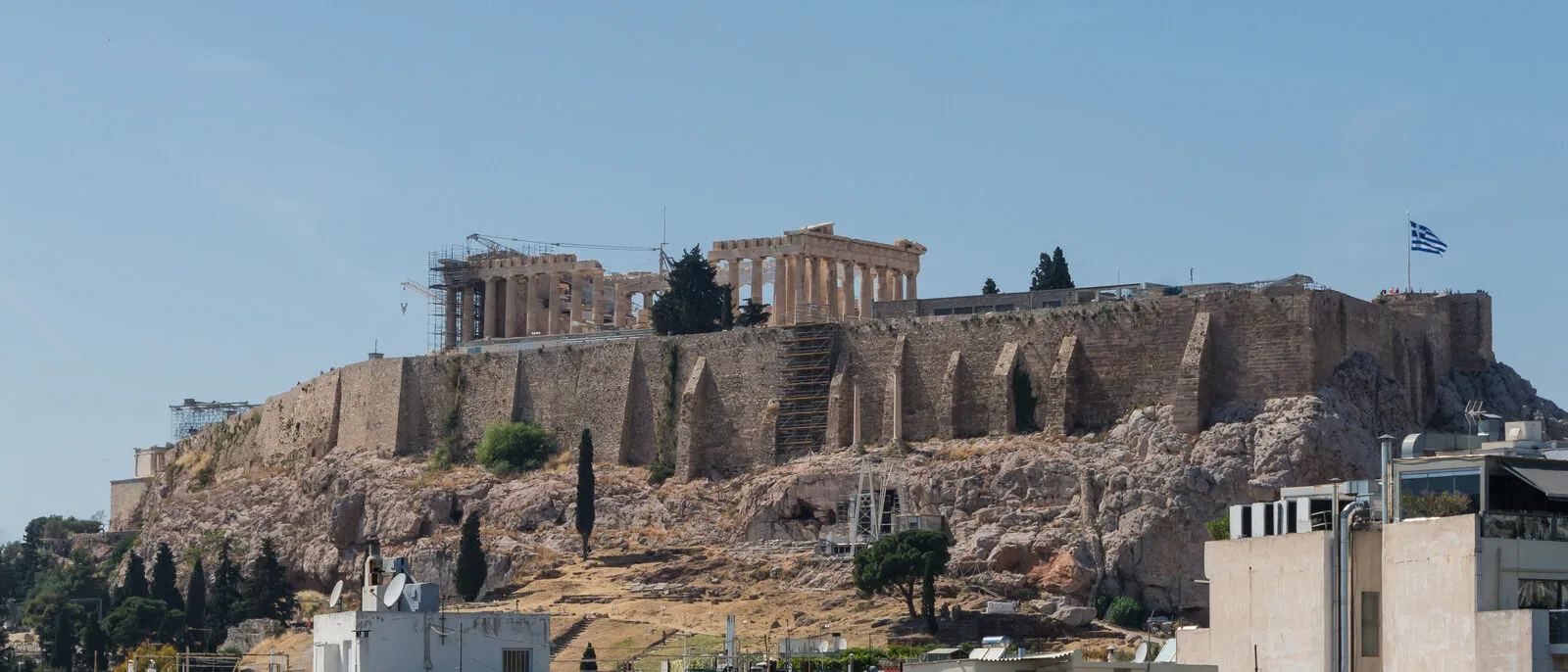
The Acropolis is the reason to come and the thing that needs planning. Entry is timed, and the full ticket is 30 EUR with a reduced ticket at 15 EUR, sold on the official portal at etickets.tap.gr. You choose a date and an entry hour, and you are expected to arrive inside that window rather than treat the ticket as an all-day pass. The 08:00 slot is the one that sells out first, and in the busy months the popular hours go days ahead.
One change catches people out. The old 30 EUR combined ticket that covered the Acropolis plus six other archaeological sites was discontinued in April 2025, and each site is now ticketed on its own. If you also want the Ancient Agora, the Temple of Olympian Zeus or Kerameikos, budget them separately. Some resellers still advertise a combo pass, but the official multi-site ticket is gone.
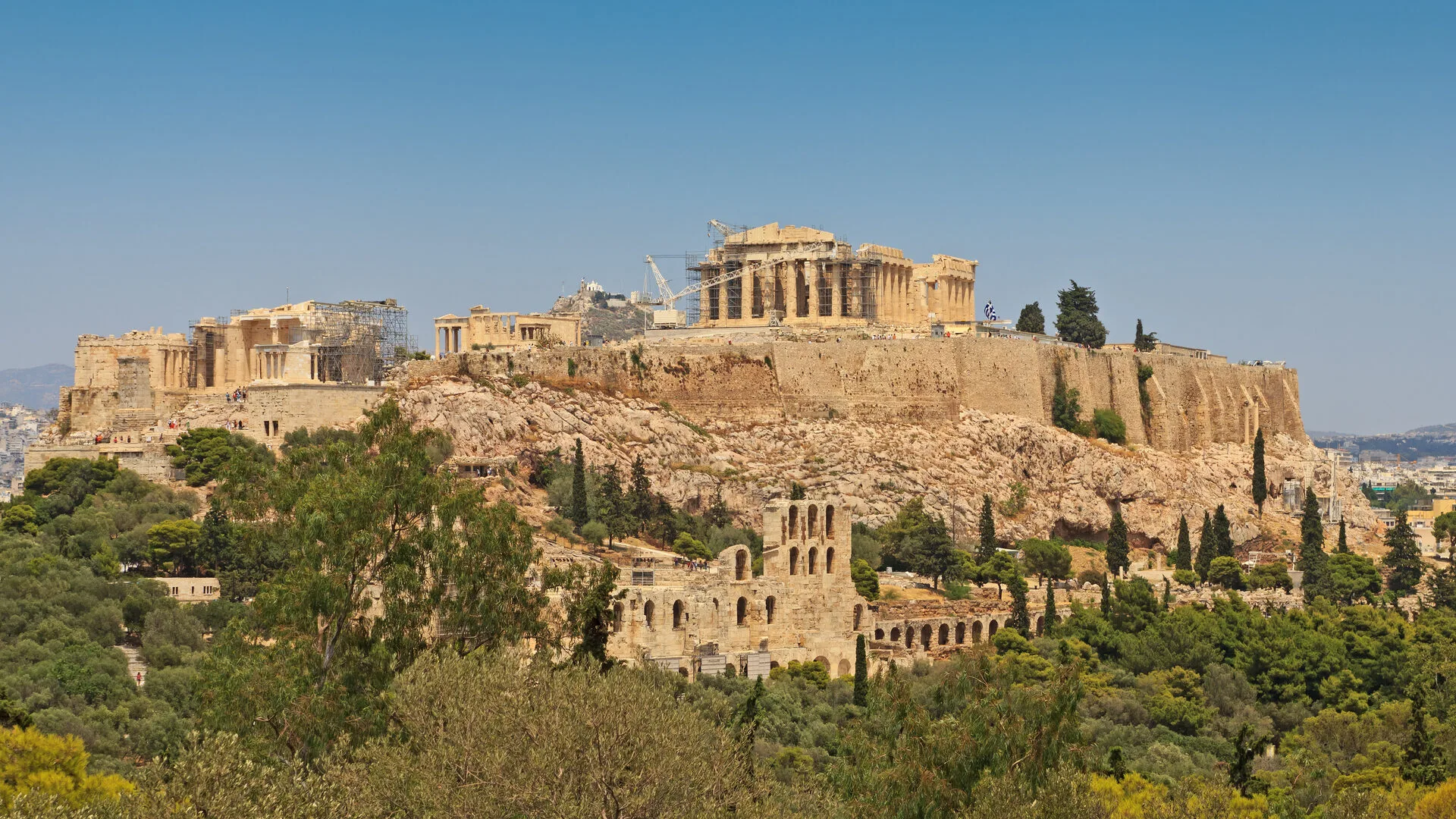
Inside the gate the route is a single climb past the Odeon of Herodes Atticus and the Theatre of Dionysus, through the Propylaia, and out onto the plateau with the Parthenon on one side and the Erechtheion and its Caryatids on the other. Two hours covers it properly. Go at opening, because by mid-morning the groups arrive and the narrow top of the hill turns into a queue with a view. The site runs roughly 08:00 to 20:00 in summer and 08:00 to 17:00 in winter, with last entry 30 minutes before closing, and the official Hellenic Heritage ticket page carries the current hours and the reduced and free categories.
Reduced and free entry follows the national rules, with EU citizens under 25 and young children among those who get in without paying and a handful of free admission days through the year, all set out on the ticket page. The climb is short but steep in places, and the path is polished marble that is slick underfoot, so proper shoes matter more than they look. Once you are through the gate there is almost no shade and no water, which is why the first slot of the day is worth the early alarm.
The Acropolis Museum
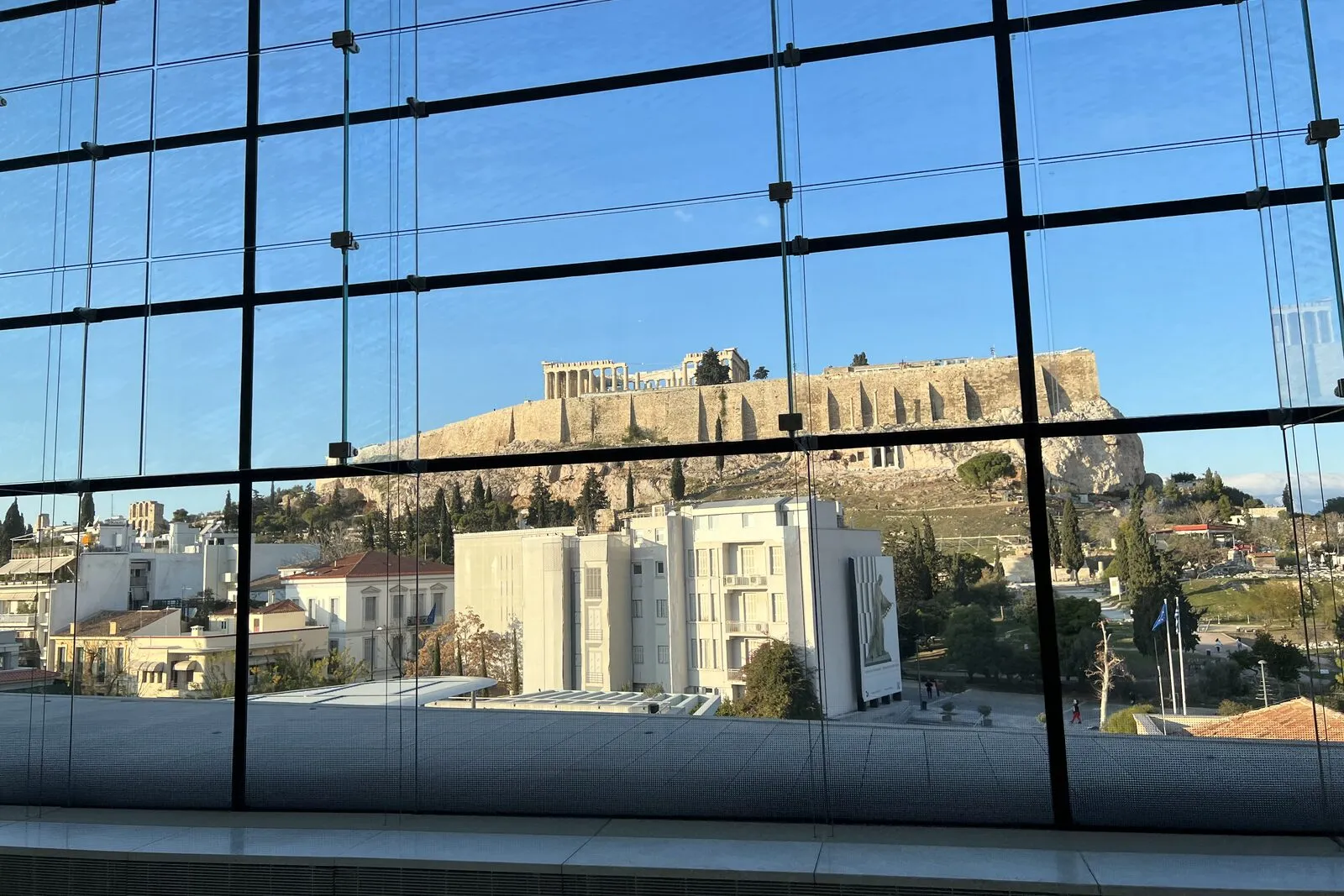
The Acropolis Museum is a separate institution with a separate ticket, 20 EUR general and 10 EUR reduced, and it is worth the pairing because the hill makes little sense without it. The building sits at the foot of the rock on Dionysiou Areopagitou, with a glass floor over an excavated neighbourhood so you walk in over the ruins. The top floor is the point of the whole design: the Parthenon Gallery is set at the same orientation and dimensions as the temple, with the frieze mounted on a continuous wall and the gaps left by the sculptures held in London and elsewhere left visibly empty.
Give it two hours, or three if you read every panel. The official hours are 09:00 to 17:00 on Mondays, 09:00 to 20:00 Tuesday to Sunday and until 22:00 on Fridays in summer, with shorter winter hours from November. It closes on 1 January, Orthodox Easter Sunday, 1 May, and 25 and 26 December, and the last entry is 30 minutes before closing. The museum’s plan-your-visit page has the current schedule, and tickets are on its own e-ticketing site.
The Ancient Agora and Monastiraki
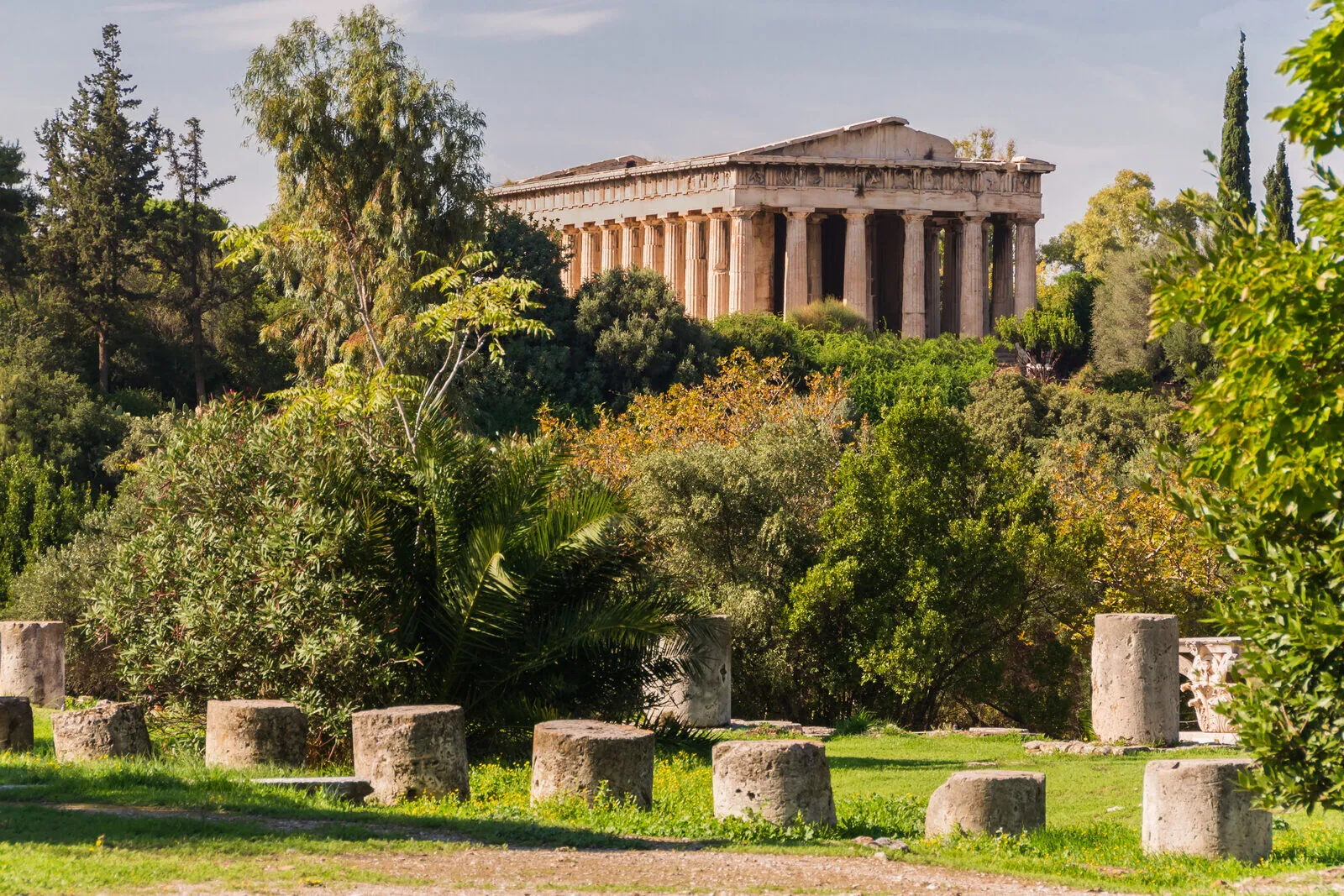
The Ancient Agora is the second site that earns its ticket, 10 EUR, and it is the one most people skip. This was the civic and commercial heart of classical Athens, the ground Socrates walked, and it survives as a green, quiet site under the north slope of the Acropolis. The Temple of Hephaestus at its western end is the best preserved ancient Greek temple anywhere, with its colonnade and roof line almost intact, and the reconstructed Stoa of Attalos holds a small museum with finds from the excavations.
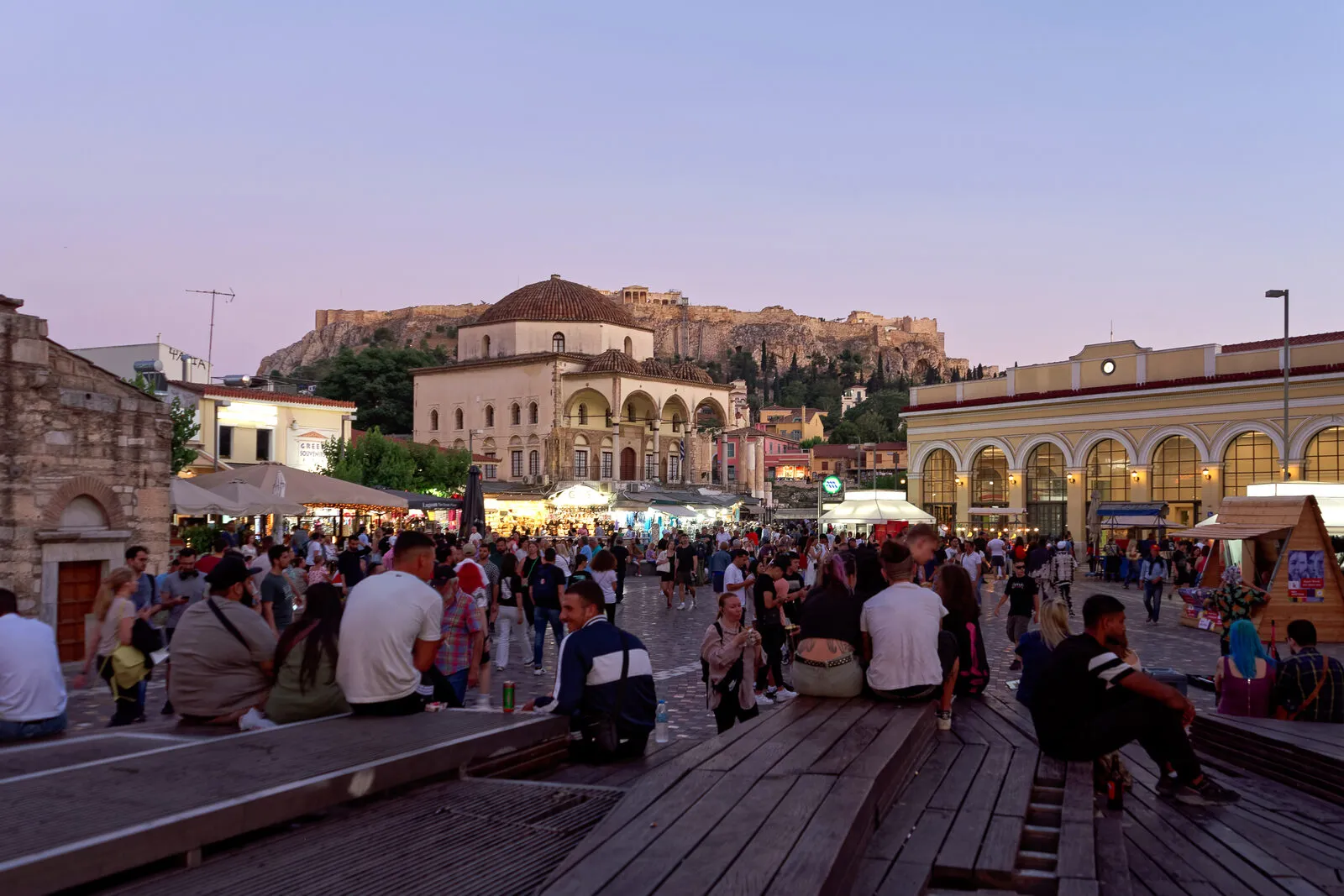
From the Agora’s north edge you walk straight into Monastiraki, which is the busy, slightly chaotic square with the old mosque, the little church of Panagia Pantanassa, and the flea market streets behind it. Sunday is the day the antiques and bric-a-brac traders turn out in force. It is touristy, and it is also the easiest place in the city to eat, drink and buy nothing in particular, with the Acropolis framed at the end of the street.
Two smaller sites sit within a few minutes of the Agora and fold in easily if the classical city is your main interest. The Roman Agora, just to the east, holds the octagonal Tower of the Winds, and Hadrian’s Library stands on the other side toward Monastiraki. Neither is essential on a first visit, and since the combined ticket ended they are each ticketed on their own, so add them only if you have the time and the appetite for ruins.
Plaka and Anafiotika
Plaka is the old town, the neighbourhood that has been lived in longer than anywhere else in Athens, and it spreads across the northern and eastern slopes below the Acropolis. It is the obvious place for a first dinner, and it is at its best in the morning or late at night when the day-trippers thin out. The lanes around Adrianou and Kydathineon run to tavernas, jewellery shops and wine bars, and the walk down from the Acropolis exit drops you into the middle of it.
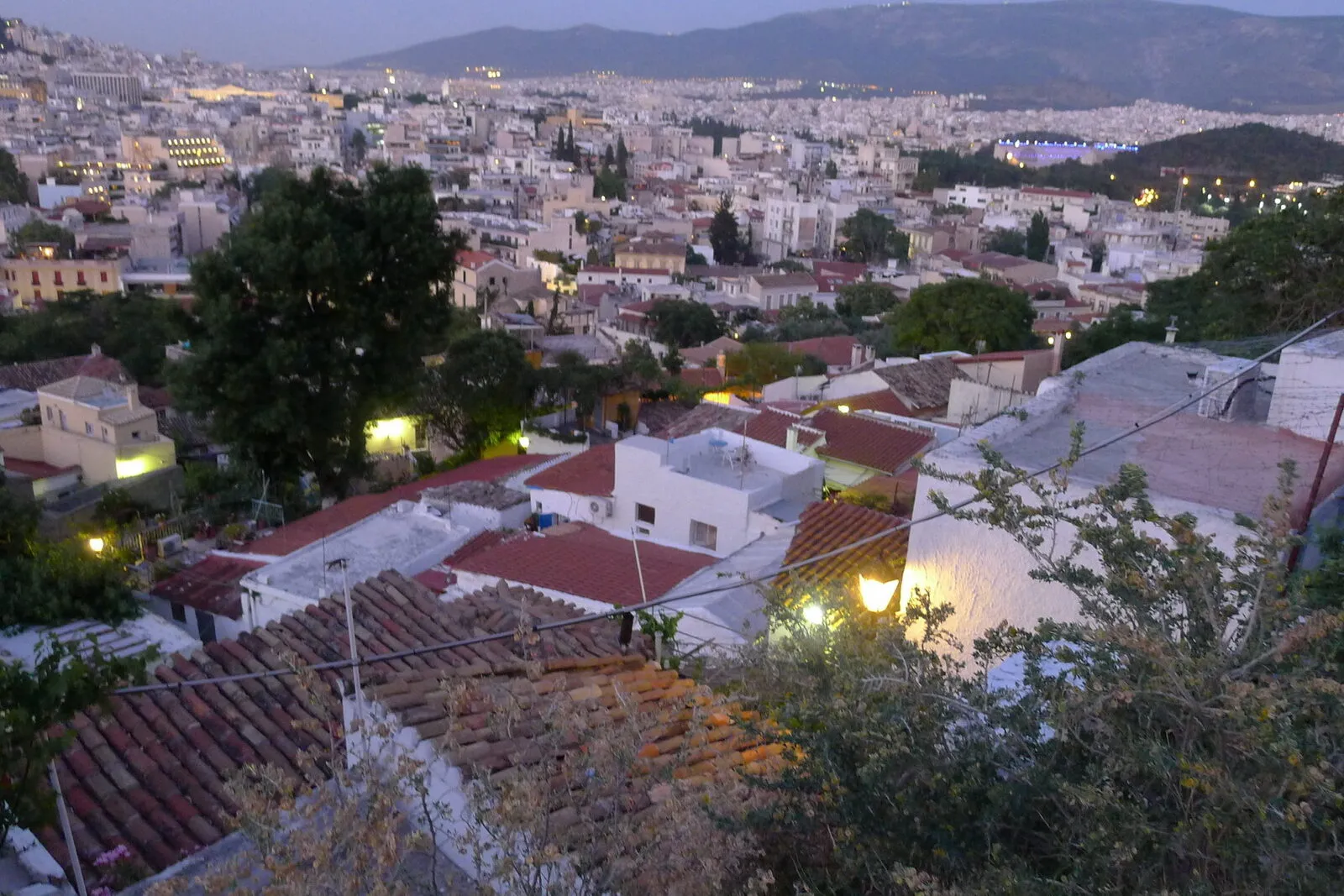
At the top of Plaka, pressed against the cliff below the Acropolis, is Anafiotika. It was built in the nineteenth century by stonemasons from the Cycladic island of Anafi, and they built it to look like home: whitewashed cubes, blue shutters, bougainvillea, narrow stepped alleys where no car can go. Only a small part of the original settlement survives, and people still live in it, so it is a place to walk through quietly rather than a sight with an entrance. The view down over the rooftops from the upper lanes is free and one of the best in the city.
Lycabettus and the free views
Athens has a lot of viewpoints and the best of them cost nothing. Filopappou Hill, opposite the Acropolis, has the classic postcard angle on the Parthenon and the Odeon below, plus pine woods and the path to the Pnyx where the ancient assembly met. Areopagus Hill, just below the Acropolis entrance, is the bare rock where crowds gather for sunset, and the view over the Agora and the city is worth the slightly awkward steps. Both are open access and best in the hour before dark.
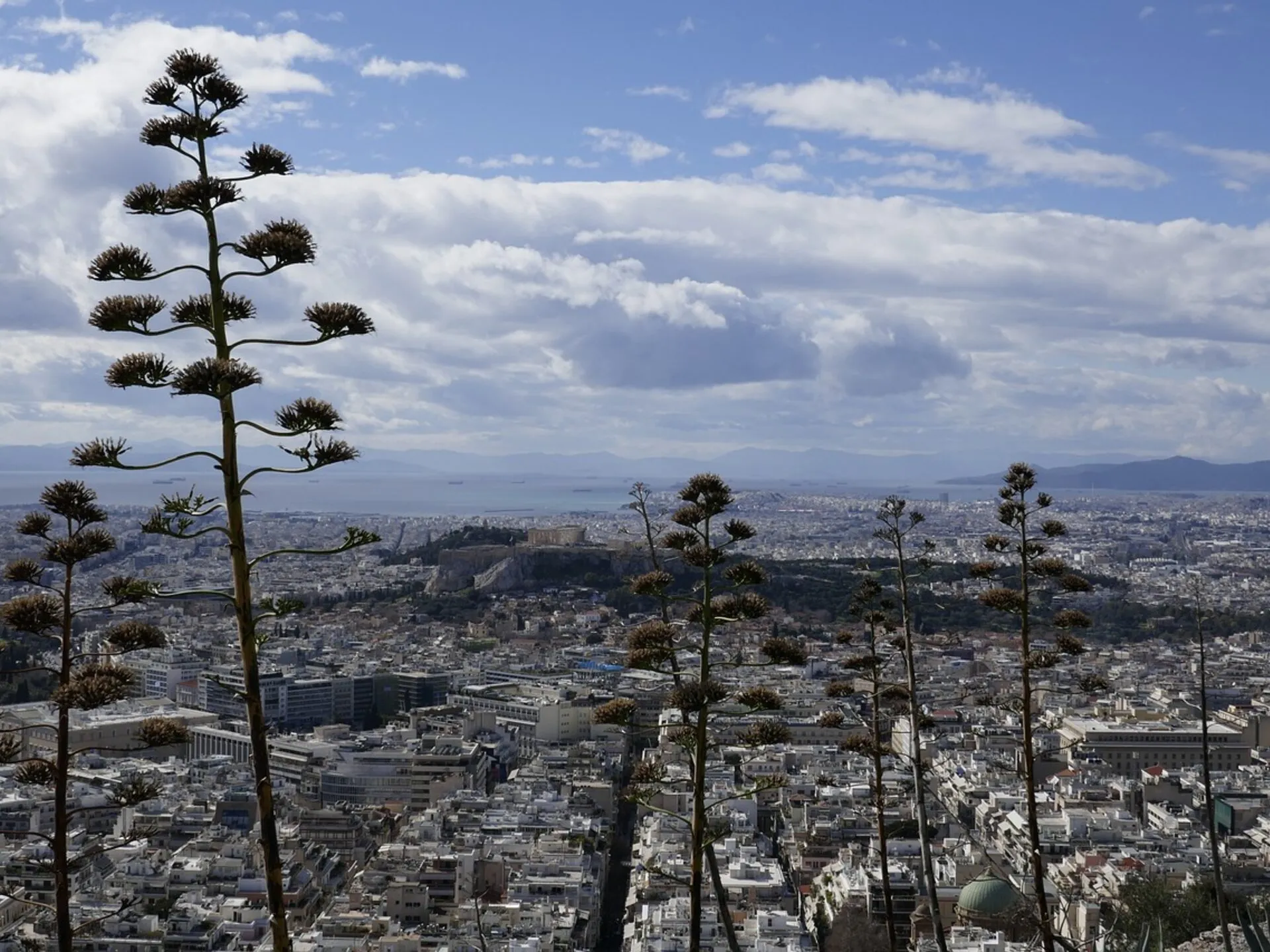
Mount Lycabettus is the highest point in the centre and gives you the whole city at once, sea to mountains. You can walk up through Kolonaki in about 40 minutes, or take the funicular that climbs from the streets below the hill. It is the one view that shows how Athens sits in its bowl of hills, which is exactly what makes the sunset crowds worth tolerating. If you only have one clear evening, pick Filopappou for the Acropolis and Lycabettus for the city, in that order.
The National Garden, behind Syntagma, is the other free green space worth knowing: shady, quiet, and the best place to sit out the middle of a hot day when the sites are at their busiest. Between the hills, the garden and the pedestrian street around the Acropolis, the best of Athens outside the ticketed sites costs nothing at all.
Food
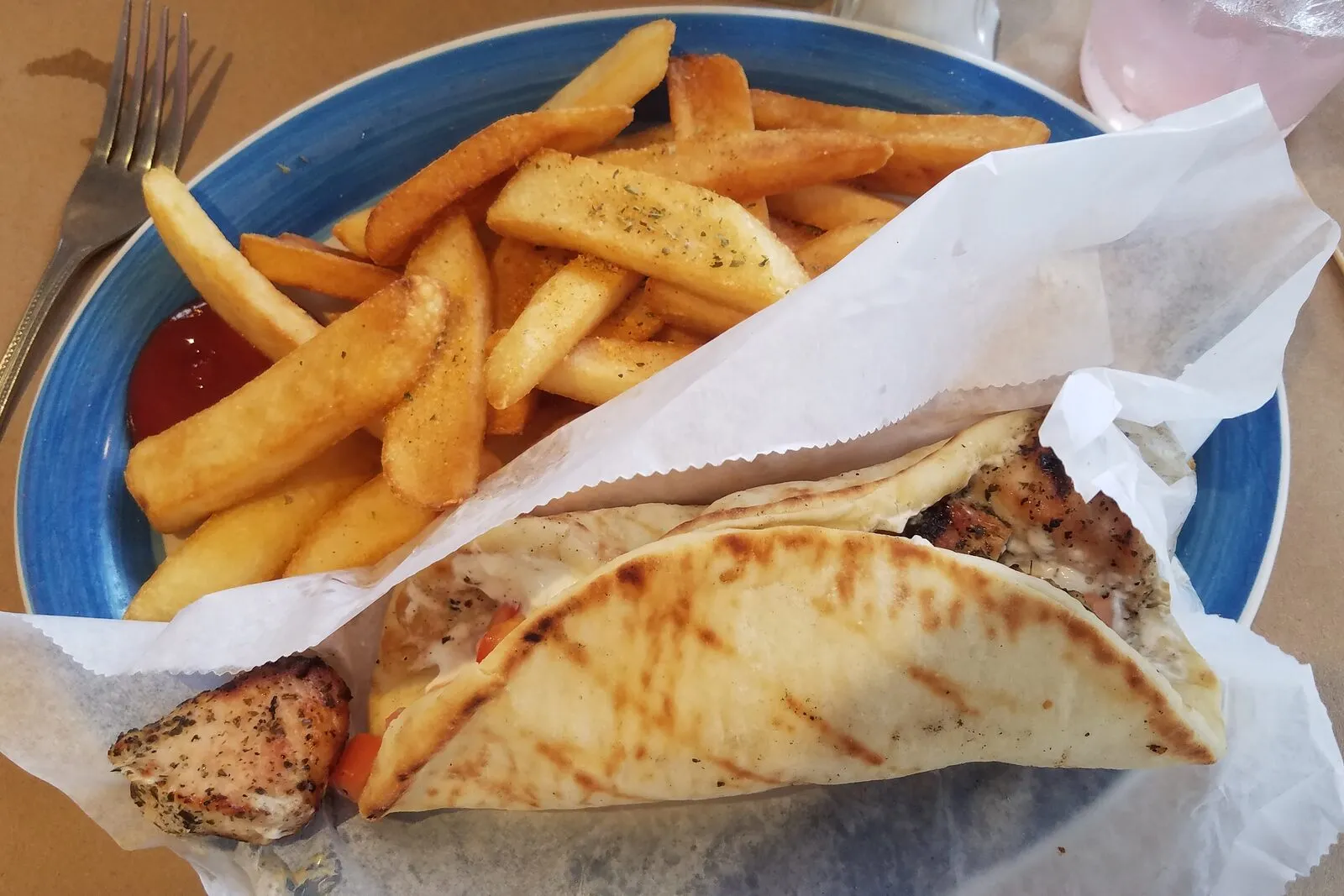
Athens is the best place in Greece to eat cheaply and well, and the everyday food is the reason. Souvlaki and gyros are the local fast food: grilled meat, pita, tomato, onion and tzatziki, sold from counters all over the centre and eaten standing or on the nearest step. A proper taverna meal is a table of small plates, fava, saganaki, grilled vegetables, a whole fish if you want it, and a jug of house wine, and it is still one of the better value dinners in western Europe.
The neighbourhoods to eat in are Plaka for the obvious version, Psyrri for something younger and noisier, and Koukaki for the places Athenians actually go. Varvakios Agora, the central market, is the one food sight worth a detour: fish, meat and spice stalls in the morning, with the surrounding streets full of cheap, excellent lunch spots. Coffee is a serious local ritual, so a freddo espresso or a freddo cappuccino is the thing to order and to copy for the rest of the trip. If you would rather have it arranged, food tours and cooking classes in Athens run through the market and the old town.
Leave room for the end of the meal. Yoghurt with honey and walnuts, or a scoop of mastiha or kataifi ice cream, is the usual finish, and the pastry shops around Syntagma and Kolonaki are worth a stop on the walk home. The one food mistake visitors make is eating every meal on the most photographed street in Plaka, where the menu is aimed at the passing crowd; walk two blocks back from the main drag and both the prices and the cooking improve.
Day trips
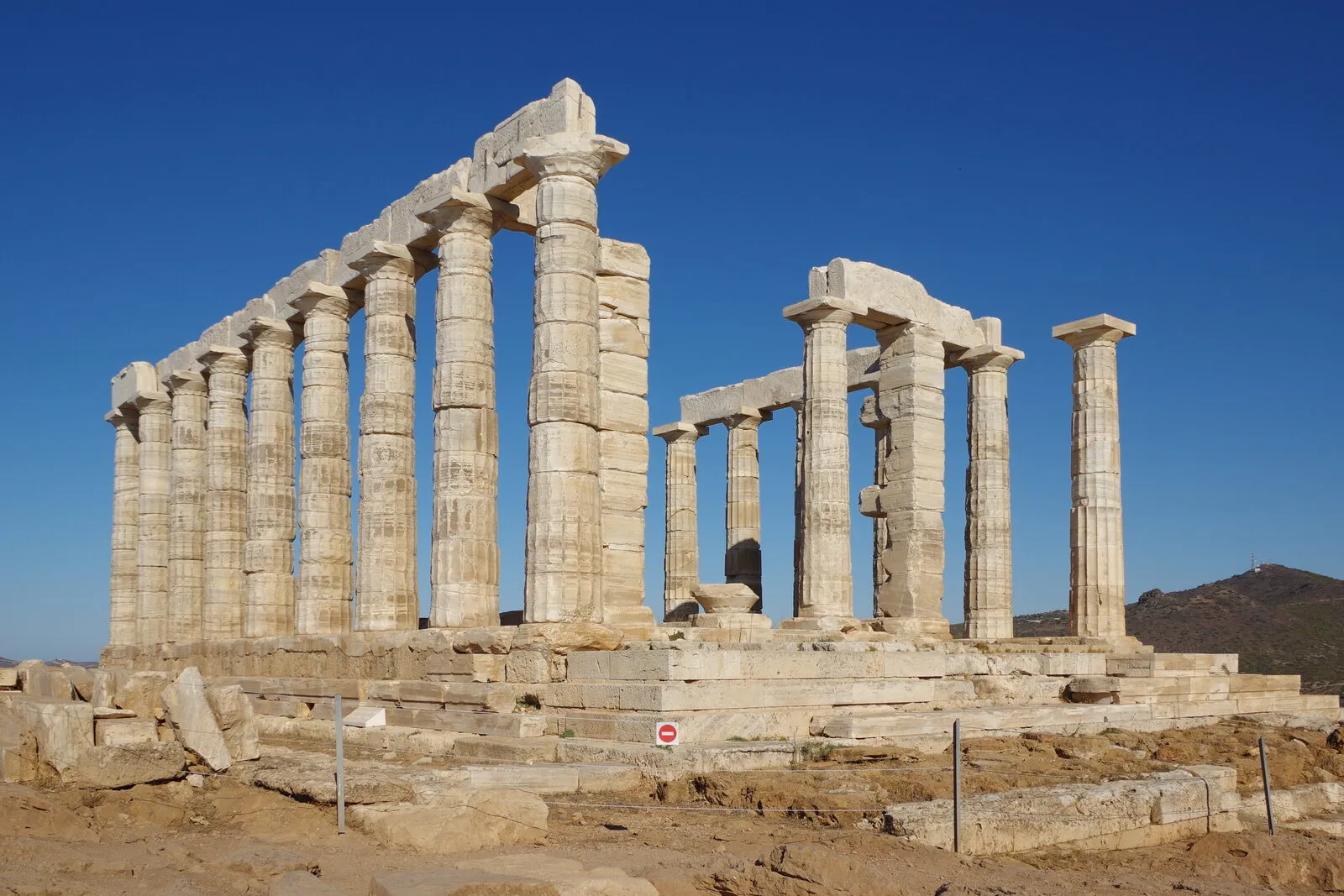
The third day in Athens is better spent leaving it, and there are three shapes for that. The closest and most dramatic is Cape Sounion, the headland at the southern tip of Attica where the Temple of Poseidon stands on a cliff above the Aegean. The official site is 20 EUR full and 10 EUR reduced, open daily from 09:30 until sunset, with last admission 20 minutes before closing, so the whole point is to time the visit for the light. You can get there by KTEL bus from Aigyptou Square in about two hours each way, or on a half-day tour that handles the drive and the timing.
Delphi is the other mainland day, about two and a half hours by road, and it deserves a full day rather than a rushed afternoon. The site on the mountain slope above the valley, with the Temple of Apollo and the Charioteer in the museum, is one of the great archaeological settings in Greece and the reason the package tours run here every morning. If you are staying longer, Delphi combines naturally with Meteora as an overnight extension.
The third option is the sea. Piraeus is the ferry port and the Saronic islands are close enough for a day: Aegina is around 40 minutes by fast ferry and Hydra about 1 hour 15 minutes to 1 hour 55 minutes depending on the boat and the stops. Hydra has no cars at all, just donkeys and water taxis, and Aegina has the pistachios and a fine temple at Aphaia. Book the ferry as a foot passenger and check the last crossing home before you leave, because the return times are what decide the day. Compare the routes on Omio, and for the longer island legs see the Santorini guide and the quiet Greek islands.
When to go
April, May, early June, late September and October are the good months. The days are warm without being punishing, the archaeological sites are manageable in the morning, and the hotel rates are well below the summer peak. Spring brings the city out to its rooftops and terraces; autumn keeps the sea warm enough for a Saronic island day well into October.
July and August are the honest low point for sightseeing, even though they are the busiest. Athens bakes, the Acropolis has almost no shade, and the heat pushes the sensible sightseeing into the first two hours after opening and the last two before closing. Winter is quiet and cheap, with mild grey days and far fewer people, but the sites close earlier and some island ferries thin out. If your dates are fixed to high summer, plan around the heat rather than against it: Acropolis at 08:00, museum in the middle of the day, everything else in the evening.
The city also has its own calendar. Orthodox Easter falls on a different date each spring and is the biggest holiday of the year, with candlelit processions and a long family table on the Sunday, and it is a fine time to be here if you book early. In August many Athenians leave for the islands, so a few family-run places close even as the sites fill up. The Athens Epidaurus Festival runs through the summer, with performances in the ancient Odeon of Herodes Atticus below the Acropolis, which is worth checking before you fix your dates.
Getting there
Athens International Airport is 33 km east of the centre and there are three sensible ways in. Metro Line 3 runs to Syntagma in about 40 minutes and costs 9 EUR, with a return ticket at 16 EUR that is valid for 30 days. The X95 express bus costs 5.50 EUR, runs 24 hours and takes about 60 minutes to Syntagma, which makes it the reliable option for late-night arrivals. A taxi from the official rank outside arrivals has a regulated flat fare of 40 EUR from 05:00 to 24:00 and 55 EUR from 00:00 to 05:00, tolls included, and the fares are published on the airport’s taxi page.
If you are heading straight to the islands, the ferries leave from Piraeus, which is a separate trip across town on Metro Line 1 to Piraeus station, about 25 to 30 minutes from the centre. The Saronic and most Cyclades boats use the main port; some Cyclades ferries also leave from Rafina, which is closer to the airport than to the city. Check which port your ferry actually uses before you book a hotel, because the two are an hour apart by road.
Where to stay
Stay in the centre and walk, because the historic core is compact and the metro only matters for the airport and Piraeus. Plaka and Monastiraki put you under the Acropolis with the restaurants and the market on the doorstep, and it is the right default for a first visit. Syntagma and Kolonaki are calmer and more polished, with the square, the shopping and the walk up Lycabettus, and they suit a short trip built around museums and food. Koukaki and Makrygianni sit next to the Acropolis Museum and feel more residential, which is a good base if you want to eat where locals eat.
Within Plaka, the quieter upper lanes near the Acropolis are prettier and calmer than the strips around Adrianou, and still five minutes from everything. In Monastiraki, expect noise late into the night, which is either the point or a reason to look elsewhere. Kolonaki is the most expensive and the least touristy, a real neighbourhood of offices, cafes and shops, and it works if you want a calm base and do not mind a 20-minute walk to the Acropolis.
The exception is an early ferry. If you have a 07:00 sailing from Piraeus, a night near the port saves a stressful dawn taxi, and the port area is perfectly functional for one night. For everything else, being central is worth more than the small saving of staying out by the coast.
What a day costs
Planning figures for 2026, per person per day and excluding flights and accommodation: a backpacker day runs 55 to 80 EUR, a comfortable day 100 to 150 EUR, and a mid-range day 180 to 260 EUR. The comfortable band is the realistic one for most first-timers, because it covers the Acropolis and the museum tickets, a sit-down taverna dinner, a couple of metro rides and a coffee stop without counting every euro. These ranges are planning estimates built from the ticket, transport and food prices cited in this guide, not an official index.
The two line items that swing the total most are accommodation and how many paid sites you stack up. Since the combined ticket ended, three or four separate entries add up quickly, so decide before you go whether you are a one-site or an all-site traveller. The day-to-day costs of the city itself, food, coffee and transport, are among the lowest in western Europe.
Practical information
| Getting around | The centre is walkable and the metro covers the rest. OASA fares are 1.20 EUR for a 90-minute ticket, 4.10 EUR for 24 hours and 8.20 EUR for five days, and a 3-day tourist ticket at 20 EUR includes both airport journeys. Validate every ride, because inspectors do fine. The metro has three lines; Line 3 links the centre to the airport. |
|---|---|
| When to go | April, May, early June, late September and October are the sweet spot. July and August are hot, crowded and best done early and late in the day. November to March is quiet and cheap, with shorter site hours. |
| Money | Greece uses the euro. Cards are accepted almost everywhere, but keep some cash for buses, market stalls and small tavernas. Tipping is a round-up or five to ten percent on a good meal, not the American percentage. |
| Health and safety | Athens is a safe city, but the metro, Monastiraki and the crowded tourist streets are pickpocket territory; keep bags zipped and phones out of back pockets. Summer heat is the real risk: carry water, use the morning, and take the marble steps on the Acropolis slowly when they are polished and dry. Tap water is drinkable in the city. |
| Sightseeing rhythm | Acropolis at opening, Acropolis Museum straight after, the Ancient Agora and Plaka in the afternoon, and a free hill for sunset. Book the Acropolis slot before you travel, and keep a day free for Sounion, Delphi or a Saronic island. |
Disclosure. This blog post contains affiliate links. If you book through them, Mediterranean Vibes may earn a small commission at no extra cost to you; it is how the site stays up.