Greek island hopping is simpler than it looks and harder than it sounds. The ferries are the buses of the Aegean, running on fixed timetables between hundreds of inhabited islands, and a trip is just a chain of short crossings strung together. The catch is that each link is a real timetable with limited sailings, so the difference between a relaxed ten days and a stressed one is decided long before you pack, when you pick the islands and the order.
This guide walks through one honest 10-day route through the Cyclades: Athens for a night, then Milos, Sifnos and Paros, finishing in Naxos before the boat or flight back. It is the western and central Cyclades line, so each hop is short, and it leans on the islands where rooms and food cost less than on Santorini or Mykonos. Every ferry time and fare below was checked against the operators and 2026 booking pages, and it is the planning layer that the single island guides in this series do not cover.
If you only have a week, cut an island rather than rushing three. If you have two weeks, the route stretches easily to a fourth stop or folds in Santorini and Crete at the end. For the wider country, start with the Greece guide and all the guides.
Plan and book
3 partners- Flights
Land in Athens, then let the ferries do the rest. Compare routes into ATH from wherever you start.
Search flights - Ferries and trains
Book the Piraeus to Milos leg and compare the island hops in one search.
Compare routes - Where to sleep
Rooms on Milos, Sifnos, Paros and Naxos, sorted by area, price and review score.
Find a room
How island hopping works
Two kinds of boat share the Cyclades, and the choice shapes the whole trip. Conventional ferries are the large car ferries, slower but steadier, cheaper, and far less bothered by wind. High-speed catamarans and the fast monohulls cut crossing times roughly in half but charge more and are the first to be delayed or cancelled when the meltemi blows. On the same route the difference is real: Piraeus to Milos is about 4h 35m on a Blue Star conventional ferry from 42 to 48 EUR, or about 2h 30m on a Seajets catamaran from 78.70 EUR, according to Ferryhopper.
The network runs on a few hubs. Athens has three ports: Piraeus is the big one for the Cyclades, Rafina is convenient if your hotel is on the east side, and Lavrio is a summer alternative near the airport. Out in the islands, Paros and Naxos are the main interchanges, which is why this route runs through them. You rarely return to Athens between islands; you hop sideways. Foot passenger tickets are the norm for hoppers, they are cheap, and they let you ignore the long vehicle queues. Bring a printed or offline ticket and be at the port early in peak season, because the good seats and the shade fill first.
Booking is straightforward. Ferryhopper and Ferryscanner compare every operator, and the operator sites sell the same seats. In July and August book the long legs a few weeks ahead and any catamaran crossing as soon as your dates are fixed; outside peak season a day or two is usually enough. The island to island hops are the ones to guard, because Sifnos to Paros can run only one to three times a day.
The 10-day route
The shape is Athens, then three islands moving south to north, then out through Naxos. It is deliberately slow at the start, because the first crossing out of Piraeus is the long one and you want to arrive with the afternoon still ahead of you.
Day 1 is Athens: land, sleep near the port or the centre, and see the Acropolis if the flight allows. Days 2 to 4 are Milos, three nights. Days 5 to 6 are Sifnos, two nights. Days 7 to 9 are Paros and Naxos, three nights split as you like, since the two are half an hour apart. Day 10 is the run back to Athens, by ferry from Naxos or by a short flight from Naxos or Paros.
Two rules keep the route working. Move in the morning, because the meltemi builds through the afternoon and the early boats are calmer and more likely to leave on time. And never put a ferry and a flight on the same day without a buffer, especially at the end, because a wind cancellation the day you fly home is the one that ruins a trip.
Milos
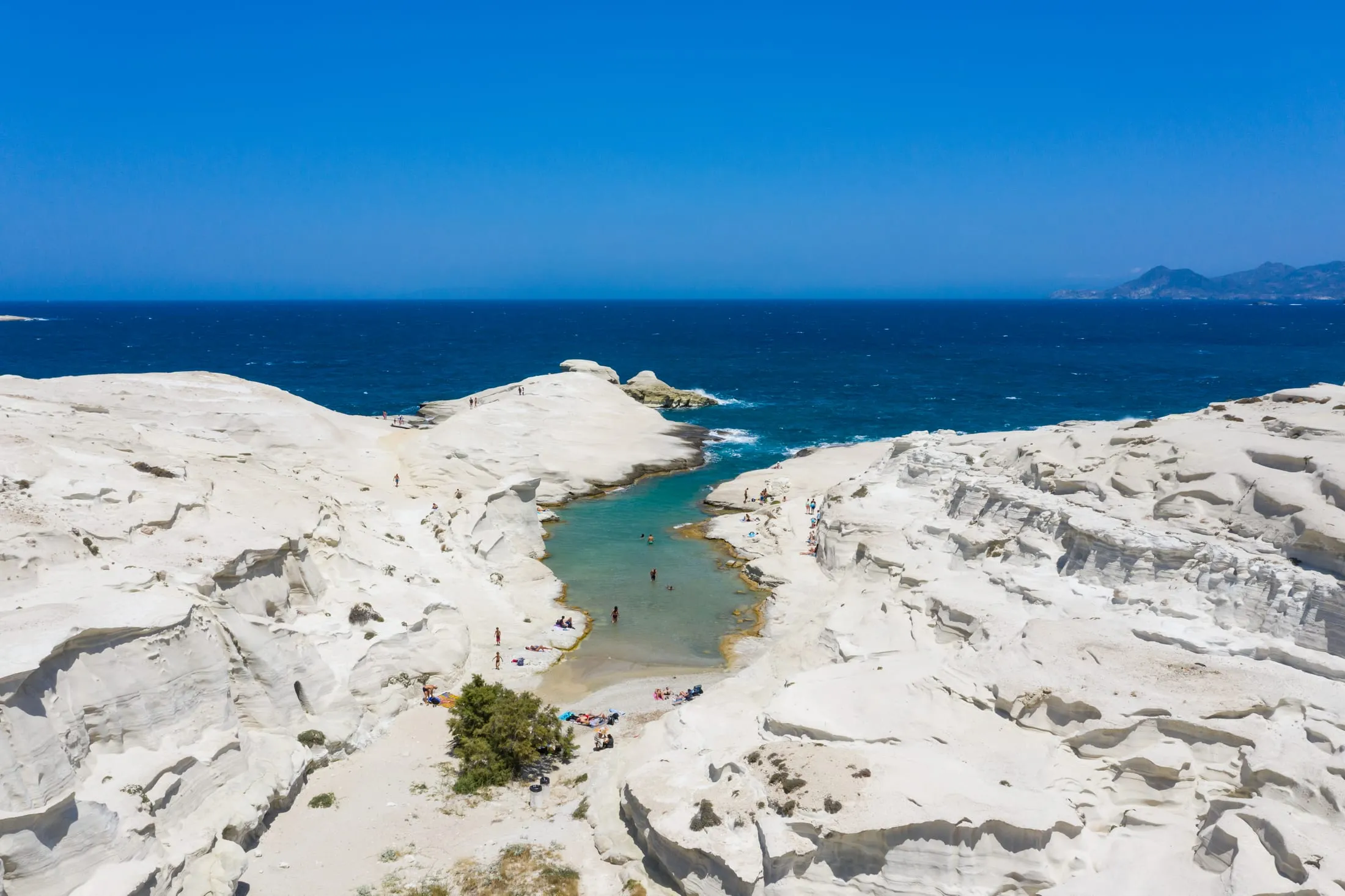
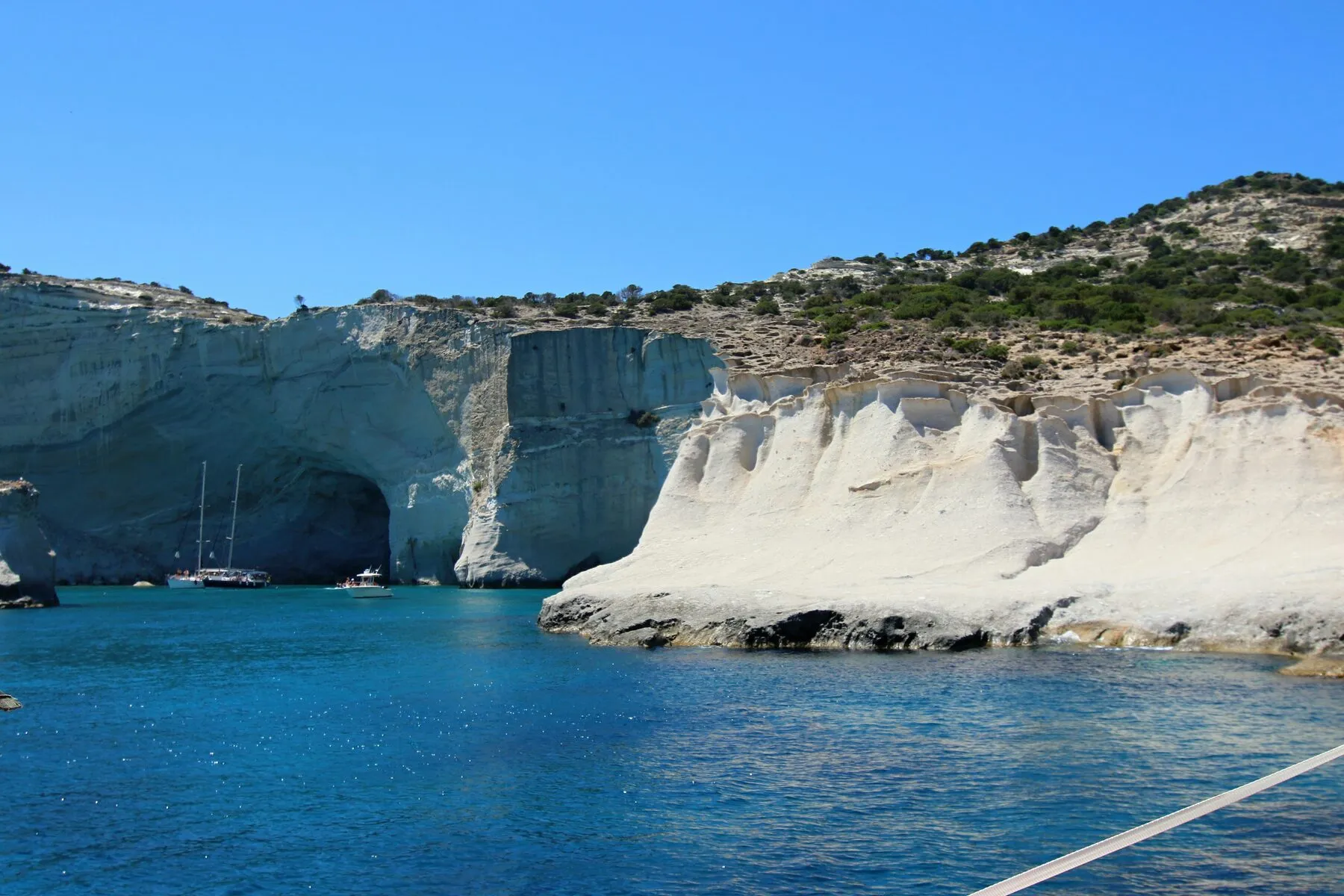
Milos is the beach and geology island, and three nights is the minimum that does it justice. The port is Adamas, a working harbour town with the ferry quays, the best bus links, and a strip of tavernas along the water. From there the island spreads out: Plaka and the hill villages inland, the lunar white rock of Sarakiniko on the north coast, and the sea caves of Kleftiko at the south-west tip, reachable only by boat.
The rhythm that works is a boat day, a beach day and a village evening. Take a full-day sail to Kleftiko and the western coves, which is the single best thing on the island and books out in summer. Give a day to Sarakiniko and the north, then Firopotamos and the syrmata boathouses at Klima, the little carved shelters where fishermen still keep their boats under the houses. Eat in Plaka or Trypiti in the evening, higher up where the air is cooler. The Milos guide has the beaches, the ferry detail and the budgets in full.
Sifnos
Milos to Sifnos is the shortest hop of the trip, about 40 minutes on a SeaJets catamaran or 1h 25m on a Cyclades Fast Ferries conventional boat, from as little as 6.50 EUR on a deck ticket. Sifnos is the quiet one, with no airport and a single port at Kamares, and it is the best eating on the route. It is also the walking island: 19 signed trails stitch the villages, beaches and chapels together, and the paths are stone rather than technical.
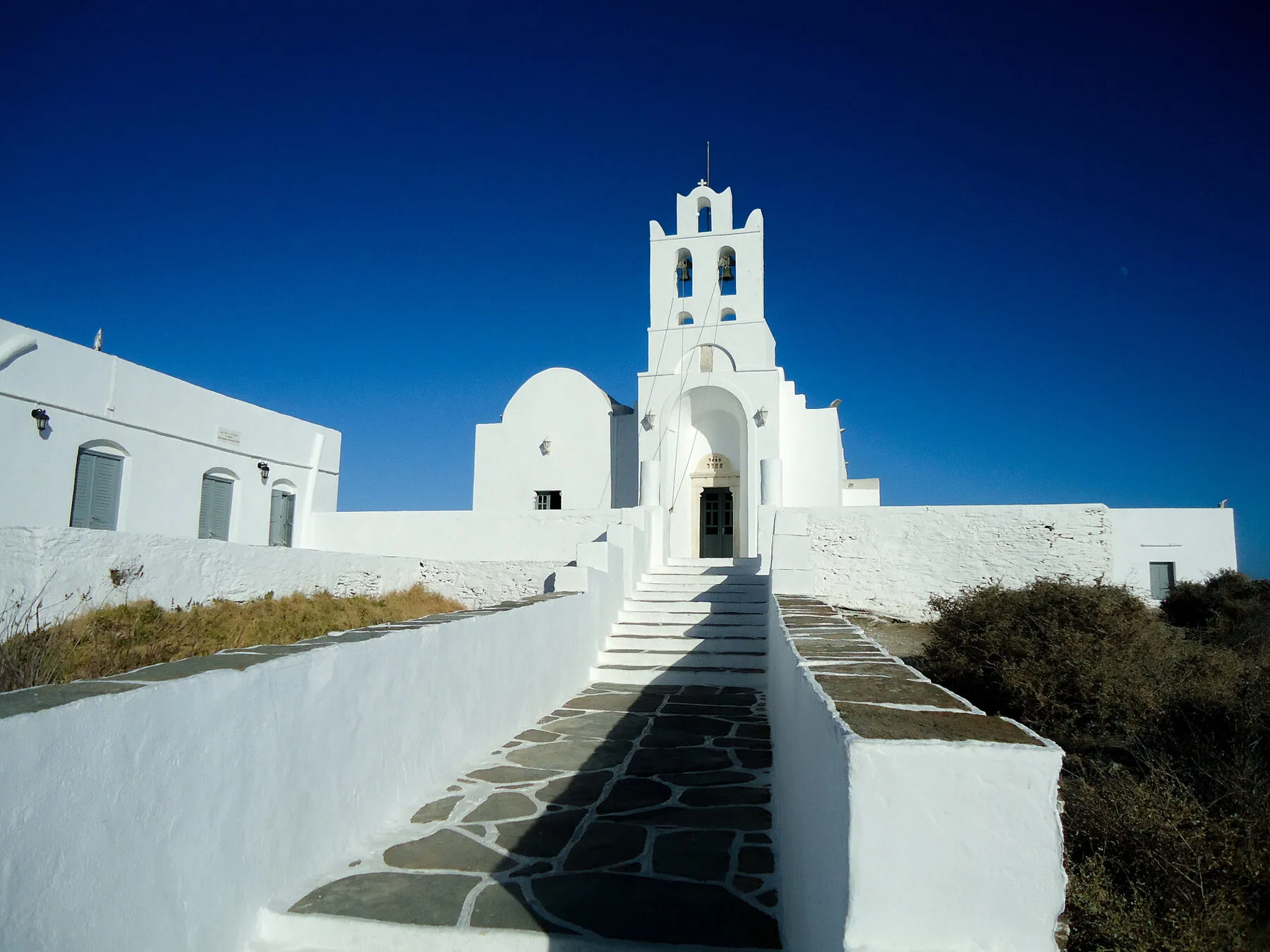
Two nights is enough to taste it. Base yourself in Apollonia or the neighbouring Artemonas, the whitewashed inland capital, and walk the alleys in the evening when the square fills. Give half a day to Kastro, the medieval former capital on its rock, and to the Panagia Chrysopigi monastery on its promontory, the island’s patron and its most photographed spot. Add Platis Gialos for the organised beach and the swim, and eat the local cooking, because Sifnos has a genuine reputation as the food island of the Cyclades. The quiet Greek islands guide places Sifnos in context with the other understated islands.
Paros and Naxos
The last leg is the easy one. Sifnos to Paros is about 55 minutes on SeaJets, though it runs only one to three times a day and mostly from June to September, so fix the date when you book. From Paros, Naxos is a short, frequent hop of 25 to 55 minutes several times a day, which is why the two work as one three-night block. Sleep on one and day-trip the other rather than moving twice.
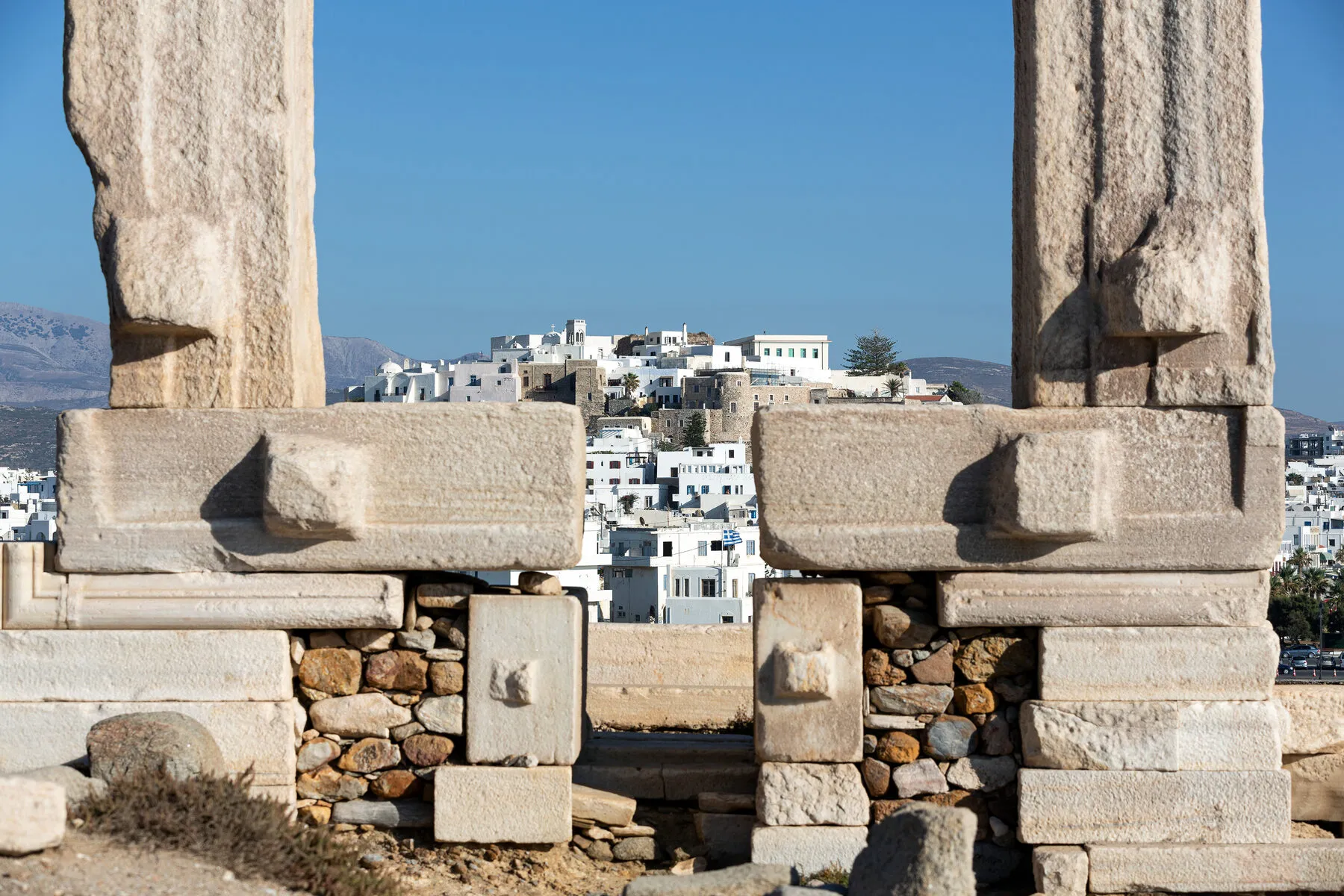
Paros is the polished, convenient island, and the choice is between two towns. Parikia has the port, the Byzantine church of Panagia Ekatontapiliani, and the best bus network. Naoussa is the prettier harbour, upmarket, and the place to stay if you want to walk to dinner. The beach to know is Kolymbithres, where the granite has been worn into smooth white forms and small sandy coves. Naxos is the larger, greener, more agricultural island, with the Portara, the giant marble gate of an unfinished temple, standing on its own islet by the Chora, and the best beaches on the west coast at Agios Prokopios and Plaka. From either island the return to Athens is a ferry of about 4 to 5h 30m on the fast or conventional boats, or a short domestic flight.
Ferry times and prices
These are the 2026 planning figures for the route, one way and per foot passenger, from the operator and booking pages. Treat them as indicative: fares move with season and demand, and the high-speed numbers are economy seats booked in advance.
| Piraeus to Milos | Daily year round. Conventional Blue Star about 4h 35m, from 42 to 48 EUR. Seajets catamaran about 2h 30m, from 78.70 EUR. Minoan about 4h, from 33 to 48 EUR. |
|---|---|
| Milos to Sifnos | About 40 minutes on SeaJets, 1h 25m on Cyclades Fast Ferries. From about 6.50 EUR conventional, 30 to 45 EUR high-speed. Two to five crossings a day in summer. |
| Sifnos to Paros | About 55 minutes on SeaJets, 3h 10m on Blue Star. From about 4.50 EUR. Seasonal: one to three a day from June to September, about one a week outside. |
| Paros to Naxos | 25 to 55 minutes, several a day year round. Blue Star from about 19 USD, Seajets from about 46 USD. |
| Naxos to Piraeus | Seajets about 4h from 78 EUR, Blue Star about 5h 30m from 43 EUR. First boat around 05:40, last around 22:30. |
| Athens airport to Piraeus | Metro Line 3 direct, about 60 minutes, 9 EUR. X96 express bus, 24 hours, about 90 minutes, 5.50 EUR. Metered taxi roughly 50 to 58 EUR by day, outside the central flat rate. |
The cheapest single lever is the boat type. Riding conventional ferries instead of catamarans across the five legs can halve the transport cost, and the deck is the best seat on a calm day anyway. The Ferryhopper route pages show every operator side by side.
When to go
June and September are the best months for this route, and September edges it. The sea is at its warmest, around 25 to 26 C, the meltemi has begun to fade so the crossings are calmer and more reliable, and the ferry timetable still runs at near full summer frequency. June is nearly as good, with longer days and lighter crowds than the peak.
May and October are the value months: cheaper rooms, fewer people, and comfortable walking weather, but the sea is cooler and, in October, the smaller islands start to close down. July and August are the ones to think twice about. They are the hottest, busiest and most expensive, and they carry the strongest meltemi, which is when high-speed ferries get cancelled and travellers get stranded. The wind is the reason morning crossings matter: it builds through the afternoon, so a 07:00 boat is often calm on a day when the 15:00 boat is rough, and an overnight conventional ferry avoids the worst of it entirely.
What it costs
Excluding international flights, a mid-range 10-day trip runs roughly 100 to 150 EUR per person per day, or about 1,000 to 1,500 EUR on the ground. The biggest variable is the ferries, and the second is accommodation, because the island you sleep on matters more than the hotel you pick. Naxos and Paros are the value picks for both rooms and food; Milos is mid-range; Sifnos is quiet and reasonable outside August. A daily budget looks like this.
| Ferries, all legs | Roughly 70 to 150 EUR per person for the whole route on conventional boats, more if you take catamarans throughout. |
|---|---|
| Accommodation | About 40 to 80 EUR a night for a simple double on the value islands, 70 to 120 EUR mid-range three-star in high season. A double splits the cost. |
| Food | 12 to 20 EUR for a taverna meal, 4 to 8 EUR for a gyros or bakery lunch, plus coffee and water. The food is where Sifnos rewards a splurge. |
| Activities | A Kleftiko boat day, a cooking class, island buses and a scooter rental run about 20 to 60 EUR a day when you use them. |
These are planning estimates built from the ferry, accommodation and food prices cited in this guide, not an official index. The single most effective saving is to travel in June or September rather than August, when the same rooms cost noticeably more.
Mistakes to avoid
The first mistake is too many islands. Every hop costs you half a day once you count the checkout, the port, the crossing and the check-in at the far end, so three islands in ten days is the sane limit for a first trip. The people who come home exhausted are the ones who tried to see six.
The second is thin buffers. Only a handful of boats serve the smaller hops, and one missed connection can cost a day. Do not schedule a ferry and a flight on the same day, and keep the last night close to an airport or a major port. The third is booking late in high season; the cheap conventional seats go first and the convenient catamaran times follow. The fourth is fighting the wind. If the meltemi cancels a catamaran, the conventional ferry or the next morning is usually the answer, and a flexible day in the middle of the trip absorbs it without drama. Build the trip so one lost crossing is an inconvenience, not a crisis.
Practical information
| Getting around | Ferries are the only way between islands, and each island has its own bus network from the main port. Buses are cheap and frequent in season on Milos, Paros and Naxos; a scooter or ATV helps on Milos and Paros. On Sifnos the trails and the bus do much of the work. |
|---|---|
| When to go | June and September are best all round. May and October are cheaper and quieter with cooler water. July and August are hottest, busiest, priciest and windiest, when ferry cancellations are most likely. |
| Booking | Book long legs from Piraeus and all catamaran crossings a few weeks ahead in peak season. The island hops, especially Sifnos to Paros, run only one to five times a day, so lock times you cannot miss before you book rooms. |
| Money | Cards work widely, but carry cash for bus fares, small tavernas and port kiosks. Greece tips by rounding up; a few euros on a good meal is enough. |
| Health and safety | The main hazards are sun, heat and the sea. Carry water on walks, respect the meltemi on exposed beaches and boat trips, and swim where locals do. Travel insurance that covers trip interruption is worth it when ferries can be cancelled. |
Disclosure. This blog post contains affiliate links. If you book through them, Mediterranean Vibes may earn a small commission at no extra cost to you; it is how the site stays up.